Best Wine to Pair with Pizza: 8 Smart Picks
Pinot Grigio is a strong starting point for Margherita, but the best wine to pair with pizza changes as soon as the toppings change. Use eight styles, from crisp white to bold red, and pick the bottle that matches the slice in front of you.
The usual advice is too lazy. Pizza is not one flavor. A simple tomato-and-basil pie needs something bright and clean, while spicy, creamy, meaty, earthy, Sicilian, or seafood pizzas all ask for different structure. The trick is simple, acidity keeps rich cheese and tomato feeling fresh, a little sweetness cools heat, and body should match the weight of the pizza. If you can name the dominant sauce or topping, you can choose the right bottle without turning dinner into a wine test.
Table of Contents
- 1. Crispy Thin Crust with Tomato and Basil
- 2. Pepperoni and Spicy Pizzas
- 3. Meat Lovers and BBQ Pizzas
- 4. White Pizza and Creamy Sauces
- 5. Vegetable-Heavy and Pesto Pizzas
- 6. Mushroom and Truffle Pizzas
- 7. Sicilian and Heavy Cheese Pizzas
- 8. Seafood and Anchovy Pizzas
- Wine Pairings for 8 Pizza Styles
- Choose by the Topping, Then Trust Your Taste
1. Crispy Thin Crust with Tomato and Basil
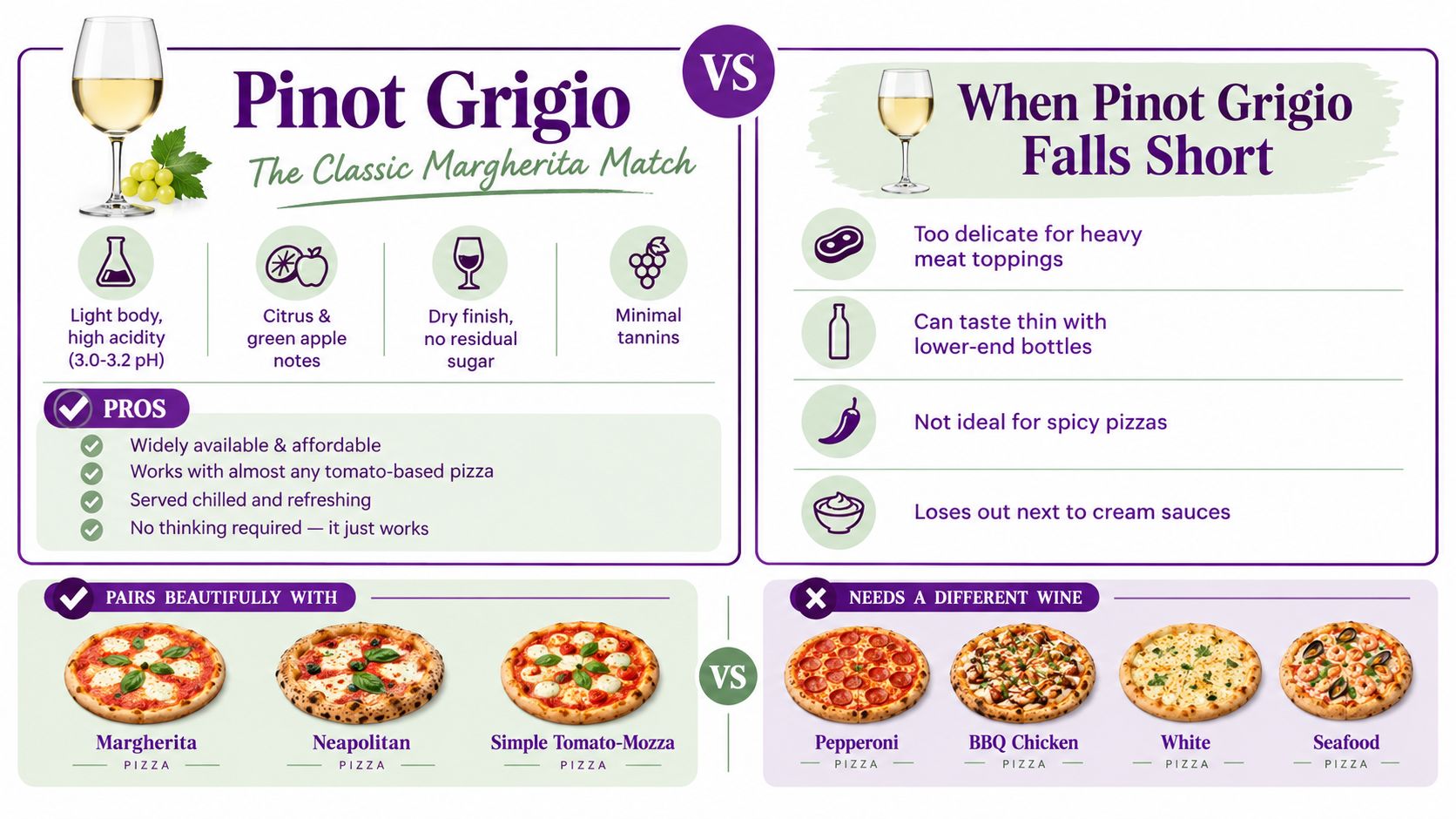
For a classic Margherita or any thin-crust pizza with tomato, basil, and mozzarella, order Pinot Grigio. It's the easiest answer because the wine stays light, crisp, and clean while the sauce brings the flavor.
A good Pinot Grigio cuts through cheese and olive oil without bullying the basil. It also has enough acidity to keep tomato from making the wine taste flat, which is why this pairing works so well with simple pies from a wood-fired oven or a Neapolitan shop. If you want the fastest safe bet on the menu, this is it.
Practical rule: if the pizza looks simple and fresh, the wine should feel simple and fresh too.
For what to order, think of a bottle from northeastern Italy, or a Spanish Albariño if Pinot Grigio is missing. If the restaurant pours a house white, try that first, because it's usually built for easy drinking with food. And don't overpay for this pairing. Cheap Pinot Grigio does the job just fine.
What to taste
You want crisp acidity, a little stone fruit, and a clean finish. That combo refreshes your mouth between bites instead of stacking more weight on top of the pizza. Serve it ice-cold, around 45 to 50°F, so the freshness stays front and center.
2. Pepperoni and Spicy Pizzas
Pepperoni, hot peppers, Calabrian chile, and red pepper flakes need off-dry Riesling. Dry wine and spicy pizza fight each other, and the alcohol can make the heat feel harsher. A little sweetness cools the burn.
Off-dry Riesling works because it has just enough residual sugar, meaning a touch of natural sweetness left after fermentation, to soften the spice without turning the wine into dessert. The acidity still keeps it sharp and lively, so the pizza doesn't feel heavy. If the slice brings heat, this is the bottle that calms it down.
For a New Year-style pepperoni pizza with oily cups, a Detroit-style pie with hot honey, or anything with jalapeños, this is the move. Ask the server if the Riesling is dry or has some sweetness. Diners on the floor can usually answer that in one sentence.
A good backup is Gewürztraminer, which brings similar floral sweetness and works especially well when the pizza has lots of chile heat. Just skip fully sweet dessert-style Riesling. That's too much.
Practical move: if the pie has heat, look for a wine with a little sweetness, not less flavor.
3. Meat Lovers and BBQ Pizzas
For sausage, bacon, pepperoni, smoked chicken, or a full meat-lover's pie, pick Zinfandel. Rich food needs rich wine. A light red would disappear next to all that meat and cheese.
Zinfandel brings fruit, enough tannin to handle fat, and enough body to keep up with a loaded slice. Tannin is the dry, mouth-gripping part of red wine, and on a meaty pizza it helps cut through grease instead of getting buried by it. The smoky, jammy side of Zinfandel also lines up nicely with BBQ sauce and charred edges.
A California Zinfandel is the most reliable version, and it doesn't have to be expensive. Let it warm a bit from fridge temperature, around 55 to 60°F, so the fruit opens up. That matters with pepperoni, bacon, and caramelized onion toppings, where the wine should feel generous instead of tight.
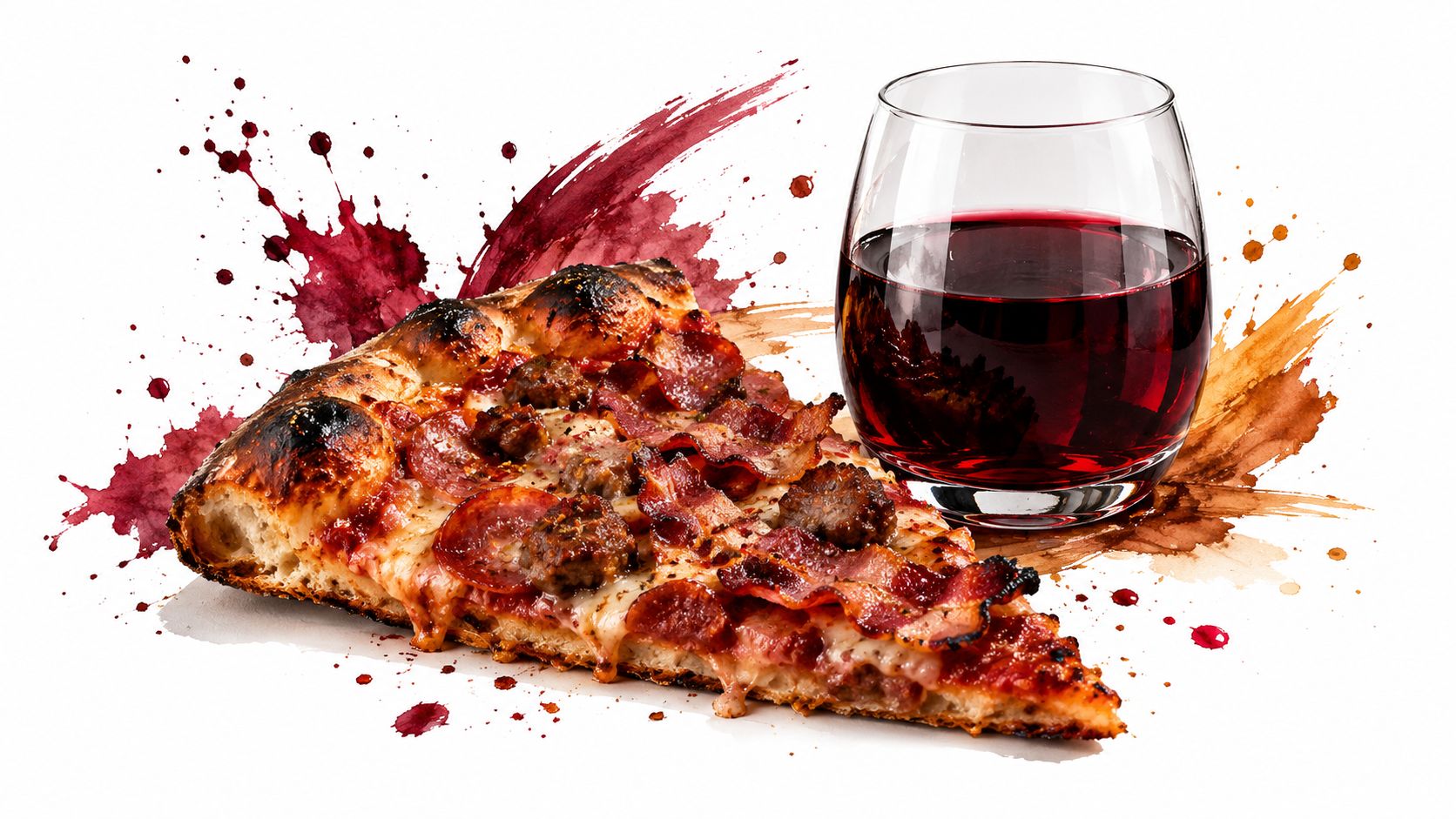
If Zinfandel isn't on the list, ask for Côtes du Rhône or Spanish Garnacha. They have the same kind of fruit weight and enough structure for the job. That's the whole point. Big slice, big wine.
What to expect
You're not looking for elegance here. You're looking for a wine that can handle smoky meat, salty cheese, and a crust with some chew. If the pizza is mostly sausage and bacon, Zinfandel should feel like a match, not a contrast.
4. White Pizza and Creamy Sauces
White pizza needs Vermentino or Fiano. These are the bottles to reach for when the pie is built on ricotta, mozzarella, olive oil, garlic, or a creamy sauce instead of tomato.
The job here is tricky. The wine has to be rich enough to stand next to cheese, but still bright enough to keep the slice from feeling heavy. Vermentino and Fiano do both. They have more substance than Pinot Grigio, plus subtle almond and herb notes that fit right into a pizza bianca or a pesto-and-cream style pie.
Order Vermentino from Sardinia or Fiano from southern Italy if you can find them. If the list looks thin, ask for Greco di Tufo as a backup. Serve the wine cold, around 45 to 50°F, so the acidity stays sharp and the creaminess doesn't take over.
This is the bottle I'd order for a classic white pizza with ricotta and garlic, a pesto pie with creamy cheese, or a mushroom pizza finished with truffle oil. If you've ever had a white slice feel too rich with a normal white wine, this fixes that problem.
Practical rule: creamy pizza needs a white with enough shape to stand up, not a bland one that just gets swallowed.
5. Vegetable-Heavy and Pesto Pizzas
For pizzas stacked with vegetables, fresh basil, arugula, or pesto, grab Sauvignon Blanc. It has the green, herbal edge that clicks right into the toppings instead of fighting them.
This is the bottle for a pie with roasted peppers and zucchini, or one finished with arugula and lemon vinaigrette. Sauvignon Blanc tastes lively and crisp, so the wine feels like part of the dish, not a side note. It also works well when the pizza has less cheese, because the wine brings its own energy.
Choose Loire Valley or Italian Sauvignon Blanc if you want a subtler style. New Zealand versions can get loud and grassy, which is great if you like that, but they can overwhelm delicate toppings. For pizza, I'd rather keep the herbs in balance.
The best move is to chill it well, around 45°F, so the freshness stays bright. If the restaurant has a house white from northeastern Italy, that's often Sauvignon Blanc and usually a strong play.
Fresh vegetables want a wine that tastes green, clean, and sharp. Sauvignon Blanc does that without making the pizza feel thin.
6. Mushroom and Truffle Pizzas
Earthy pizzas need Barbera. If the slice has roasted mushrooms, caramelized onions, garlic, or truffle oil, Barbera is the smart red. It matches the savory side of the pizza without weighing it down.
Barbera brings bright acidity, enough tannin for cheese, and a savory edge that works with umami, the mouth-filling richness you get from mushrooms and melted cheese. It's lighter than Zinfandel, so it won't bury a single-topping mushroom pizza. That balance matters when the toppings are all about depth instead of power.
Look for Barbera d'Alba or Barbera d'Asti. Those are the most dependable versions. Serve it slightly cool, around 55 to 60°F, so the acidity stays lively and the tannins don't get harsh. If the menu doesn't list it, ask the server anyway. Italian restaurants often have a bottle tucked away that fits perfectly.
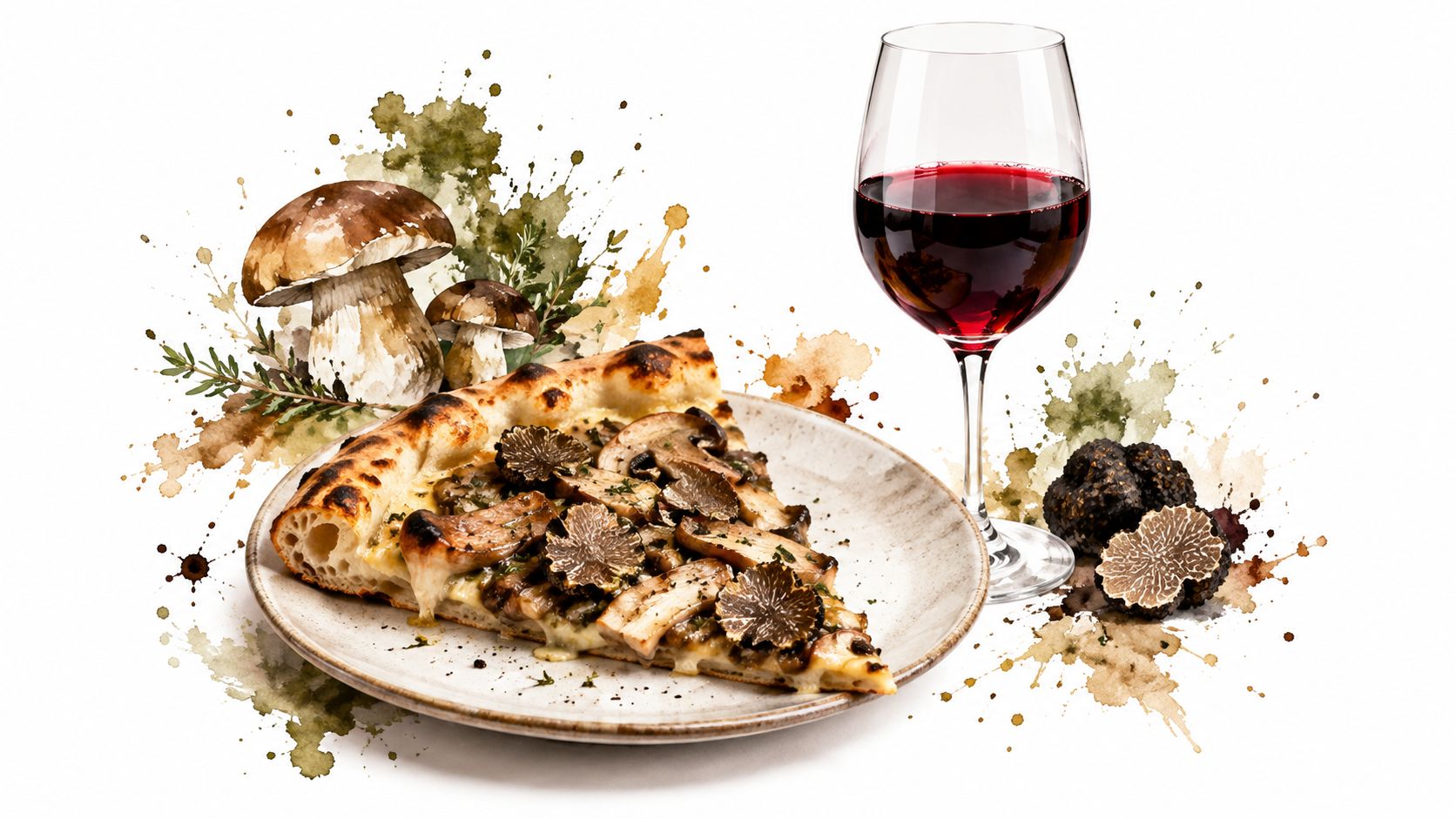
If Barbera is missing, Nerello Mascalese is a great stand-in. It brings similar acidity and earthiness. That's what you want with truffle and mushroom toppings, a wine that feels savory, not heavy.
What to taste for: bright fruit first, earthy notes second, and no thick oak getting in the way.
7. Sicilian and Heavy Cheese Pizzas
Thick, cheesy, heavily topped Sicilian pizza needs Nero d'Avola. This is the bottle for serious structure. If the pizza is loaded with multiple cheeses, anchovies, olives, or Italian meats, light wine won't do the job.
Nero d'Avola has enough tannin to grip fatty cheese and enough fruit to keep the wine from feeling severe. It's fuller than Barbera, but it still has that southern Italian warmth and spice that works with rich toppings. For a thick-crust slice with lots of mozzarella and ricotta, this is exactly the kind of red you want.
Order it only when the pizza is substantial. On a light pie, it'll overpower the food. On a heavy Sicilian-style slice, it's right where it should be. If you can choose a producer from Noto or Ragusa in southeastern Sicily, even better.
Serve it a little warmer, around 60 to 65°F, so the tannins soften. If Nero d'Avola isn't around, ask for Nerello Mascalese or Aglianico. Both can handle the weight of the pizza without folding.
Rich pizza wants a wine with a firmer frame. Nero d'Avola gives you that frame without losing the fruit.
8. Seafood and Anchovy Pizzas
For anchovy, clam, or shrimp pizza, go with Verdicchio or Greco di Tufo. Seafood toppings need white wine with enough body to stand up to the richness, but enough acidity to cut through salt and oil.
These wines have a saline, slightly mineral character that echoes the ocean in the toppings. That makes them a natural fit for anchovy, olives, capers, and lemon zest. They also have enough texture to feel substantial, so the pairing doesn't collapse into something thin or sharp.
Verdicchio from Marche and Greco di Tufo from Campania are both worth ordering. Serve them cold, around 45 to 50°F, so the mineral edge stays clean. If the restaurant doesn't stock either, ask for another central or southern Italian white. They often have something close.
This is the move for a clam pizza with white sauce, a shrimp and garlic pie, or anything salty and briny. Online ordering helps if you're planning seafood pizza at home, because these wines are easier to find there than in a casual corner shop.
Practical rule: salty seafood toppings need a white with grip, lift, and a little sea-salt character of its own.
Wine Pairings for 8 Pizza Styles
| Pairing | 🔄 Complexity | ⚡ Availability & Effort | ⭐ Expected effectiveness | 📊 Ideal use cases | 💡 Key advantage / Tip |
|---|---|---|---|---|---|
| Crisp Thin Crust w/ Tomato & Basil, Pinot Grigio | 🔄 | ⚡ High availability; serve 45–50°F | ⭐⭐⭐⭐⭐ | Margherita, Neapolitan, simple tomato-mozza | 💡 Affordable, refreshing; don't overpay (≈$15–20); serve very cold |
| Pepperoni & Spicy Pizzas, Off‑Dry Riesling | 🔄🔄 | ⚡ Moderate availability; ask for “Kabinett”/off‑dry | ⭐⭐⭐⭐ | Pepperoni, hot honey, chiles, jalapeño-spiced pies | 💡 Light sweetness tames heat, avoid fully sweet styles |
| Meat Lovers & BBQ Pizzas, Zinfandel | 🔄 | ⚡ Widely available; serve ~55–60°F | ⭐⭐⭐⭐⭐ | Deep‑dish, meat‑lovers, BBQ chicken | 💡 Tannins & jammy fruit cut fat; CA Zinfandel is reliable |
| White Pizza & Creamy Sauces, Vermentino or Fiano | 🔄🔄 | ⚡ Lower availability; may require special order; serve 45–50°F | ⭐⭐⭐⭐ | Pizza bianca, béchamel, ricotta/mushroom cream pies | 💡 Mineral texture + acidity matches cream and oil; try Greco di Tufo as backup |
| Vegetable‑Heavy & Pesto Pizzas, Sauvignon Blanc | 🔄 | ⚡ Very available; serve ~45°F | ⭐⭐⭐⭐ | Pesto, roasted veg, arugula/burrata pizzas | 💡 Herbaceous notes echo pesto, choose Loire/Italian for subtlety |
| Mushroom & Truffle Pizzas, Barbera | 🔄🔄 | ⚡ Moderate availability; serve ~55–60°F | ⭐⭐⭐⭐ | Porcini/truffle pizzas, mushroom + fontina | 💡 High acidity + earthiness mirrors umami; seek Barbera d'Alba/Asti |
| Sicilian & Heavy Cheese Pizzas, Nero d'Avola | 🔄🔄🔄 | ⚡ Less common outside specialty shops; serve 60–65°F | ⭐⭐⭐⭐ | Thick, heavily cheesed Sicilian‑style pizzas | 💡 Structured tannins and spice stand up to dense cheese toppings |
| Seafood & Anchovy Pizzas, Verdicchio or Greco di Tufo | 🔄🔄 | ⚡ Lower availability; best served 45–50°F | ⭐⭐⭐⭐ | Anchovy, clam, shrimp or olive/caper pizzas | 💡 Saline minerality echoes seafood, polarizing but effective |
Choose by the Topping, Then Trust Your Taste
If the pizza is simple tomato and basil, choose Pinot Grigio. If it's spicy, go off-dry Riesling. If it's loaded with meat, use Zinfandel. For creamy white pizza, reach for Vermentino or Fiano. For vegetables and pesto, pick Sauvignon Blanc. For mushrooms and truffle, choose Barbera. For heavy cheese and Sicilian-style pies, go Nero d'Avola. For seafood and anchovy pizza, pour Verdicchio or Greco di Tufo.
That's the core rule. The dominant sauce, topping, and richness matter more than rigid wine dogma. Acidic tomato needs acidity in the glass. Heat needs a little sweetness. Fat needs structure. Earthy toppings want earthier wine. Salty seafood wants a white with grip and mineral lift. Once you start matching the slice instead of chasing a “perfect” bottle, pizza night gets a lot easier.
If you're torn between two styles, pour both with the same pizza and taste which one feels fresher, cleaner, or more balanced after the second bite. That tells you more than any label ever will. And if the menu throws you a weird combo, use A to Wine's Personal Sommelier and get a fast answer that fits the food in front of you.
A to Wine helps you build wine confidence in a few minutes a day with short lessons, practice quizzes, and an AI sommelier that gives real pairings, not wine snobbery. If you want easier dinner decisions, smarter bottle picks, and more wins like pizza night, visit A to Wine and start there.