Blind Tasting Wine: A Practical Guide for Beginners
You're at a dinner table, somebody has wrapped three bottles in foil, and now everyone is pretending they know what's in the glass. That's blind tasting wine in the real world, and it's the fastest way to stop guessing based on labels, price, or reputation. You taste the wine first, then you decide what you think it is.
Table of Contents
- Why Blind Taste Your Wine Tonight
- Setting Up for Blind Tasting Success
- How to Analyze Wine Systematically
- The Best Practice Formats for Beginners
- Effective Exercises to Train Your Palate
- Common Mistakes to Avoid
- Practical Takeaway for Your Next Tasting
Why Blind Taste Your Wine Tonight
Blind tasting wine works because it forces you to deal with the wine itself. No label. No producer story. No expensive bottle in the back of your head whispering what you should taste.
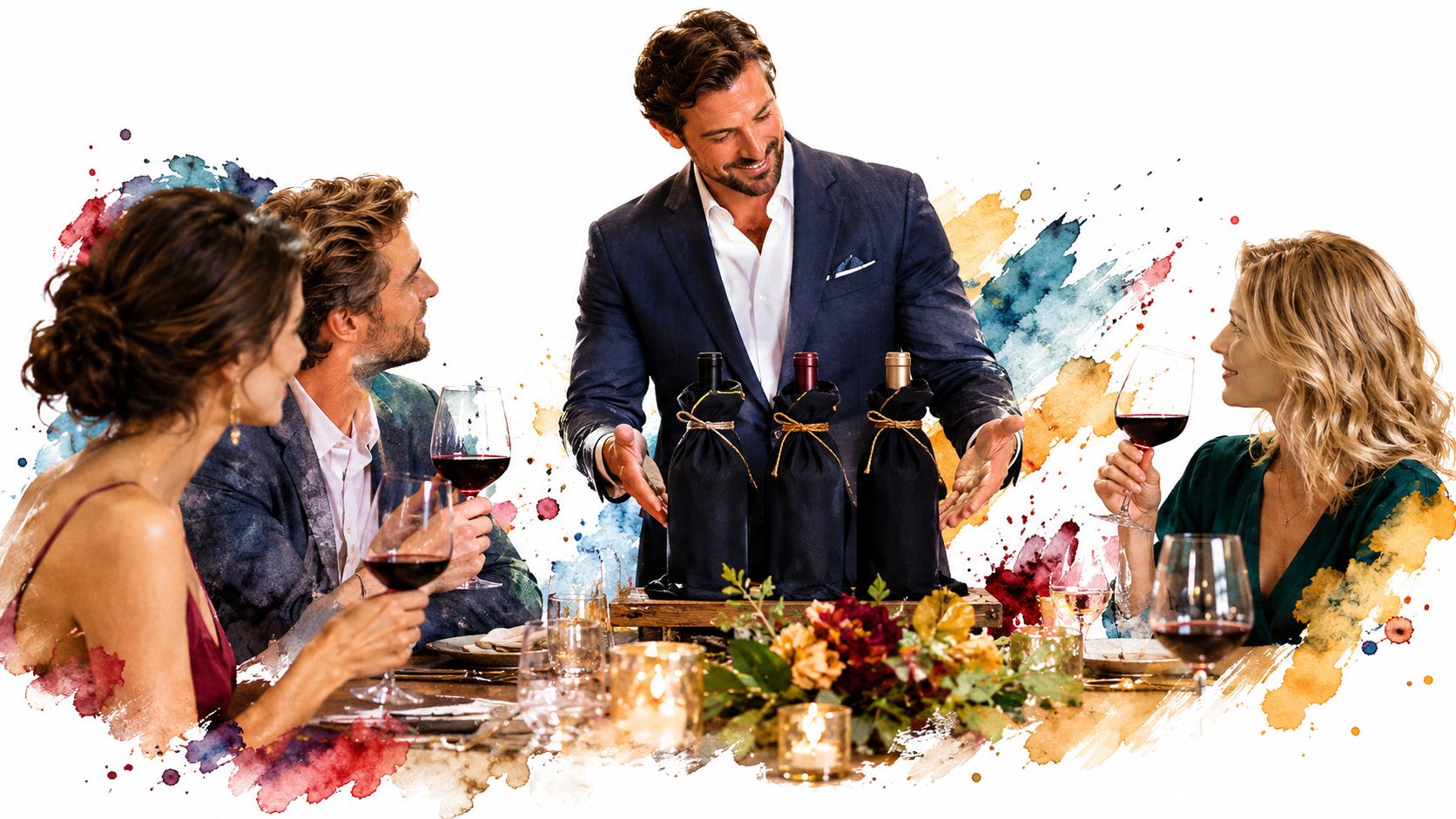
That matters because expectations can hijack your palate fast. In one set of experiments reported in the Journal of Wine Economics, tasters sometimes failed to notice when wines were identical, and ratings moved when people learned about price or reputation. The cleanest lesson is simple, a famous label can change the experience before the first sip. The expectations study makes that pretty hard to ignore.
Why beginners should care
Many assume blind tasting is just for professionals and exam candidates. Not true. It's useful for anyone who wants to know why one wine feels sharp and another feels soft, why one tastes savory and another tastes ripe.
The bigger win is confidence. When you taste without labels, you start trusting your own memory and your own notes instead of the marketing on the bottle. That's a better habit than trying to guess the exact vineyard every time.
Practical rule: start with what you can actually sense, not what you hope the wine is.
A good blind tasting also makes comparison easier. If you pour two wines side by side, the contrast teaches you more than reading a description ever will. For a quick primer on the basics of tasting order, see the steps of wine tasting.
Setting Up for Blind Tasting Success
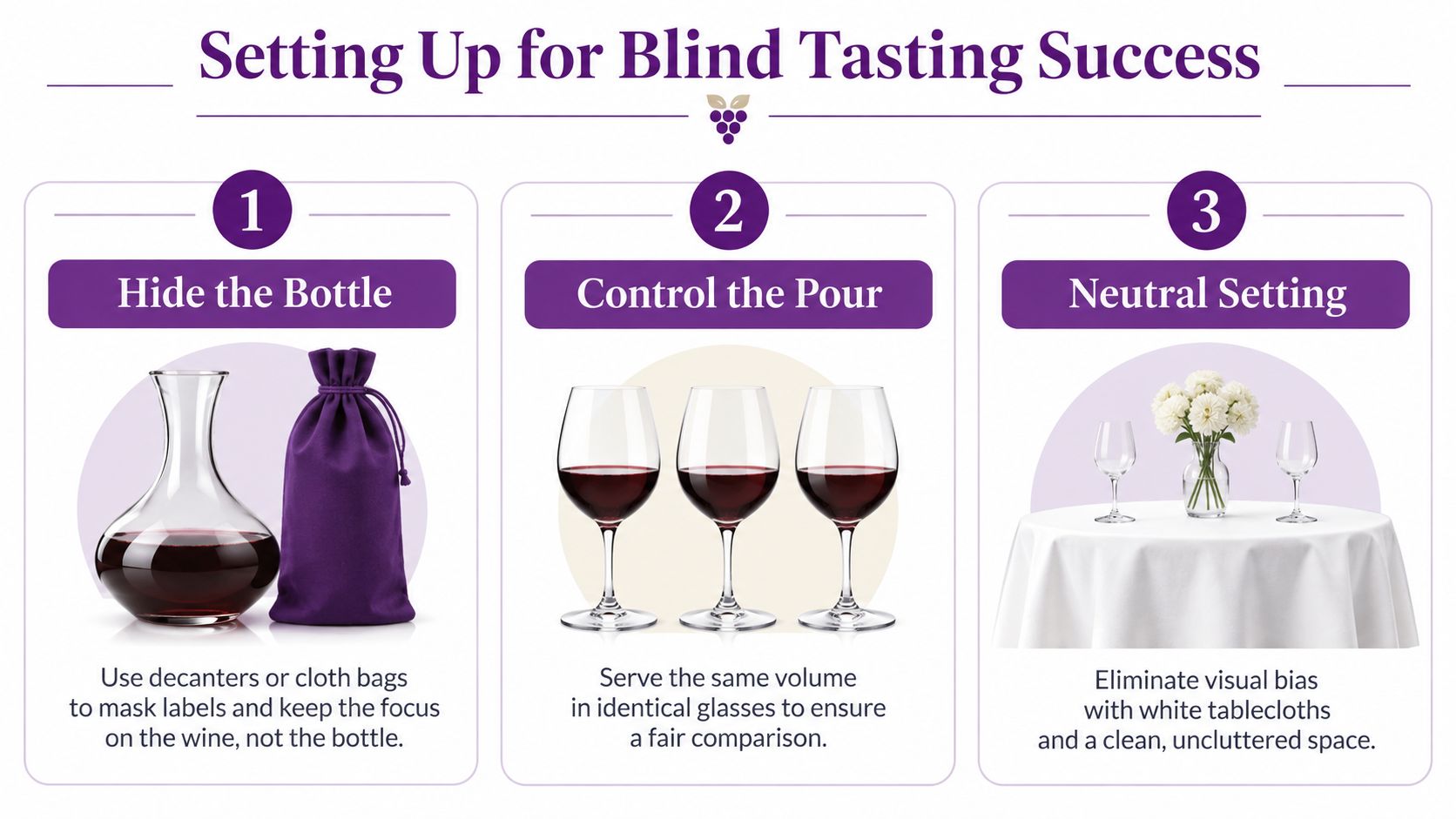
A proper setup keeps the tasting fair. Cover the bottles with paper bags, foil, cloth, or any opaque wrap that hides the label. Use the same glass for every wine, because glass shape changes how aroma shows up, and keep the serving temperatures similar so one wine doesn't get an unfair advantage.
Keep the order from giving away the answer
Random order matters. If you always pour light wines first or expensive wines last, people start reading the sequence instead of the wine. Use numbered glasses, keep a secret key, and don't talk about guesses until every sample has been recorded.
The point is not to perform a magic trick or guess a bottle instantly. It is to judge the evidence in the glass before reputation, price, producer, or region gets involved.
That's the cleanest way to think about it. Blind tasting means evaluating wine without knowing its identity, and the goal is to reduce bias, not to create a party trick. This overview of systematic deduction nails that idea without making it fussy.
Make the room boring on purpose
Use plain glassware and a neutral table. Skip scented candles, loud music, and anything else that distracts from smell and texture. If you want to compare wines fairly, give the glass the best chance to speak for itself.
A simple setup at home is enough. Cover the bottles. Pour the same amount. Write down the results before anyone starts helping anyone else.
How to Analyze Wine Systematically
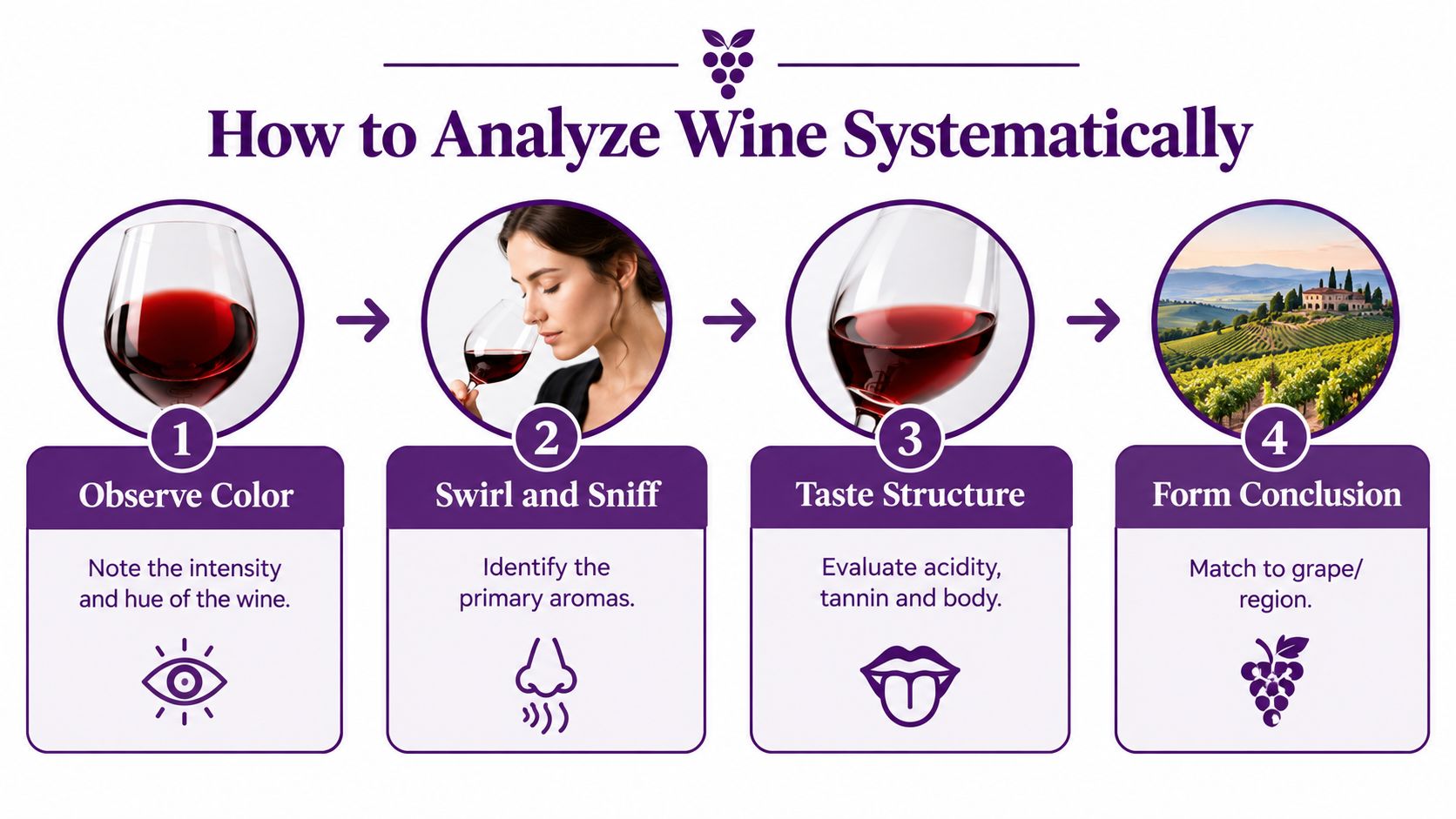
Good blind tasting starts with structure, not guessing. First, look at what the wine does in your mouth. Then ask what that pattern suggests. That order matters because it keeps you from jumping to “Cabernet” before you've even noticed the acidity.
Build the structure first
Start with sweetness, then acidity, then tannin, then alcohol and body. Sweetness tells you whether the wine feels dry or leaves a hint of sugar. Acidity is the mouthwatering snap that makes a wine feel lively. Tannin is the drying, grippy feeling on your gums, mostly in red wines.
Body is the weight of the wine in your mouth. Alcohol adds warmth and texture. If you notice those pieces before naming the grape, you've already turned the tasting into something useful.
Don't confuse identity with quality
A wine can be well made and still not fit your taste. That's where beginners get stuck. They think a correct grape guess proves skill, but enjoyment and identification aren't the same thing.
The evidence backs that up. A large compilation of blind tastings found that ordinary drinkers generally didn't rate more expensive wines higher when price was hidden, while experts still tended to rate expensive wines higher even in double-blind settings. That research summary shows why blind tasting is useful, but not magical.
A clean note sheet helps. Write down the wine's structure first, then make your guess. That habit keeps you honest.
The Best Practice Formats for Beginners
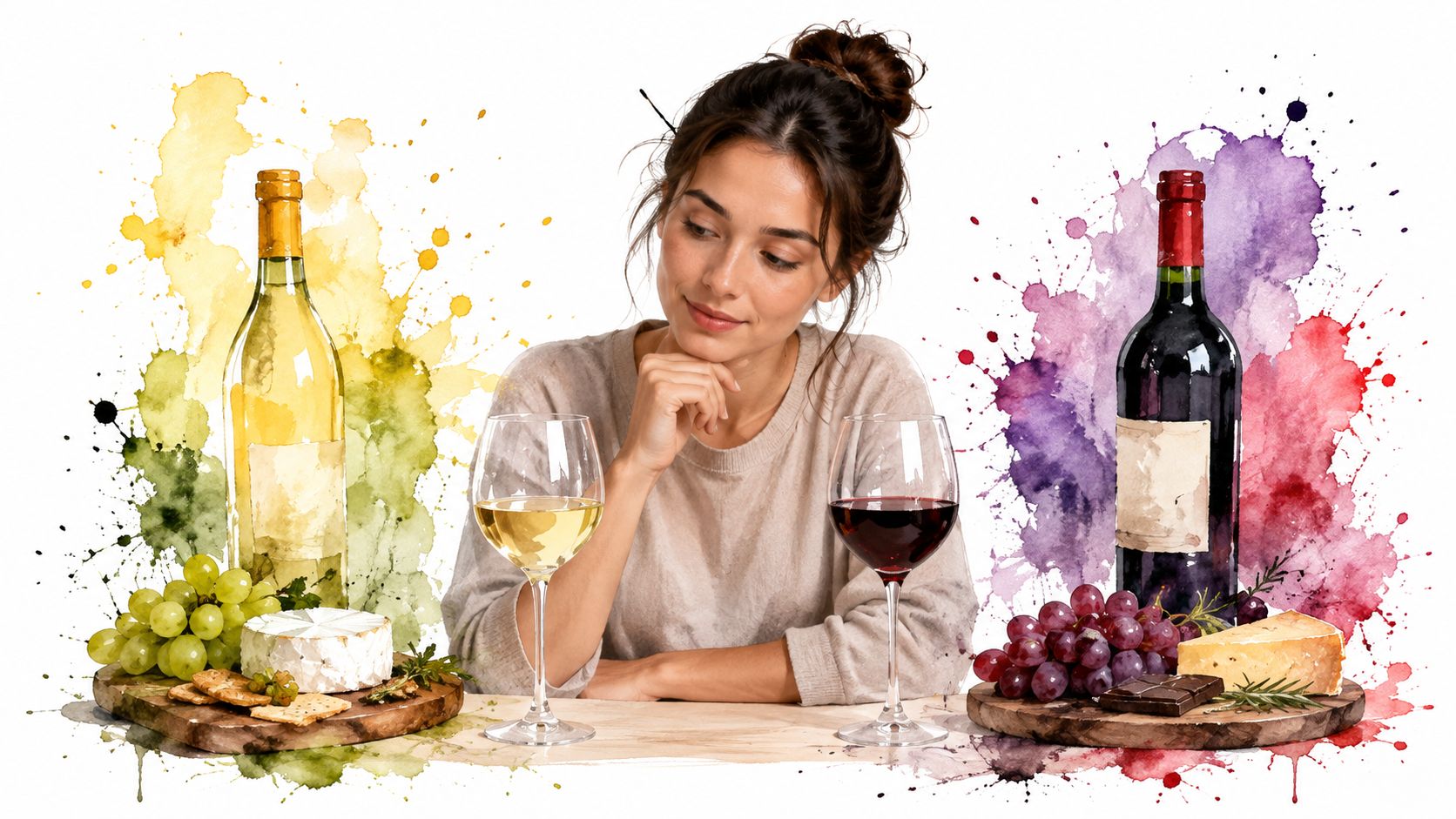
You don't need ten wines on the table to learn fast. Two wines is enough if you choose them well. A side-by-side comparison, like Cabernet Sauvignon versus Merlot or California Chardonnay versus Burgundy Chardonnay, makes differences in body, oak, and shape easier to spot.
Start with simple contrasts
Two wines teach faster than a giant lineup because the mind isn't busy juggling too many options. You can compare one thing at a time, like freshness, weight, oak, or fruit ripeness. That's how people stop feeling overwhelmed.
A three-wine flight is the next step. Use the same grape from different regions and look for the change in climate, texture, and aroma. One wine might feel brighter, another rounder, another more savory.
Add mystery only after you've learned the shape
Once you're comfortable, try a mystery flight with three very different wines. That pushes speed and memory without turning the tasting into chaos. The trick is to limit the number of variables so your brain can actually learn.
If you want a quick refresher on how flights work, this guide to a flight of wine is a useful companion. The main point stays the same. Keep the exercise small enough that you can think clearly.
Effective Exercises to Train Your Palate
Training your palate means building sensory memory, not showing off. Taste a wine you already know, cover the bottle, and describe it again from scratch. Then compare your new notes with what you wrote before. That simple loop teaches your brain the true texture of the wine.
The research says training helps. In a blind-tasting practice study, researchers analyzed 196 tasting sheets with 2,271 tasting notes from 15 participants across 18 sessions over 36 days, and they found that accuracy and agreement on grape variety improved over time while acidity estimates got better too. The study supports a practical idea, repeated comparison builds real skill.
Use exercises that isolate one variable
Try a horizontal tasting, which just means the same grape from different years or regions. A Chardonnay from one place may show more citrus, while another leans into oak or weight. That helps you separate climate from grape character.
Another good drill is a paired contrast. Taste oaked and unoaked Chardonnay side by side. The wood becomes obvious fast, because you're not relying on memory alone.
Useful habit: write what you notice before you guess what the bottle is.
Make the practice social if you can. A monthly tasting with friends keeps it fun and stops it from feeling like homework. The key isn't intensity, it's consistency. A short session each week beats one giant tasting once in a blue moon.
For more structured drills, how to practice blind tasting is a solid next read.
Common Mistakes to Avoid
The biggest mistake is guessing too early. Swirl, sniff, sip, and think before you commit. If you skip the swallow, you miss the finish, and the finish often tells you more than the first sip does.
Color can help, but it can also mess with your head. A darker red doesn't automatically mean a better wine or a specific grape. It's one clue, not the verdict.
Another trap is letting prior knowledge take over. If you know the producer, region, or price, your brain starts filling in blanks. That's exactly the bias blind tasting is trying to remove.
Keep the mood relaxed, too. Stress makes people rush, and rushed tasting usually means sloppy notes. Blind tasting should feel focused, not severe.
Don't turn every glass into an exam. A calm room makes a better palate.
Practical Takeaway for Your Next Tasting
Start small. Grab three wines you already enjoy, cover the bottles, and pour them into identical glasses. Taste each one in silence long enough to write down sweetness, acidity, tannin, body, and one guess about the grape or region.
Then reveal the bottles and compare your notes with the answers. Don't judge yourself on whether you nailed the label. Judge yourself on whether your notes were specific, honest, and useful.
If you want a simple next step, take the free quiz at A to Wine and use it to figure out where your wine skills are right now. Then build from there, one short tasting at a time.
If you want more short, practical wine lessons, A to Wine helps you practice a little each day with quick lessons, quizzes, and an AI sommelier. It's a smart way to build confidence with blind tasting wine without turning wine into homework.