Cabernet Sauvignon Merlot
You're staring at a wine list or a shelf with two familiar names and wondering which one won't let you down. Cabernet Sauvignon usually gives you more structure, firmer tannin, and a darker, more serious feel. Merlot usually feels smoother, rounder, and easier to drink young, which is why the cabernet sauvignon merlot comparison keeps coming up for real-world buying decisions.
| Quick comparison | Cabernet Sauvignon | Merlot |
|---|---|---|
| Main feel | Firmer, more structured | Softer, rounder |
| Ripening | Later | Earlier |
| Best fit | Heartier food, longer aging | Quieter meals, earlier drinking |
| Common use | Standalone wines and blends | Standalone wines and blends |
The tricky part is that these grapes aren't rival personalities. They're partners that often show up together because they solve different problems in the glass. Cabernet gives shape. Merlot fills in the edges. If you know that, the label gets a lot less mysterious. For a quick visual reference, compare the grape families in this grape varieties chart and keep this same idea in mind when you shop.
Table of Contents
- Cabernet Sauvignon and Merlot Explained
- Why These Two Grapes Behave Differently in the Vineyard
- How Cabernet Sauvignon and Merlot Work Together in Bordeaux Blends
- Taste Differences and Food Pairing Choices
- Which Grape Is Actually Better for Beginners
- How to Pick Between Cabernet Sauvignon and Merlot
Cabernet Sauvignon and Merlot Explained
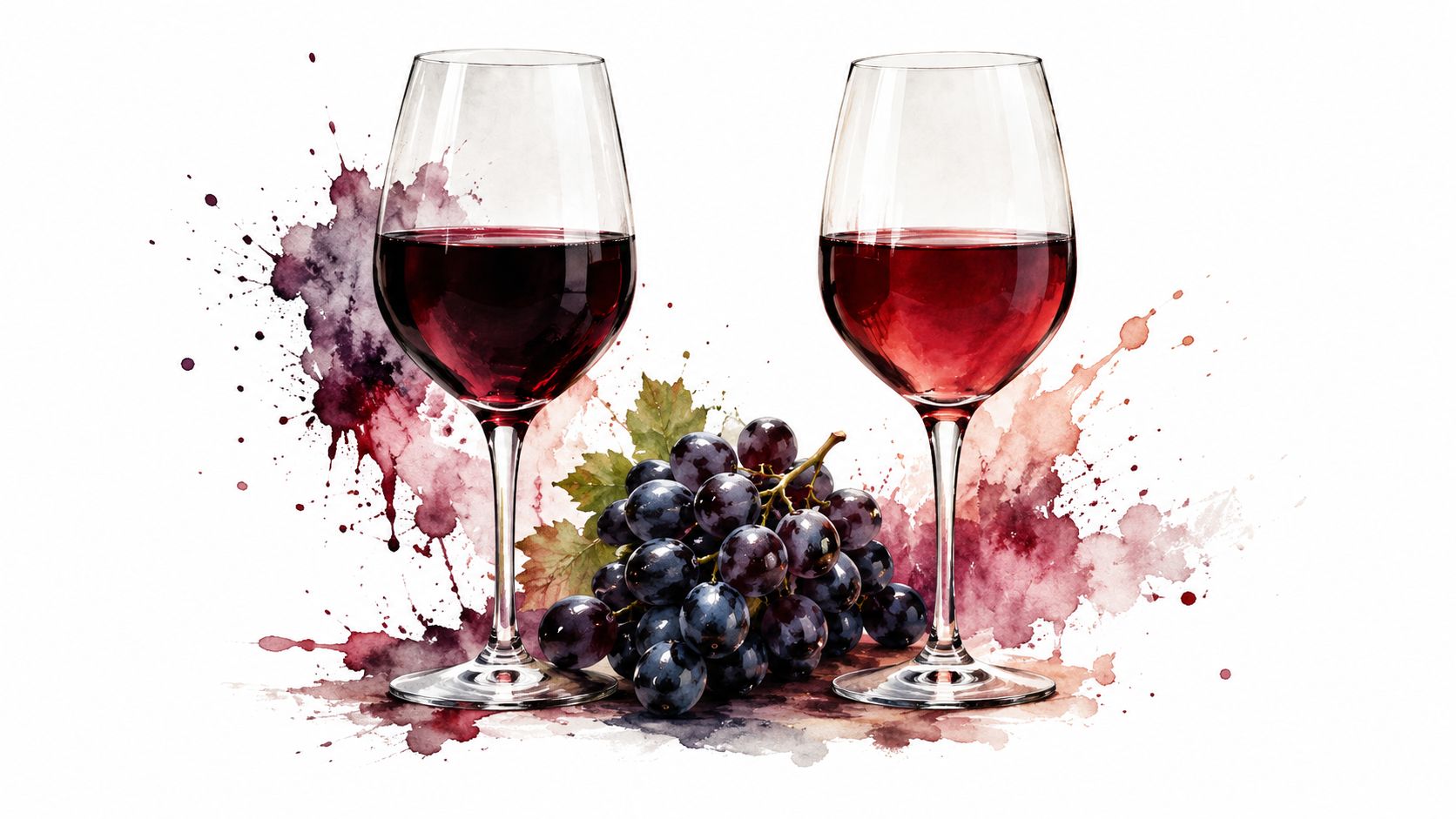
You're holding a menu or standing in front of a shelf, and the decision has to be quick. Cabernet Sauvignon usually gives a firmer, more structured glass, while Merlot usually feels rounder and easier to enjoy right away. That simple difference is why people reach for them in different rooms, with different meals, and for different budgets and moods.
Their importance is easy to see in the vineyard, too. The OIV's 2015 data places Cabernet Sauvignon at 341,000 hectares, or 4% of the world's vineyards, while Merlot covered 266,000 hectares, or 3% of the global vineyard area. Cabernet Sauvignon was already established in 37 countries by 2015, including major plantings in China, France, Chile, the United States, Australia, Spain, Argentina, Italy, and South Africa, which helps explain why it shows up so often from Bordeaux to Napa to Chile OIV grapevine variety distribution report.
What that means in real life
A useful way to read the label is to start with the meal, then the region. A Cabernet from a cooler place can feel leaner and tighter, while one from a warmer place often feels richer and softer. Merlot shifts in the same way, and a blend can change a lot depending on how much of each grape is used. That matters more than personality labels like “bold” or “soft,” because two wines with the same grape name can still drink very differently.
If you want a wine that feels more gripping and more ready for food with substance, Cabernet Sauvignon is usually the safer choice. If you want a bottle that feels friendlier on the first sip, Merlot often fits better. The point is not to crown a winner. The point is to match the wine to the moment.
Practical rule: Start with the dish, then check the blend ratio. A small shift in how much Cabernet or Merlot is in the bottle can change the whole feel of the wine.
Cabernet and Merlot also appear together because they balance each other well. Cabernet gives shape, Merlot softens the edges, and that is why the blend works across so many styles. If you want a broader guide to grape families, use this grape varieties chart as a reference while you taste.
Why These Two Grapes Behave Differently in the Vineyard
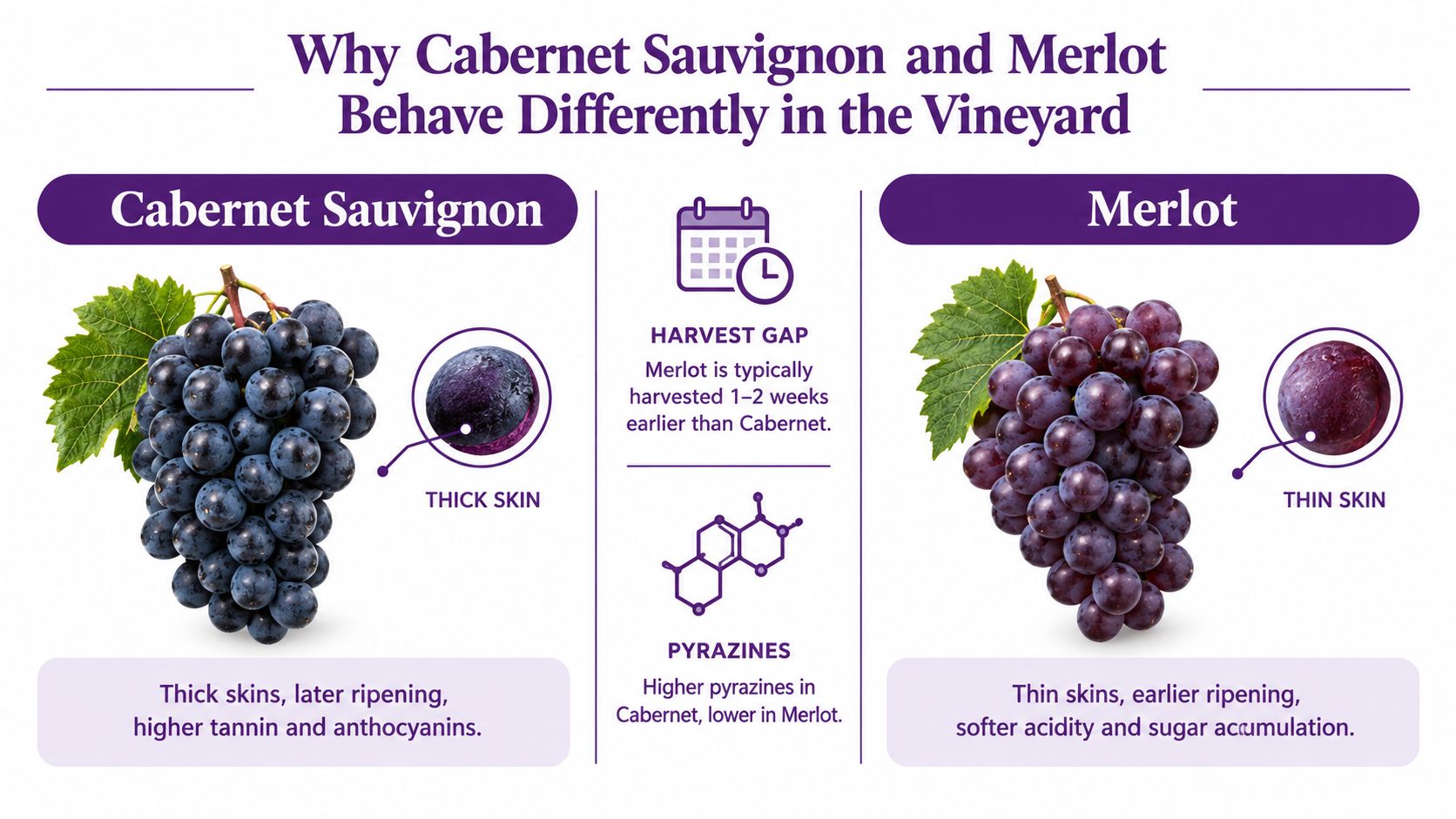
A glass of Cabernet Sauvignon and a glass of Merlot can feel miles apart, but the reason starts in the vineyard. Cabernet Sauvignon is a late budder and late ripener, while Merlot buds and ripens earlier UC Davis Bordeaux grape reference. That difference shapes when growers harvest, how much weather risk they face, and how much room each grape has to reach full maturity.
Ripening timing changes everything
Late ripening matters because the vine has to keep working longer before the fruit is ready. Cabernet Sauvignon usually needs more heat and a longer run of stable weather, so it is more exposed to cool seasons and frost risk. Merlot reaches harvest readiness sooner, which makes it a more forgiving choice in cooler or shorter growing seasons.
That timing also helps explain the feel in the finished wine. Cabernet Sauvignon often develops more color and a firmer frame, while Merlot tends to come across as rounder and easier to drink young. If you want a simple way to connect texture to structure, what tannin means in wine is a useful place to start, because tannin is a big part of why Cabernet can feel more gripping on the tongue.
The chemistry follows the same pattern. In the UC Davis-linked data, Merlot showed higher total phenolics at 956.23±16.66 mg/L, while Cabernet Sauvignon showed higher anthocyanins at 129.95±2.65 mg/L. Anthocyanins are the pigments that drive color, so Cabernet often brings deeper color and stronger color stability. Phenolics are the broader family tied to bitterness, astringency, and the dry sensation you may notice after a sip.
Why the texture changes in the glass
That is why Cabernet often feels more structured and Merlot more open. Cabernet usually shows more color density and a tighter frame. Merlot can still have plenty of depth, but it usually arrives with less bite and a softer first impression. If one wine feels like it wants time and another feels ready now, that difference is often built in before the grapes ever reach the cellar.
Cabernet usually asks for patience. Merlot usually gives you more right away.
The easiest way to remember it is simple. Cabernet leans toward structure, Merlot leans toward early comfort. That is not a personality test. It is the result of how the grapes behave in the vineyard, and it is why region and blend ratio matter so much when you choose a bottle.
How Cabernet Sauvignon and Merlot Work Together in Bordeaux Blends
You are choosing between two Bordeaux bottles. One is led by Cabernet Sauvignon, the other by Merlot. The grape names matter, but the region and the blend ratio often tell you more about how each bottle will drink.
Cabernet Sauvignon and Merlot work like partners with different jobs. Cabernet usually contributes structure, tannin, and acidity, while Merlot brings body, softness, and fruit Decanter on Cabernet Sauvignon and Merlot. Together, they can create a wine with Cabernet's frame and Merlot's rounder center.
Why the blend works
A Cabernet-led wine can feel firmer and more drying, while a Merlot-led wine often feels broader and easier to approach. Blending them lets the winemaker adjust the balance. Merlot can fill out Cabernet's firm shape, and Cabernet can give Merlot more definition and length.
The same two grapes can produce different results across Bordeaux. Left Bank wines often give Cabernet the leading role, while Right Bank wines usually place Merlot first. Regional preference therefore affects your choice before you even read the full blend details. A bottle from a Cabernet-focused area may feel more structured, while one from a Merlot-focused area may seem more generous in its youth.
The ratios are the real story
There is no single Bordeaux formula. Some blends are nearly even, such as 50.4% Cabernet Sauvignon and 47.8% Merlot. Others place Cabernet firmly in charge, such as 89% Cabernet Sauvignon with only 3% Merlot Decanter on Cabernet Sauvignon and Merlot grapes.
Those proportions change the decision in your glass. A Cabernet-heavy blend is a sensible choice when you want a firmer, more powerful style and are comfortable giving it time. A Merlot-heavy blend is often the better pick when you want a rounder texture and easier drinking earlier. The label's ratio tells you which grape is steering the wine.
Good blend, bad blend, or just different? Usually, just different. The ratio points toward power or ease.
For a practical way to match the finished wine with food, this wine and food matching guide focuses on texture rather than grape names.
Taste Differences and Food Pairing Choices
Choosing between Cabernet Sauvignon and Merlot becomes easier at the table. Start with the dish, then consider the wine's regional style and blend ratio. Cabernet Sauvignon often brings firmer tannin and a more defined shape, while Merlot commonly feels rounder. Those are useful clues, not fixed personality labels. A Cabernet-led blend from a warm region may drink differently from a Merlot-led blend from a cooler one.
What Cabernet Sauvignon tends to do at the table
Cabernet Sauvignon suits food with strong flavours, browned edges, or plenty of protein. Try it with grilled steak, roast lamb, braised beef, or richly browned mushrooms. Protein and fat can soften the wine's drying tannins, so the pairing feels more balanced.
Cabernet also holds its ground beside char, smoke, herbs, and savoury sauces. It remains noticeable rather than disappearing behind the meal. With delicate fish, lightly seasoned vegetables, or mild dishes, however, its tannin and flavour can dominate. If the food tastes fragile, choose a less Cabernet-driven bottle or serve the wine with a richer accompaniment.
Where Merlot usually lands better
Merlot often fits hearty food with gentler seasoning. Roast chicken with mushrooms, tomato-based pasta, meatloaf, burgers, and softer red meats are practical choices. The wine still brings dark-fruit character and body, but its texture may feel less demanding.
Bordeaux's planting pattern helps explain why Merlot appears so often in accessible blends. Across Bordeaux, Cabernet Sauvignon accounts for 22% of red-wine acres, while Médoc is the only subregion where Cabernet Sauvignon outnumbers Merlot. Merlot had expanded to about 70,000 hectares, or 172,974 acres, out of 271,450 acres across the region by 2020 Bordeaux variety overview. Regional preference and planting conditions shape the blend before the wine reaches your glass.
A simple pairing test
Use the meal as your first filter:
- Cabernet Sauvignon with grilled red meat, roast, or smoky flavours.
- Merlot with pasta, mushrooms, burgers, or softer meat.
- Cabernet-heavy blend when the dish is rich and strongly seasoned.
- Merlot-heavy blend when you want a rounder match with less tannin.
If you are unsure, compare the food's weight with the wine's structure. A rich dish can support more Cabernet, while a gentler dish may suit more Merlot. For a more detailed method, this wine and food matching guide recommends matching texture rather than relying on grape names alone.
Which Grape Is Actually Better for Beginners
A lot of wine advice says Merlot is the beginner grape and Cabernet is the serious one. That sounds tidy, but it misses how people drink. Beginners do not need a label for their personality. They need a bottle that fits the meal, the mood, and the style of red they already enjoy.
A useful place to start is the bottle itself, not the grape stereotype. Some people want a firmer red with more shape. Others want a rounder wine that feels less drying on the finish. Both Cabernet Sauvignon and Merlot can work for a first step, depending on what you are tasting for and where the wine comes from.
Preference depends on where people drink
Independent market research shows Cabernet Sauvignon and Merlot are the top two red varieties chosen by regular wine drinkers in eight of 10 key markets. The leader changes by country. Cabernet Sauvignon is #1 in Canada, Japan, South Korea, and China, while Merlot is #1 in the United States, United Kingdom, Germany, and Singapore Wine Australia market bulletin. That split matters because drinking habits, local food, and familiar styles shape what feels approachable.
So there is no single beginner answer. A person who likes structure and a firmer finish may find Cabernet easier to understand. A person who prefers softer texture and less grip may connect with Merlot faster. The better choice is the wine that matches your palate, not the grape name that sounds simpler.
Merlot is not just the soft option
Recent market commentary also points to a less obvious fact. Luxury Merlot priced at $45 and above is growing in dollar sales, and buyers are showing interest in more site-driven Merlot Wine Australia market bulletin. That tells you Merlot is not only a casual, easy-drinking red. Producers can make it in a more layered, age-worthy style when the vineyard and winemaking call for it.
Some beginners hear “Merlot” and assume it always means soft and simple. A well-made Merlot can still have depth, shape, and staying power. It often arrives with a gentler first impression than Cabernet Sauvignon, which is why many people find it easier at the start.
A better question than “Which grape is best?” is “What do I want the first sip to feel like?”
If you are teaching yourself to taste, try one Cabernet and one Merlot side by side. That comparison gives you a clearer lesson than memorizing flavor words. If you want a structured path, the free wine quiz is a simple place to start.
How to Pick Between Cabernet Sauvignon and Merlot
You are choosing a bottle for dinner, not taking a personality test. Start with the meal, then consider the region and blend ratio. Those details often predict the drinking experience better than the grape name alone.
Choose Cabernet Sauvignon when the food is rich, grilled, or strongly seasoned, or when you enjoy a firmer finish. Choose Merlot when you want a rounder texture and an easier first sip. These are useful starting points, not fixed rules.
Read the label like a shortcut
US labeling law offers one practical clue. Under TTB rules, a wine labeled with a single grape name, such as Cabernet Sauvignon, must contain at least 75% of that grape. Below that level, it generally appears as table wine, red wine, or a proprietary blend rather than a single-varietal Cabernet Sauvignon or Merlot TTB labeling rule overview.
The label still cannot tell you everything. A Cabernet-led blend will usually give Cabernet a larger role, while a Merlot-led blend will give Merlot more influence. Regional preference matters too. A style from one place may feel firmer, fresher, riper, or more oak-driven than a bottle made from the same grapes elsewhere. Read the grape name as a starting point, then use the region and blend balance to refine your choice.
A simple buying rule
- Order Cabernet Sauvignon with steak, lamb, or rich grilled food.
- Order Merlot with pasta, mushrooms, roast chicken, or lighter red meat.
- Choose Cabernet-heavy blends when you want more firmness.
- Choose Merlot-heavy blends when you want a rounder, easier texture.
For a useful comparison, buy one more structured bottle and one smoother bottle. Taste them on separate nights with similar food, and notice the texture, finish, and how each responds to the meal. A to Wine offers short lessons, quizzes, and an AI sommelier for practicing choices like these.