Chile Sauvignon Blanc: Region, Flavor, and Food Pairing
You're standing in a wine shop, staring at three bottles labeled Chilean Sauvignon Blanc. One promises citrus, another lists a coastal valley, and the third gives you almost no useful information at all. The country tells you something, but the valley tells you much more.
Chile Sauvignon Blanc usually leans toward bright citrus, fresh herbs, and firm acidity rather than the explosive tropical style often associated with New Zealand. Choose the right valley, and you can find anything from lime-driven and mineral to rounder, fruitier, and still refreshingly crisp.
Table of Contents
- What Makes Chilean Sauvignon Blanc Different
- The Coastal Climate That Shapes the Flavor
- Casablanca, Leyda, and San Antonio Compared
- Food Pairings That Actually Work
- How to Spot a Good Bottle
- Your Next Step in Wine Confidence
What Makes Chilean Sauvignon Blanc Different
Sauvignon Blanc is grown in many countries, but Chile gives the grape a very specific fingerprint. The Pacific Ocean cools the western edge of the country, while the Andes help shape the broader growing environment. That combination lets Chile produce wines with freshness without making every bottle taste identical.
The country's history with the grape is more complicated than the label suggests. Vine cuttings arrived from Bordeaux in the 19th century, before phylloxera devastated French vineyards. For generations, many older plantings were identified as Sauvignonasse, also called Sauvignon vert. Chilean growers and ampelographers only began separating Sauvignon Blanc from those vines clearly in the early 1990s, which explains why the variety's modern identity is relatively young even though the grape has been present for generations. The history of Sauvignon Blanc in Chile is a useful reminder that grape names on old vineyard records don't always tell the whole story.
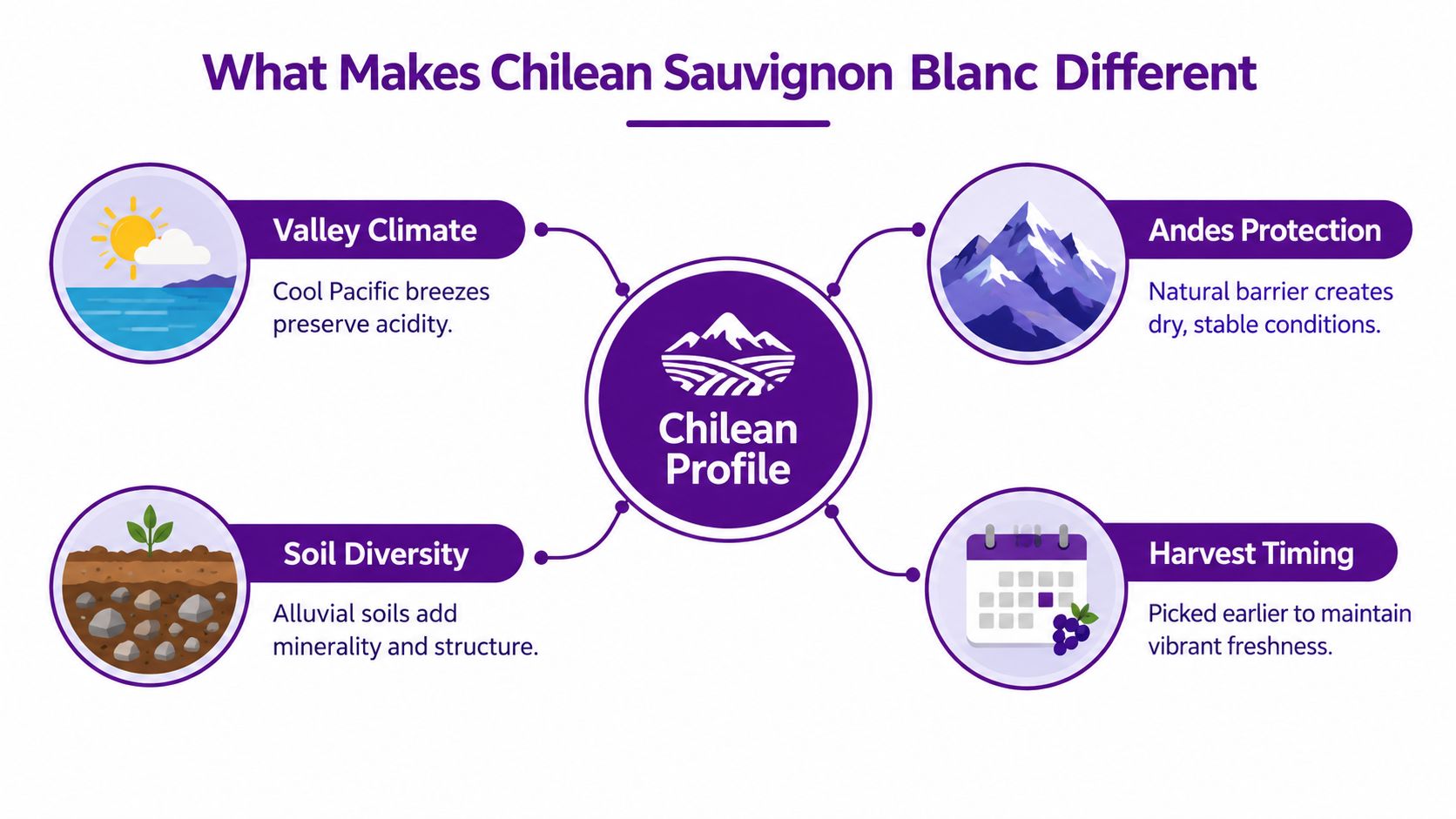
The Chilean style in plain English
If you like New Zealand Sauvignon Blanc for its passion fruit and loud tropical aromas, Chile may seem more restrained. That isn't a weakness. Chilean versions often offer lime, lemon, grapefruit, green herbs, and a clean mineral edge. They tend to work better at the dinner table because the acidity stays noticeable without the fruit taking over.
Practical rule: If you want a Sauvignon Blanc that refreshes first and performs with food second, start with a cool coastal Chilean valley.
The easiest way to understand the difference is to compare origin before producer. A bottle from a cooler coastal site can taste leaner and more saline. One from a warmer or more inland-influenced area can taste riper and softer. That old-world versus new-world comparison can also help you place Chile among the broader Sauvignon Blanc styles. Learn how place changes wine style before you shop by brand alone.
The Coastal Climate That Shapes the Flavor
The Humboldt Current is the main reason Chile's Pacific-facing vineyards can make such fresh Sauvignon Blanc. It carries cold water along the coast, cooling the air above it. Morning fog and afternoon sea breezes then move that cooling effect into valleys such as Casablanca, Leyda, and San Antonio.
That matters because grapes don't ripen at the same speed in every climate. In a cooler setting, the berries build flavor more gradually and hold on to more natural acidity. In simple terms, cool climate usually means higher acid and sharper flavors. Warmer inland sites can ripen fruit faster, which may create a rounder, softer wine with less of that crisp edge.
Why the ocean shows up in your glass
Acidity is the mouthwatering sensation that makes you want another sip. It gives Sauvignon Blanc its snap and keeps citrus flavors from feeling heavy. In comparative analyses, Leyda and San Antonio showed higher titratable acidity than inland Casablanca, while pH could remain similar across the sites. The comparative study of Chilean Sauvignon Blanc sites helps explain why a wine can taste sharper even when a basic pH reading doesn't separate the valleys dramatically.
The practical cause is temperature. Cooler conditions reduce the rate at which grapes use up organic acids as they ripen. The finished wine keeps a straighter, fresher shape, especially when the grower picks at the right moment.
That doesn't mean every coastal bottle tastes thin. It means the producer has more natural freshness to work with. The winemaking team can choose whether to preserve that direct, citrus-led character or build more texture through cellar decisions. A wine with malolactic fermentation, a process that softens some of the wine's sharper acidity, will feel different from one that keeps all its original bite.
Coastal does not mean one single style
Casablanca, Leyda, and San Antonio all receive Pacific influence, but they don't receive it in exactly the same way. Differences in temperature, wind, humidity, and sunlight change how quickly grapes ripen and which aromas become most obvious. Technical research on Chile's cool-climate valleys shows why the phrase “coastal freshness” is only a starting point, not a complete tasting note.
The useful shopping lesson is simple. Don't ask only whether a bottle is from Chile. Ask whether the label points to a cooler coastal valley, and then decide how much citrus, herb, fruit, or saline character you want.
Casablanca, Leyda, and San Antonio Compared
These three valleys are close enough to sit in the same conversation, but different enough to make side-by-side tasting worthwhile. Casablanca is the familiar benchmark. Leyda is often the sharper, more ocean-driven option. San Antonio can sit between those poles, combining freshness with a little more fruit and breadth.
| Valley | What you may notice | Choose it when you want |
|---|---|---|
| Casablanca | Citrus, green herbs, balanced freshness | A classic, versatile coastal style |
| Leyda | Lime, higher acidity, mineral or saline tones | A leaner, sharper, more maritime bottle |
| San Antonio | Citrus, herbs, freshness, with a touch more range | A middle ground between precision and fruit |
Casablanca
Casablanca is the valley to try first if you want a clear picture of Chilean Sauvignon Blanc. It has long been identified as a benchmark cool-climate region and remains an important center for premium Sauvignon Blanc. The Chilean wine regional guide from The Wine Society places Casablanca firmly in that role.
The style often lands in the middle. You may find lemon, grapefruit, fresh grass, and a clean finish without the wine becoming aggressively sharp. Casablanca is a good restaurant choice when the table has different preferences because it can handle seafood, salads, and lighter poultry without demanding one narrow food match.
Order Casablanca if you like: lemon, green herbs, and a wine that feels fresh but not severe.
Leyda
Leyda is the move for drinkers who want more tension. Its cooler coastal setting can preserve higher acidity, which gives the wine a straighter line across the palate. The profile may feel more mineral, saline, or lime-driven than a typical Casablanca bottle.
“Saline” sounds technical, but the idea is easy. It describes a subtle impression of saltiness or sea air, not actual salt in the wine. Leyda works especially well with oysters, ceviche, shellfish, and dishes where you want the wine to feel like a squeeze of lime.
Order Leyda if you like: wet stone, lime, sea air, and a crisp finish.
San Antonio
San Antonio gives you another version of the coastal equation. It can show the firm acidity associated with Pacific influence, but often offers enough fruit to keep the wine from feeling austere. That makes it a smart choice for someone who likes fresh wine but doesn't want a bottle that tastes too lean.
Use San Antonio when the meal includes herbs, grilled seafood, or mildly spicy food. It has the structure to stay lively and enough aromatic range to meet stronger ingredients.
Order San Antonio if you like: citrus, herbs, and a coastal style with a little more flexibility.
Best comparison exercise: Pour Casablanca, Leyda, and San Antonio with the same simple seafood dish. Taste the wines before eating, then taste them again with the food. The differences become much easier to notice.
Food Pairings That Actually Work
Chilean Sauvignon Blanc is at its best with food that has freshness, salt, herbs, or a little heat. Its acidity acts like a squeeze of lemon. It cuts through creamy textures, refreshes the palate after salty bites, and keeps spicy dishes from feeling heavy.
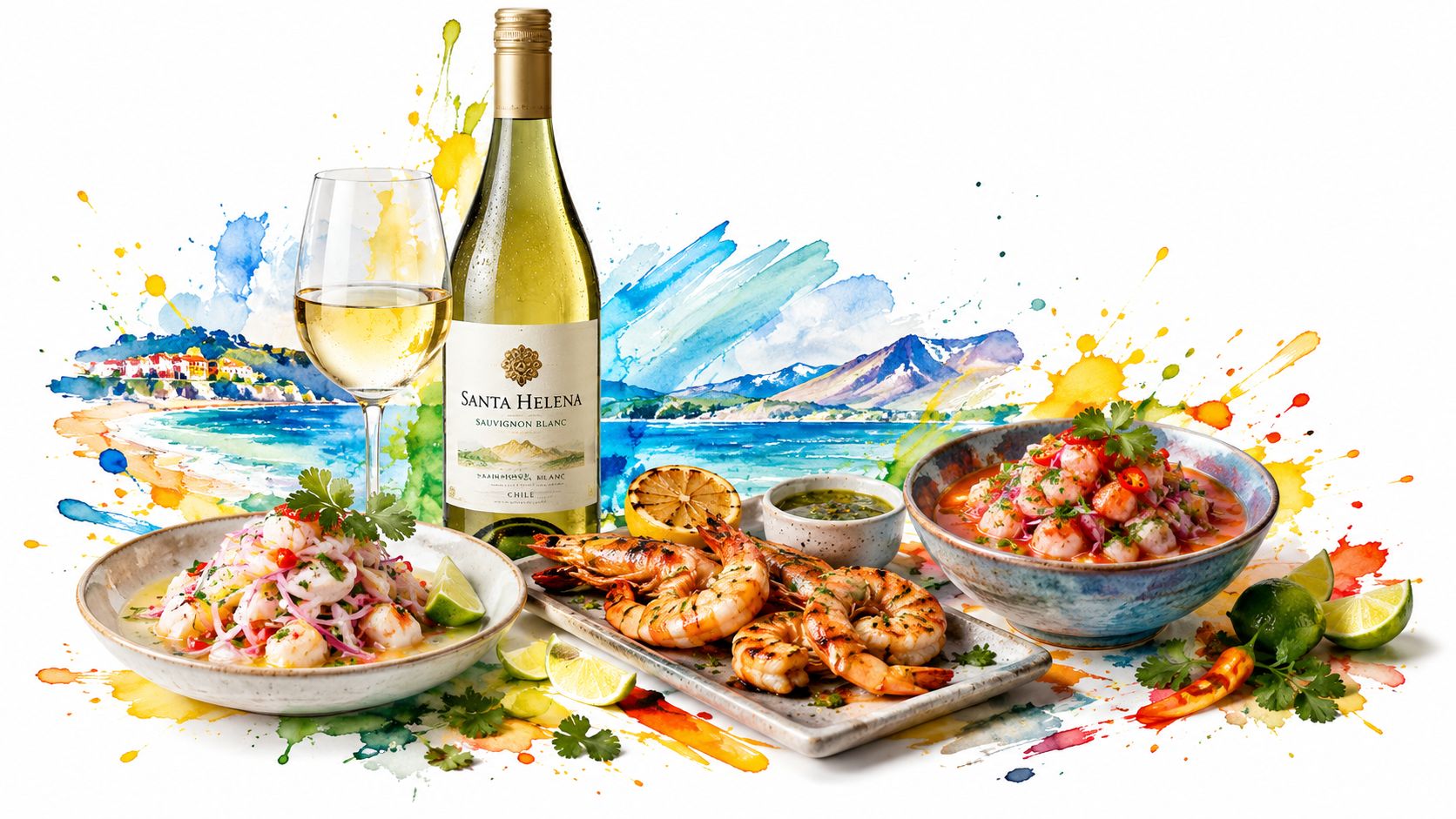
The easiest wins
Ceviche is the obvious match. The citrus marinade echoes the wine's acidity, while the wine's clean finish keeps the fish tasting bright. A sharper Leyda bottle can be especially effective here, while Casablanca gives you a slightly broader pairing.
Grilled shrimp also works because the char adds savory depth without overwhelming the wine. Add lime, herbs, or a light salsa, and the connection becomes even clearer.
Try these pairings when you want dependable results:
- Goat cheese salad: The creamy, tangy cheese meets the wine's citrus and herbal side.
- Grilled asparagus: The green vegetable character lines up with Sauvignon Blanc's fresh herbal notes.
- White fish with lemon: The wine reinforces the lemon while keeping the dish from feeling rich.
- Spicy Thai food: Freshness balances heat, especially when the dish includes lime, cilantro, or lemongrass.
For more practical pairing logic, use this guide to pairing wine with food without guessing.
Where the pairing can fail
Skip heavy steak, very sweet sauces, and intensely smoky barbecue. Those flavors can overpower a light, high-acid white. Very rich cream sauces can also make the wine seem thin unless the dish includes enough lemon, herbs, or another bright element.
Pair the wine with the sauce and seasoning, not just the protein. Grilled chicken with herbs is a better match than chicken covered in a sweet barbecue glaze.
A coastal Chilean Sauvignon Blanc also handles salty snacks well. Try feta, olives, pickled vegetables, or simple cured ham. The wine's acidity keeps the food from weighing down your palate, while the salt can make the fruit taste more generous.
The video below offers another quick visual guide to the style and its food-friendly character.
How to Spot a Good Bottle
You don't need to recognize every Chilean producer. You need a few label clues and a clear idea of the style you want.
Start with the place
Look for Casablanca, Leyda, or San Antonio on the front or back label. A named valley gives you more information than a bottle that says only “Sauvignon Blanc, Chile.” The word costa, meaning coast, can also point you toward a Pacific-influenced style, although the valley name is usually more useful.
A Chilean wine label won't always explain the exact vineyard conditions, so use the origin as your first filter. This guide to reading wine labels can help if the terminology feels crowded.
Match the label to your preference
- For lime, high acidity, and mineral character: Start with Leyda.
- For balanced citrus and herbs: Choose Casablanca.
- For freshness with a little more fruit: Try San Antonio.
- For a softer, riper impression: Be cautious with bottles that give no coastal clue and emphasize only broad regional labeling.
Look for wines that taste fresh rather than overly ripe or heavily oaked. Oak can add creamy, vanilla-like texture, but it can also cover the citrus and herbal character that makes this style useful. If you want the classic Chilean profile, choose a bottle where freshness seems to be the main point.
Chile has become an important source of Sauvignon Blanc. The USDA reported 14,316 hectares planted in 2021, making it the country's second most planted white variety. The USDA wine trade report gives useful context for the grape's scale in Chile.
Serve the bottle well chilled, but don't let extreme cold erase the aroma. Pour a small glass, taste it, and let it warm slightly if the fruit seems muted.
Your Next Step in Wine Confidence
The fastest way to understand Chilean Sauvignon Blanc is to stop treating the country as one flavor. Buy a bottle from a valley you don't usually choose, then compare it with your regular pick. If you normally drink a broad Chilean label, try Casablanca. If you already like Casablanca, move to Leyda for more acidity or San Antonio for a slightly broader coastal expression.
Taste the wines in this order:
- Smell before you sip. Look for citrus, herbs, green fruit, or a subtle saline impression.
- Take a small sip. Notice whether the acidity feels soft, direct, or sharply mouthwatering.
- Pair it with food. Try seafood, goat cheese, asparagus, or a dish with lime.
- Taste again. Food changes the wine. A bottle that seems lean on its own may become perfectly balanced at the table.
You don't need to memorize soil types or pronounce every vineyard name. You only need to connect a place with a sensation. Leyda means start looking for sharper and more saline. Casablanca points toward balance. San Antonio gives you a flexible middle ground.
The broader Chilean category is also moving beyond the idea of basic, inexpensive white wine. Wine Spectator reported that Chilean exports to the United States grew 12.5% in the year covered, bottled-wine shipments rose by more than 25%, and wines priced between $10 and $20 represented 17% of volume and almost 30% of value. Sauvignon Blanc was specifically identified as a strong-growth category in that coverage. The trade discussion of Chile's move toward stronger value supports a useful shopping point: don't assume a Chilean bottle is only an entry-level choice.
Try one bottle for casual drinking and another for dinner. Keep a short note with three words, such as “lime, herbs, salty,” or “citrus, soft, peach.” Those notes will guide your next purchase better than a long list of tasting terms.
When you want help with a specific menu, bottle, or valley, use the Personal Sommelier rather than guessing from the label alone. You can also start with the free wine quiz if you want a simple way to understand which styles suit you.
A to Wine offers short daily wine lessons, practice quizzes, and an AI sommelier for real questions about bottles, regions, and food pairings. Use what you learn about Chilean Sauvignon Blanc to build a more personal wine path, then visit A to Wine and start exploring.