Do You Refrigerate Rose Wine
Yes, refrigerate rosé before serving, but don't pour it ice-cold straight from the fridge. Chill it, then let it sit about 30 minutes at room temperature before you open the bottle. That one move keeps the wine refreshing without crushing the fruit.
The popular advice gets one thing right, rosé belongs cold. It gets the rest wrong when it treats every bottle the same. A light, fruity rosé wants a different touch than a fuller, darker, oak-influenced one, and an opened bottle needs a different plan than a sealed one.
Table of Contents
- The Short Answer on Refrigerating Rosé
- Why Temperature Changes How Rosé Tastes
- How Cold Each Rosé Style Should Be
- Fast Ways to Chill a Bottle When You're Short on Time
- What to Do With Rosé After You Open the Bottle
- Rosé Chilling Myths Worth Dropping
- Your Simple Rosé Chilling Routine
The Short Answer on Refrigerating Rosé
Do you refrigerate rosé wine? Yes. Just don't serve it straight from the back of the refrigerator. A peer-reviewed review on chilled wine service places most white and rosé wines at 4–10°C (39–50°F), which is a little warmer than a typical fridge, so the practical move is to chill the bottle and then let it sit at room temperature for about 30 minutes before pouring. Source
That small rest matters. Rosé is about freshness, fruit, and a little snap. If you serve it too cold, it can feel shy and flat. If you serve it too warm, the alcohol shows up and the wine loses its clean edge.
Practical rule: chill rosé first, then give it a short rest before pouring. Cold is the setup. The glass is where the wine should actually show up.
The rest of this comes down to two questions. How cold should your style be, and what should you do once the bottle is open? Get those right, and you'll stop guessing every time you grab a pink bottle for dinner, picnic, or a random Tuesday.
Why Temperature Changes How Rosé Tastes
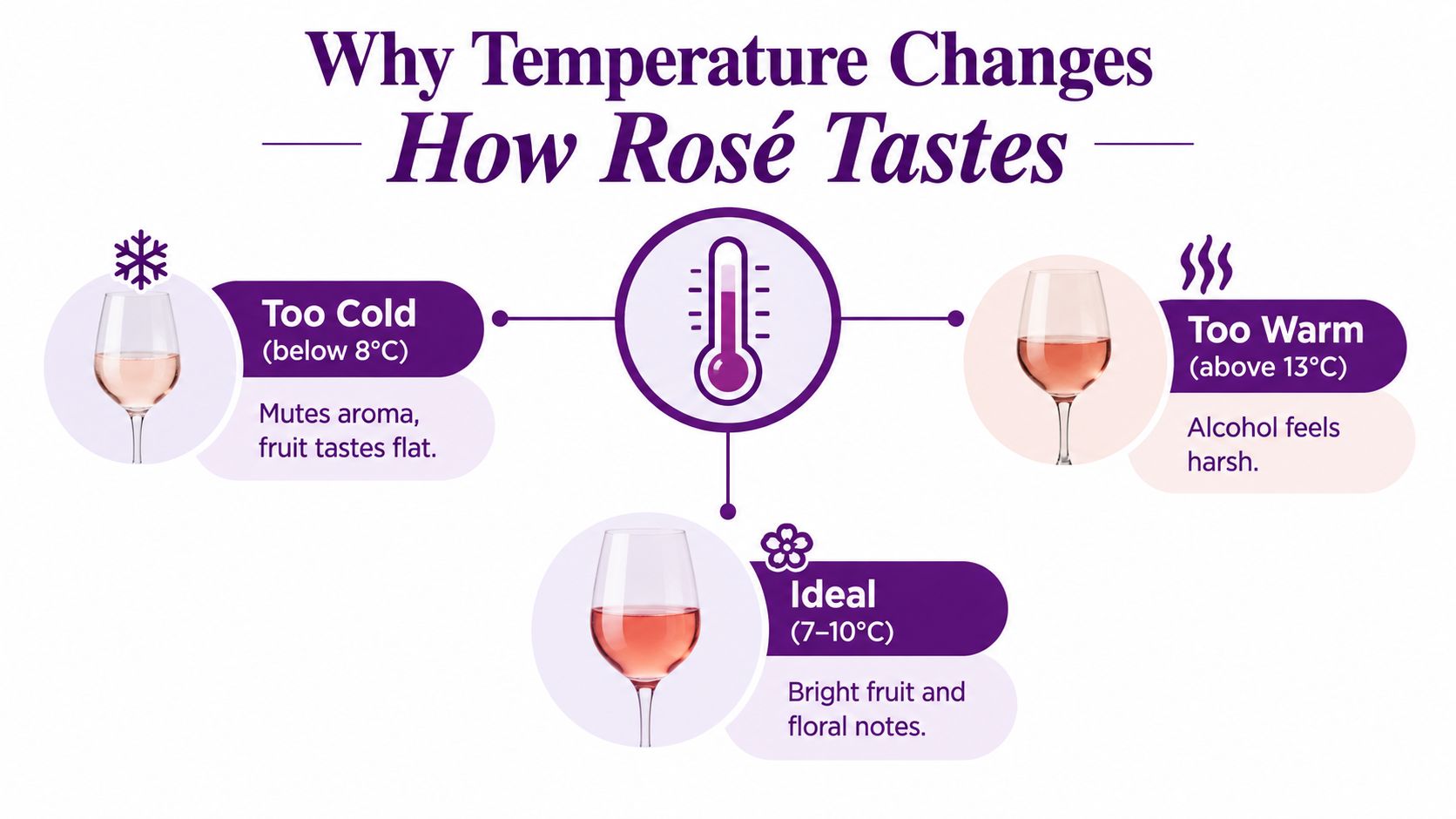
Cold changes what your nose and tongue pick up. That's the whole game. Very cold wine can mute fruit and floral aromas, while warmer wine can taste softer and less refreshing. Rosé sits right in that middle zone, which is why refrigerator cold is useful, but ice-cold is too far.
What the sensory tests point to
A 2008 sensory study tested wines at 4°C, 10°C, and 18°C with a trained panel, and serving temperature significantly affected white-wine aroma. A separate 2020 study found that participants identified the TDN aroma more easily in samples cooled to about 11 ± 1°C. Together, those findings make the same point from two angles, temperature doesn't just change how cold a wine feels, it changes what aromas you notice and how clearly you notice them. Source
That's why 8–12°C (46–54°F) is such a useful target for many rosés. It's cool enough to feel crisp and keep the alcohol in check, but not so cold that the fruit and floral notes go missing. Picture fog over a meadow. You can still see the shape, but the details blur.
What this means at the table
If a rosé smells quiet right out of the fridge, don't panic. Let it warm a little in the glass. If it suddenly tastes more like strawberries, grapefruit, herbs, or rose petals, that's the temperature doing its job.
Use that as your cue, not some rigid rule. Cold isn't the goal by itself. Controlled cold is the goal. If you want a sharper read on acidity, the A to Wine guide to identifying wine acidity is a solid next step.
How Cold Each Rosé Style Should Be
Not every rosé wants the same treatment. A simple, fruity bottle and a fuller, more layered bottle don't behave the same way in the glass. That's why one blanket temperature range always feels too crude.
Match the chill to the style
Simple, fruity rosés are commonly served around 7°C (45°F), while more complex rosés can benefit from being served 1–2°C warmer. Very cold wine suppresses aroma and flavor. Slightly warmer wine tastes softer and less refreshing, which is exactly why some fuller rosés feel better with a little more breathing room. Source
A standard refrigerator is usually colder than the ideal drinking range. That means a bottle that's been parked in the fridge for a while may need a short pause before pouring. And forget “room temperature” as a universal target. A warm kitchen, a cool cellar, and an air-conditioned dining room are not the same thing at all.
| Rosé Style | Target Temperature | What to Do Before Pouring |
|---|---|---|
| Light, fruity Provence-style rosé | About 7°C / 45°F | Chill in the fridge, then pour soon after a short rest |
| Simple, lightly sweet rosé | About 7°C / 45°F | Serve cold, but not straight from the coldest back shelf |
| Fuller-bodied or oak-influenced rosé | About 8–9°C / 46–48°F | Take it out a little earlier so the aroma opens up |
The fast way to choose
If the rosé is pale, zippy, and easy-drinking, keep it colder. If it's darker, rounder, or has a little oak behind it, ease up on the chill. That's the whole decision. If you like sparkling styles too, the A to Wine guide to sparkling wine types helps put that style contrast in context.
Simple rule: the lighter the rosé, the colder it can be. The more texture and depth it has, the sooner you should take it out of the fridge.
Fast Ways to Chill a Bottle When You're Short on Time
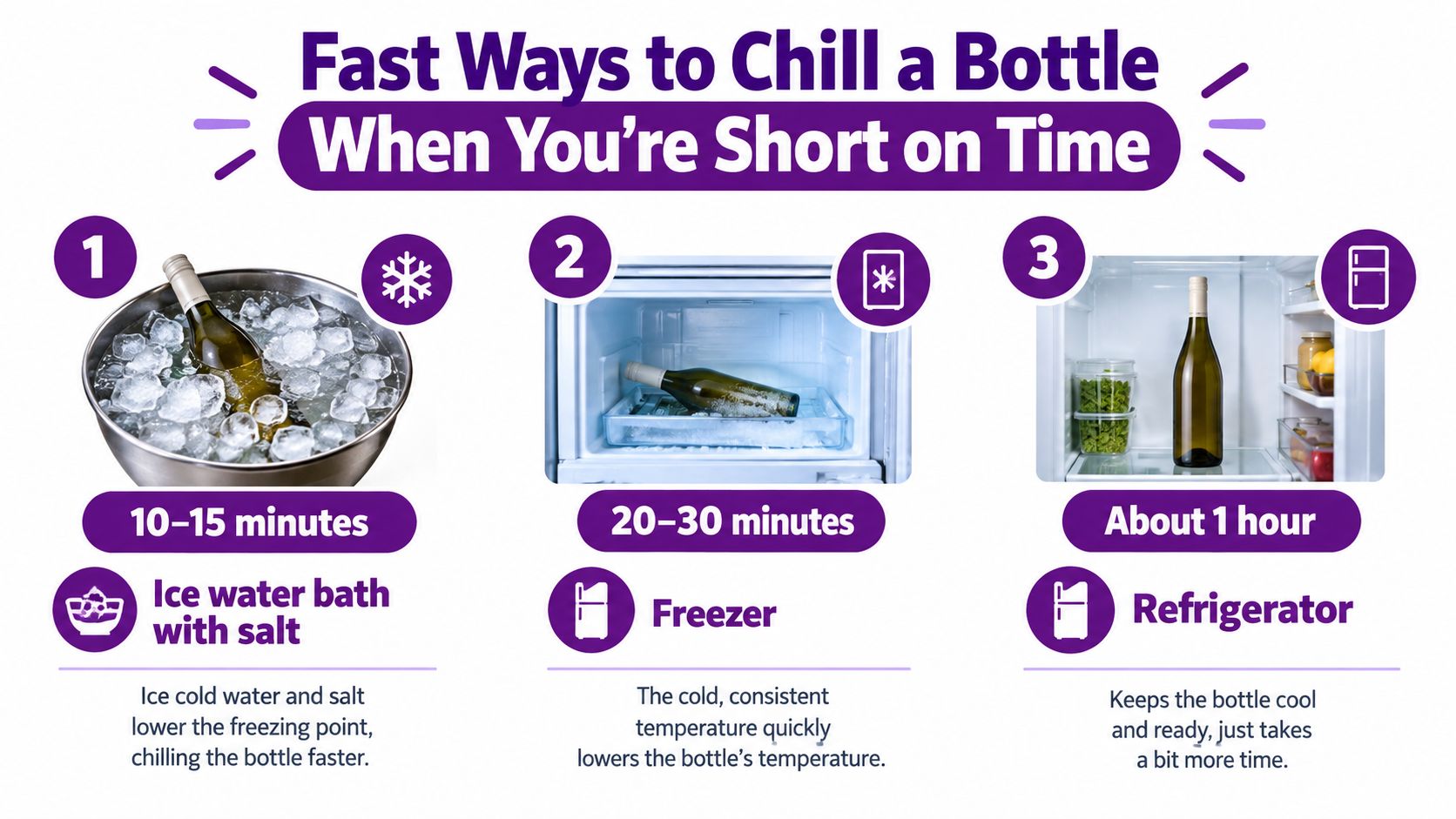
If guests are coming and the bottle is still warm, use the fridge, freezer, or an ice bath. Don't overthink it. A room-temperature bottle can get drinkable in about one hour in the refrigerator, 30–40 minutes in the freezer, or roughly 15 minutes in an ice bath. One expert recommendation puts rosé's target range at 40–45°F. Source
What actually works fastest
An ice bath wins because water pulls heat out faster than air. If you can add ice and water together, do it. That contact around the glass cools the bottle far more efficiently than just setting it on a shelf and hoping.
The freezer is fine if you're in a hurry, but it's a timer situation. Wine expands as it freezes, so a bottle left too long can push out the cork, pop the closure, or crack the glass. Set a timer every time. No exceptions.
- Ice water bath: fastest controlled option when dinner's already happening.
- Freezer: useful in a pinch, but only if you're watching the clock.
- Refrigerator: safest and simplest for planned chilling.
The last move before pouring
If the wine still feels a little tight after chilling, pour a taste and let it sit in the glass for a few minutes. That tiny warm-up can open the aromas without losing the chill that makes rosé work in the first place.
What to Do With Rosé After You Open the Bottle
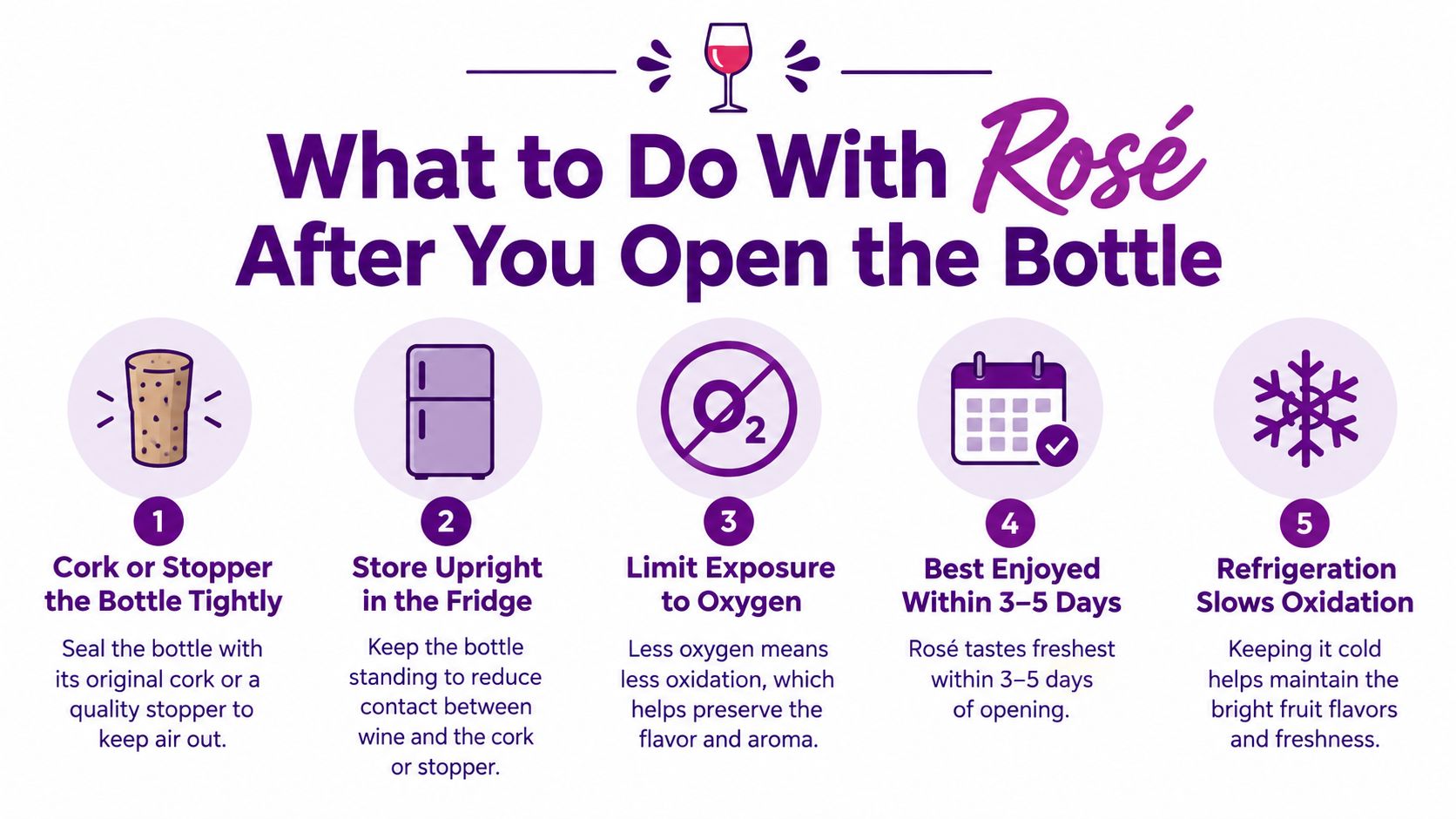
Opened rosé needs the fridge. Cold slows oxidation, the oxygen-driven change that strips fresh fruit and leaves the wine tasting flat. Reseal it right away, keep the bottle upright, and use a proper stopper if you have one.
Headspace matters more than people think
A nearly full bottle holds up better than a half-empty one because less oxygen sits above the wine. More headspace means faster flavor loss. After a long dinner and a second pour, the bottle needs more care than one that was opened and finished quickly.
Sparkling rosé is different. The bubbles disappear fast, so it needs a sparkling stopper that can hold pressure. A regular cork pushed back in is a weak fix. Cans and bag-in-box formats also behave differently, since the remaining wine is protected in other ways.
Use the bottle type to decide how fast to drink it
For still rosé, plan to finish the bottle within 3–5 days, though it usually tastes best sooner. For sparkling rosé, use it within 1–3 days with a sparkling-wine stopper, because the carbonation fades quickly. Source
Best habit: seal it tight, store it upright in the fridge, and drink the half-empty bottle before the nearly full one. Cold helps, but the bottle's headspace decides how much quality is left to save.
Rosé Chilling Myths Worth Dropping
Myth one, ice-cold rosé is always best. No. Extreme cold mutes the fruit and floral notes rosé is supposed to show. If the wine smells blank, it's probably too cold, not too warm.
Myth two, room temperature means something useful. It doesn't. A hot kitchen and a cool apartment are miles apart. “Room temperature” sounds handy, but it's too vague to guide a bottle you want to enjoy tonight.
Myth three, every rosé format follows the same bottle rules. Wrong. A can doesn't behave like a glass bottle, and bag-in-box doesn't either. The packaging changes how much oxygen gets at the wine after opening.
Myth four, the fridge ruins wine. Not for near-term drinking. Stable cool storage is fine. Repeated swings from very cold to warm are harder on the wine than just keeping it cold and using it soon. For unopened bottles you plan to drink soon, the refrigerator is a perfectly sensible place to keep rosé.
Your Simple Rosé Chilling Routine
Buy the rosé, refrigerate it, take it out about 30 minutes before pouring, and start a little earlier for fuller styles. Then taste it in the glass as it warms and adjust from there. That's the whole routine, and it beats trying to memorize one rigid number for every pink bottle on the shelf.
If you want to build this kind of instinct faster, the free quiz at A to Wine is a quick place to start, and the wine service basics guide pairs well with this topic. The essential skill is simple. Chill on purpose, then taste on purpose.
A to Wine helps you make that kind of call without guessing. You get short daily wine lessons, quick practice quizzes, and an AI sommelier that turns confusing bottles into simple choices. If you want to feel calmer the next time someone hands you a rosé, visit A to Wine and start there.