8 Duck Wine Pairings That Actually Work
Duck wine advice usually stops at "pour a Pinot Noir." That works for one dish and fails for the other seven. How the duck is cooked decides the bottle, so reach for Pinot Noir with classic roast or seared breast, off-dry Riesling with sweet and spicy sauces, and sparkling rosé with crispy duck.
Stop matching wine to the bird alone. Rich fat wants bright acidity, the tart snap that makes your mouth water. Smoky meat wants a savory wine. Sweet sauce wants a wine that stays smooth next to sugar. Crispy skin wants bubbles.
Duck sits between poultry and red meat, which means chicken rules undersell it and steakhouse rules overpower it. The eight matches below follow the cooking method and the dominant flavor on the plate, from roast and confit to Peking duck and barbecue. You'll get what to buy, what it tastes like, and how to serve it.
If you're still building confidence, start with the free 2-minute wine quiz to find your level. Then jump straight to the pairing that matches tonight's duck.
Table of Contents
- 1. Pinot Noir with Roast Duck Breast
- 2. Off-Dry Riesling with Peking Duck
- 3. Beaujolais (Gamay) with Duck Breast and Fruit Sauce
- 4. Cahors (Malbec) with Duck Confit
- 5. Northern Rhône Syrah with Smoked or Grilled Duck
- 6. Zinfandel with Sticky Barbecue Duck
- 7. Sparkling Rosé or Champagne with Crispy Duck
- 8. Chianti Classico (Sangiovese) with Herb-Roasted Duck or Duck Ragù
- 8 Duck Wine Pairings Compared
- Make Your Next Duck Dinner Easier
1. Pinot Noir with Roast Duck Breast
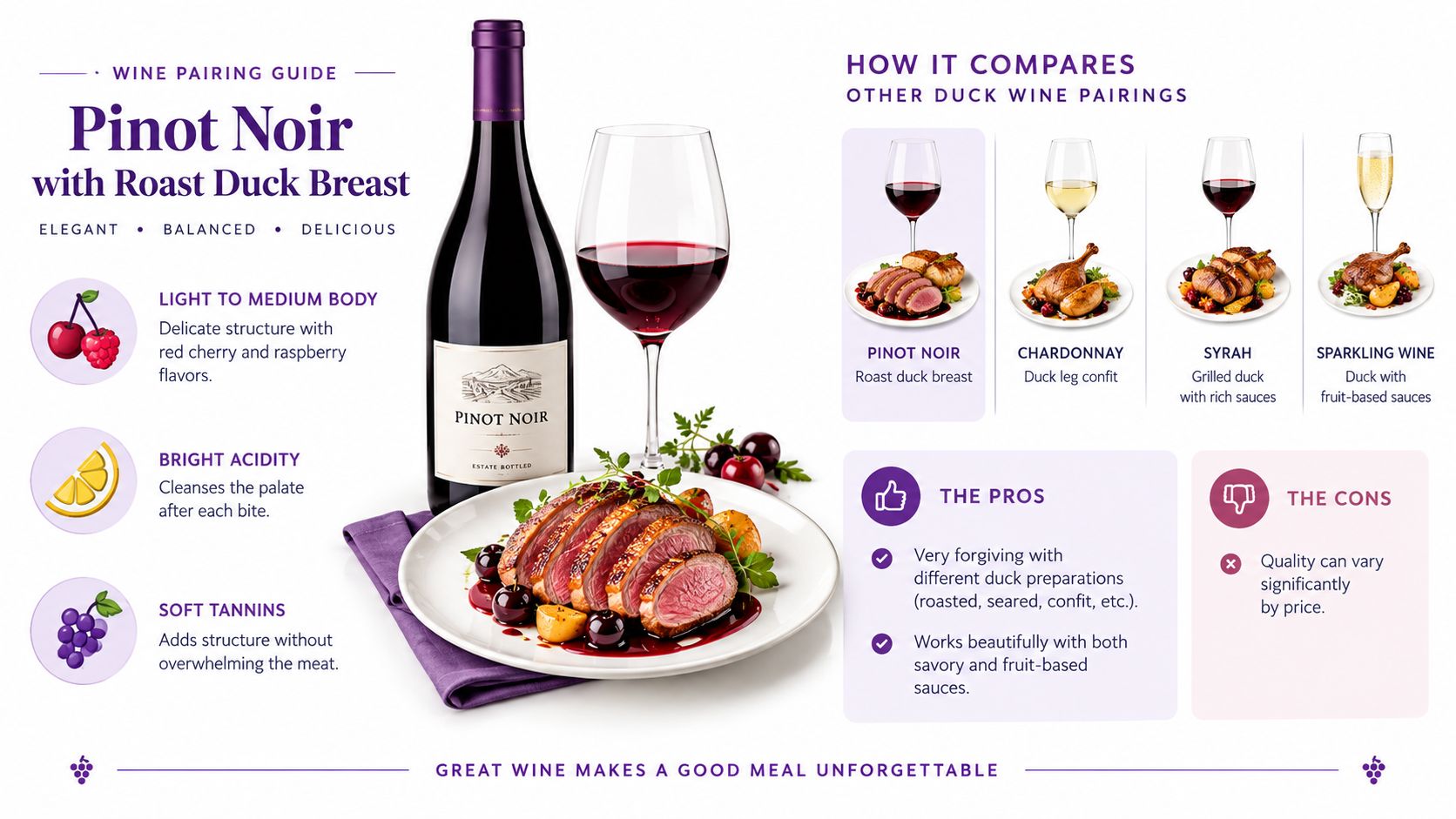
Order Pinot Noir first when duck breast is seared pink in the center. It's the safest classic for a reason. You get cherry and raspberry fruit, medium body, and enough acidity to refresh your mouth after fatty skin.
Duck works as a bridge between poultry and red meat, which is why medium-bodied, high-acid reds are the established match for roast duck and seared breast. Very light whites disappear. Heavily tannic reds bulldoze the meat. Pinot sits in the middle.
What to Put on the Plate
Think seared duck breast with cherry or blackberry sauce. Or roast duck with thyme and garlic. Duck with mushrooms and a light jus also works, because Pinot often has a soft earthy side under the fruit.
Tannin is the drying grip you feel on your tongue and gums in red wine. Pinot keeps that grip low to medium. It gives structure without fighting delicate meat.
Practical rule: If the breast is pink and the sauce is light, don't reach for a bigger red. Reach for a fresher one.
- Look for Burgundy or Oregon: Both give you that clear fruit-and-earth style without heavy oak.
- Serve it slightly cool: Aim for 60 to 65°F so the fruit stays fresh against the fat.
- Go brighter for fattier duck: Pick a Pinot that tastes tart and lively, not soft and jammy.
For a deeper walk-through of this classic match, read this guide to how to pair wine with duck and compare a Burgundy style with an Oregon bottle side by side.
2. Off-Dry Riesling with Peking Duck
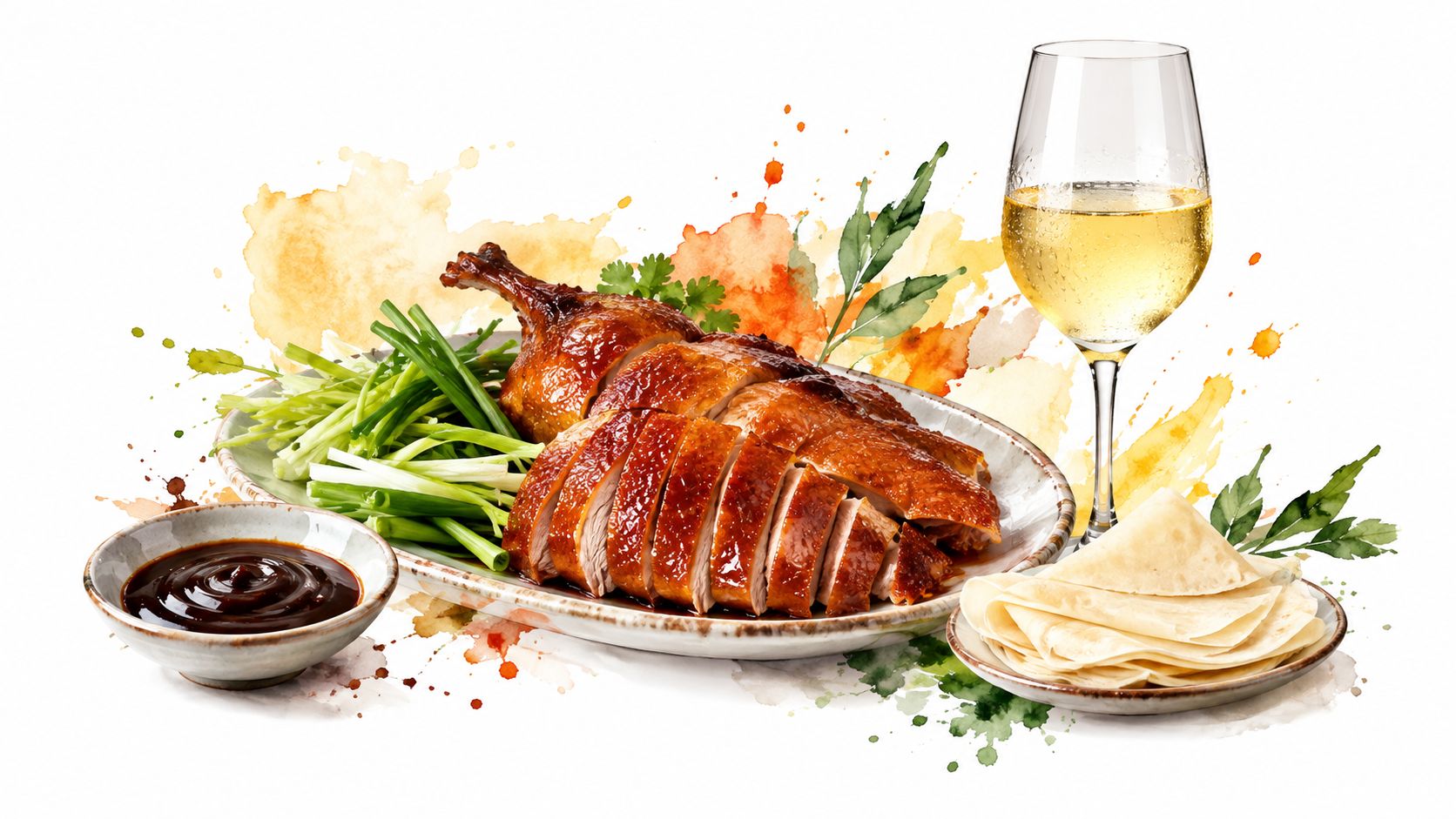
Peking duck breaks the red wine rule. You've got crispy skin, rich fat, salty meat, and sweet hoisin in one bite. A dry, tannic red can taste hard and bitter next to that sauce.
Pour off-dry Riesling instead. Off-dry means a little leftover sugar stays in the wine. That touch of sweetness mirrors hoisin and plum sauce, while Riesling's high acidity cuts the fat and keeps each bite feeling clean.
When This Bottle Wins
Use it for Peking duck with hoisin and scallions wrapped in pancakes. Use it for duck tacos with sweet chili glaze. Use it for five-spice duck with a fruit reduction, where warm spice and sweetness show up together.
Sweet and salty sauces change the job. The wine has to handle the sauce first, then the meat. Riesling does both without adding drying tannin.
- Read the back label: Look for off-dry, semi-dry, or medium-dry so you don't grab a bone-dry bottle by mistake.
- Serve it cold: Pour at 45 to 50°F for the sharpest, most refreshing bite against crispy skin.
- Start with Germany or the Finger Lakes: Both regions in New York and Germany make reliable, high-acid styles that are easy to find.
Taste the wine alone first. You should notice sweet fruit up front, then a tart finish. That sweet-then-fresh swing is exactly what Peking duck needs.
3. Beaujolais (Gamay) with Duck Breast and Fruit Sauce
Fruit sauce changes everything. Cherry, plum, and orange make a dry red taste more bitter than it really is. You need a red that's juicy, low in tannin, and friendly, not one that's trying to impress you with power.
That's Beaujolais, made from the Gamay grape. It tastes like fresh red berries and sometimes a little violet or spice. It feels light at the table, even with rich duck underneath.
Sauce can outweigh the meat itself, since sweet fruit or honey can make a dry red taste harder, more bitter, and more alcoholic. Gamay avoids that trap because its tannin stays soft. Its fruit also echoes what's already on the plate.
Plates That Love Gamay
Try duck breast with a cherry gastrique, which is a sweet and tart fruit sauce. Try roast duck with orange and honey glaze. A warm duck salad with berries and goat cheese works too, because the wine stays fresh next to tangy cheese.
- Look for Beaujolais Cru: These come from ten named villages and often bring more depth than basic Beaujolais.
- Chill it briefly: Give the bottle 15 to 20 minutes in the fridge to bring out the fruit.
- Match fruit to fruit: Cherry and berry sauces are the clearest win, so start there if you're unsure.
Don't serve Gamay warm from a kitchen counter. A slight chill makes it taste alive. Without it, the wine can feel flat next to duck fat.
4. Cahors (Malbec) with Duck Confit
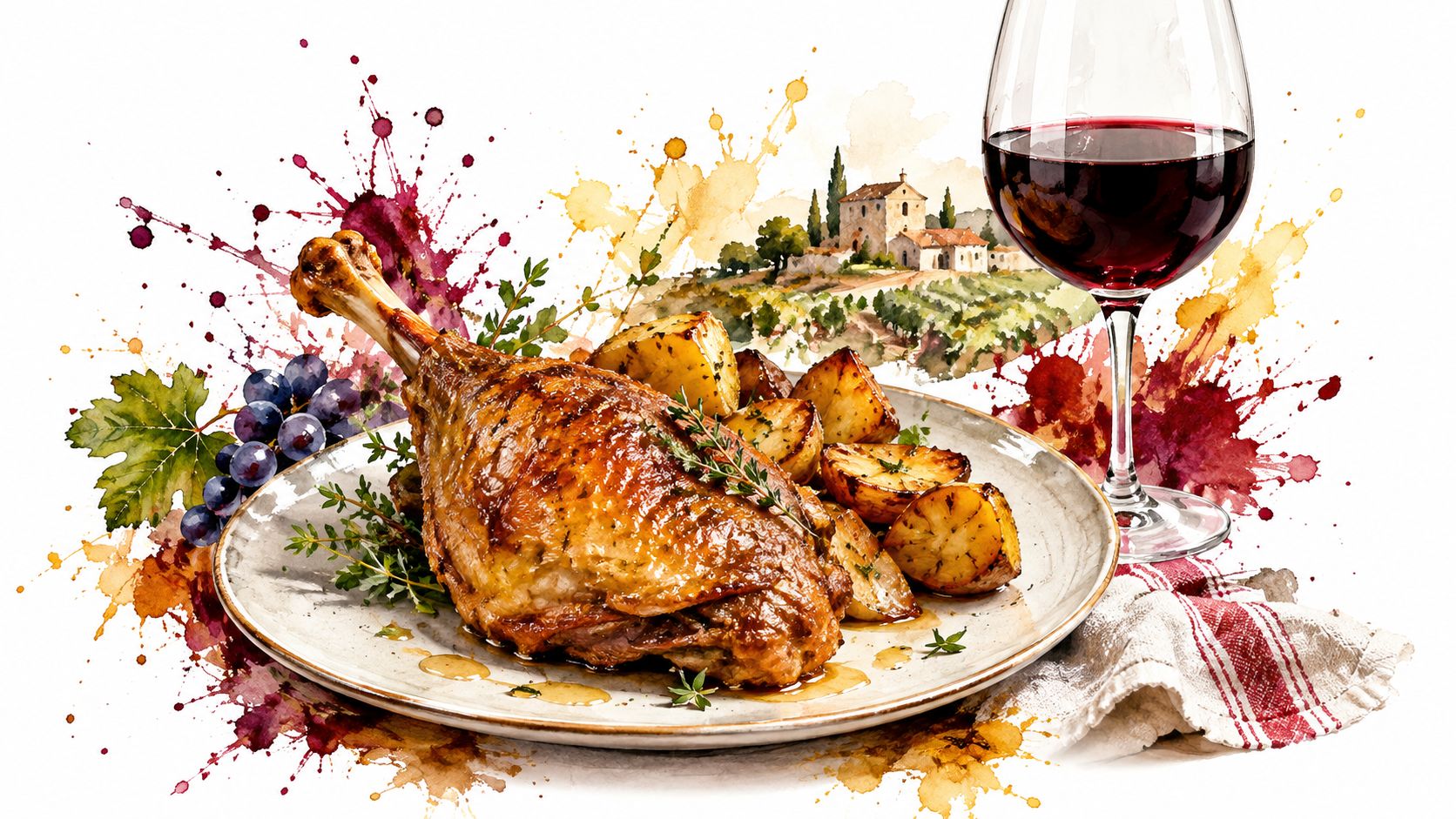
Confit is a different animal from seared breast. Duck leg cooks slowly in its own fat until it's tender, salty, and intense. A delicate Pinot can get lost here.
Pour Cahors, a dark red from southwest France made mainly from Malbec. Expect dark fruit, earth, and firm tannin. That grip is useful now, because fat softens how harsh tannin feels and the wine's structure stands up to slow-cooked meat.
Built for Slow Cooking
This is your bottle for duck confit with crispy potatoes. It's also right for cassoulet with duck leg and beans. Braised duck with prunes and red wine works because the dark fruit in the glass matches the dark fruit in the pot.
Preparation matters more than the species alone, because richer preparations can support moderate tannin since fat softens tannin's astringent perception. Confit has that fat. Lean, pink breast usually doesn't.
- Decant a young bottle: Give it 30 minutes of air so the grip relaxes before dinner.
- Serve below room temperature: Aim for 60 to 65°F, not warm and heavy.
- Check the label: Look for the name Cahors to be sure you're getting the French region, not any Malbec.
If you want a visual shortcut for this fat-and-tannin logic, keep this wine pairing chart for everyday meals nearby when you plan the menu.
5. Northern Rhône Syrah with Smoked or Grilled Duck
Smoke wants smoke. When duck hits a grill or a smoker, its flavor turns darker and more savory. A soft, fruity red tastes thin next to char and pepper.
Choose Northern Rhône Syrah from France. It brings black pepper, dark berries, and a savory, almost meaty edge. Those flavors don't just survive grilled duck. They match it bite for bite.
Order It with Bold, Dry Heat
Pour it with grilled duck breast with a dry rub. Pour it with smoked duck and a barbecue glaze that isn't too sweet. Duck with black pepper and balsamic also fits, because the wine already speaks pepper.
The tannin here is firm but balanced. That's fine for grilled skin and concentrated meat. It would be too much for a delicate breast with a light jus, so don't swap this bottle into every duck dinner.
Richer duck doesn't always need a bigger red. It needs the right kind of savor, and Syrah brings pepper instead of just weight.
- Look for Crozes-Hermitage, Saint-Joseph, or Cornas: These Northern Rhône names point you to the peppery style you want.
- Serve at 60 to 65°F: Cooler service keeps the dark fruit fresh and the alcohol in check.
- Spend less with a swap: Syrah from Australia or California often costs less, but expect a bolder, riper style.
Take one bite of the charred edge, then sip. You should taste pepper and smoke line up. That's your confirmation the pairing is working.
6. Zinfandel with Sticky Barbecue Duck
Sticky sauce is loud. It's sweet, smoky, and often a little spicy. A lean, earthy red will taste sour and mean next to it.
Go bigger and fruitier with Zinfandel, a bold red often from California. It brings ripe berry flavor, warm spice, and sometimes a touch of sweetness. That ripe fruit meets barbecue sauce on its own level instead of fighting it.
Where Zinfandel Makes Sense
Serve it with duck legs in a sticky barbecue glaze. Serve it with duck sliders and spicy slaw. Grilled duck with peach or plum sauce works for the same reason, since stone fruit and ripe berries get along.
Watch the heat, though. A very high-alcohol Zinfandel can make chili spice burn harder. The sauce should be sticky and smoky first, fiery second.
- Check the alcohol on the label: Lower numbers usually feel more balanced at the table with spice and sugar.
- Serve it slightly cool: Pour at 60 to 65°F so the fruit tastes juicy, not hot.
- Start with Sonoma or Lodi: Both give you the classic California style in different price ranges.
This is the fun pairing, not the formal one. Put the bottle on the picnic table. Let people build their own sliders. Don't overthink a wine that's built for big flavor.
7. Sparkling Rosé or Champagne with Crispy Duck
Crispy skin is really about texture. It's salty, fatty, and crackling. Still wine coats your mouth. Bubbles scrub it clean.
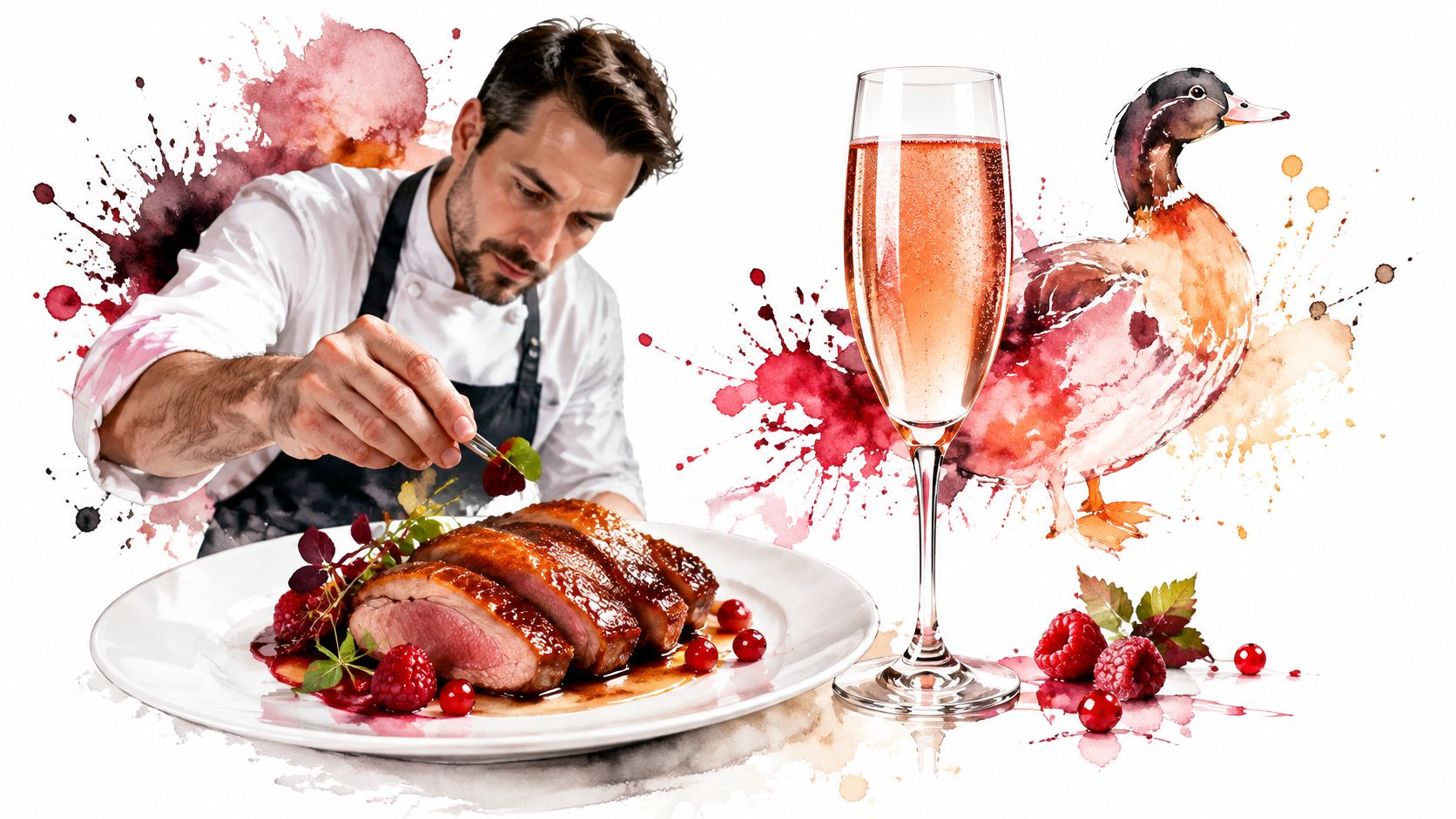
Pour sparkling rosé or Champagne. The acidity and fizz cut through fat after every bite. Sparkling rosé adds red fruit like strawberry and raspberry. Champagne brings toasty, bready flavor from aging on its yeast.
The Easiest Party Choice
Use bubbles for crispy duck skin with salt and pepper to start the meal. Use them for duck spring rolls with plum sauce. Even a duck and berry tart works with rosé, because the wine's fruit stays in the same family.
This is also your safest pick when the table has mixed dishes. One guest has spring rolls, another has roast duck, a third ordered something spicy. A dry sparkling wine handles all three better than one specific red.
- Know what Champagne means: Real Champagne comes from the Champagne region of France, while sparkling wines from Italy or Spain can work well for less.
- Chill it, don't freeze it: Serve cold but not ice cold, so the fruit and toast flavor still show.
- Pick dry or brut for savory food: Brut on the label tells you the style is dry, which keeps salty duck tasting clean.
If you only remember one trick, remember this one. Fat plus salt plus bubbles rarely fails.
8. Chianti Classico (Sangiovese) with Herb-Roasted Duck or Duck Ragù
Tomatoes and herbs pull duck in an Italian direction. The dish stops tasting purely rich and starts tasting bright, savory, and a little rustic. Your wine should do the same.
Pour Chianti Classico, made from Sangiovese. It gives you bright cherry fruit, dried herbs, and firm acidity. That acidity matches tomato sauce. The tannin gives structure without making the wine feel heavy.
Made for the Sauce Pot
This is the bottle for duck ragù over pappardelle, where wide pasta catches slow-cooked meat and sauce. It's right for herb-roasted duck with rosemary and olives. Duck with tomatoes and white beans also works, because beans and herbs love Sangiovese's savory side.
Le Cordon Bleu's guidance makes the structural point clearly, since Pinot Noir is the benchmark for seared breast but any alternative needs acidity and enough body for the bird and its sauce. Chianti Classico meets that test for tomato-based duck. It has the acid and the body, just with an Italian accent.
- Look for Chianti Classico: That label points to the core area and usually means higher quality than basic Chianti.
- Serve at 60 to 65°F: A slight chill keeps the cherry fruit bright against rich pasta.
- Decant a young bottle: Give it 20 to 30 minutes so the herbs and fruit open up.
The same acidity logic helps beyond duck, which is why this guide to wine pairing for pork chops is a useful next read for other rich, savory meats.
8 Duck Wine Pairings Compared
| Wine pairing | Best duck style | Key profile | 📊 Pairing result | 💡 Tip or caveat |
|---|---|---|---|---|
| Pinot Noir | Roast or seared duck breast; cherry sauce | Light to medium-bodied; red fruit, earthy notes, bright acidity, soft tannins | ⭐ Versatile match for savory or fruit-based sauces | Serve slightly cool; inexpensive bottles may taste thin |
| Off-Dry Riesling | Peking duck; sweet, spicy, or hoisin sauces | Light-bodied; gentle sweetness, crisp acidity, apple and peach | ⭐ Balances salty, sweet, and spicy flavors; refreshes after fatty skin | Serve cold; may seem too sweet alongside smoky duck |
| Beaujolais (Gamay) | Duck breast with cherry, plum, or orange sauce | Light-bodied; juicy red fruit, low tannins, fresh acidity | ⭐ Easy-drinking match for fruit sauces and casual meals | Chill briefly; can lack depth with very rich duck |
| Cahors (Malbec) | Duck confit or cassoulet | Medium to full-bodied; dark fruit, earthy notes, firm tannins | ⭐ Stands up to rich, slow-cooked duck and hearty sides | Decant young bottles; can overwhelm lighter dishes |
| Northern Rhône Syrah | Smoked or grilled duck | Medium to full-bodied; pepper, blackberry, smoke, savory notes | ⭐ Complements char, smoke, and bold seasonings | Serve slightly cool; may overpower delicate preparations |
| Zinfandel | Sticky barbecue duck or duck with fruit glaze | Medium to full-bodied; ripe berries, spice, often higher alcohol | ⭐ Matches sweet, smoky, and bold sauces | Choose a moderate-alcohol bottle to avoid a heavy pairing |
| Sparkling Rosé or Champagne | Crispy duck, spring rolls, or fatty duck skin | Light to medium-bodied; bubbles, bright acidity, red fruit or toast | ⭐ Cuts through richness and suits festive meals | Choose a dry or brut style; strong spice can dominate |
| Chianti Classico (Sangiovese) | Herb-roasted duck or duck ragù | Medium-bodied; sour cherry, herbs, high acidity, firm tannins | ⭐ Pairs well with tomato-based, savory, and herb-heavy dishes | Decant young bottles; acidity may clash with creamy sauces |
Make Your Next Duck Dinner Easier
Forget the bottle's reputation. Start with the cooking method. Then name the sauce's dominant flavor. Then match body, acidity, and tannin to what's on the plate.
Duck is never one flavor. A pink seared breast is delicate and only moderately fatty. Confit is salty, slow-cooked, and loaded with rendered fat. Peking duck adds sugar and spice. Barbecue duck adds smoke and sticky sweetness.
So shop with three questions.
First: is the dish sweet, spicy, smoky, or plain savory? Sweet and spicy push you toward off-dry Riesling or juicy, low-tannin reds. Smoky pushes you toward Syrah. Plain savory roast pushes you toward Pinot Noir or Chianti Classico.
Second: how fatty is the bite? Crispy skin and confit need more acidity to refresh your mouth. That's why sparkling wine works so well, and why a soft, low-acid bottle tastes tired by the third glass.
Third: how much tannin can the dish take? That drying grip in red wine gets softened by fat, but only to a point. Crisp skin, salty confit, lean pink breast, and reduced sauce do not handle tannin the same way. Freshness and moderate alcohol beat raw power almost every time.
Service is your last, cheap advantage. Serve reds slightly cool, around 13 to 17°C according to that same guidance, so they stay fresh against fat. Serve Riesling and bubbles colder. Use a normal wine glass with room to swirl. Don't fill it to the top.
Stuck between two bottles at the shop? Pick the one with more acidity and less tannin. That tiebreaker saves more duck dinners than any famous region name. A wine that's a touch too fresh still works. A wine that bulldozes the meat can't be fixed.
For help before you buy, use the A to Wine Personal Sommelier and describe your exact dish, sauce and all; 5,700+ learners rate it 4.9/5. Then pick one pairing from this list for your next duck dinner, serve it at the right temperature, and taste the difference the sauce-first rule makes.
Ready to stop guessing at the wine shelf when duck is on the menu? A to Wine gives you short daily lessons, practice quizzes, and an AI sommelier on a personalized, ongoing wine path built around real bottles and real dinners. Start today and walk into your next duck dinner knowing exactly which bottle to open and why it works.