7 Good Low Calorie Wine Options That Still Taste Good
The best good low calorie wine depends on your priority: choose Giesen 0% for the fewest calories, Kim Crawford Illuminate for a very low-calorie alcoholic option, or Bota Box Breeze for value and portion flexibility. Giesen 0% Sauvignon Blanc has about 19 calories per 5-ounce serving, while Kim Crawford Illuminate has about 70 and Bota Box Breeze has about 80.
"Low calorie" doesn't automatically mean "low sugar," and "low alcohol" doesn't automatically mean "dry." The popular advice to just grab a light-colored wine or pick the bottle with the friendliest front label is too lazy to be useful.
Lower calories usually come from lower alcohol, lower sugar, a smaller pour, or some combination of the three. A standard US wine serving is 5 fluid ounces, or about 150 milliliters, so that's the serving size used here for fair comparisons. MedlinePlus lists wine at roughly 100 calories per 5-ounce glass, while many ordinary table wines are closer to 120 to 130 calories.
The seven picks below compare calories, ABV, sugar or carbs where supplied, style, format, availability, and taste trade-offs. Some are fully alcoholic. One is alcohol-removed. None is a magic health drink, and lighter wine usually means a lighter body. The point is to find the option that fits what you want to drink.
Table of Contents
- 1. Kim Crawford Illuminate
- 2. Cupcake LightHearted
- 3. [yellow tail] Pure Bright
- 4. Sunny with a Chance of Flowers
- 5. Mind & Body
- 6. Bota Box Breeze
- 7. Giesen 0%
- Top 7 Low-Calorie Wines Comparison
- Choose the Trade-Off You Actually Want
1. Kim Crawford Illuminate
Kim Crawford Illuminate is the right pick when you want a very low-calorie alcoholic wine that still tastes like recognizable Sauvignon Blanc. The Sauvignon Blanc and Sparkling styles list about 70 calories per 5-ounce serving and 7% ABV, according to the Illuminate Sauvignon Blanc product information.
That serving size matters. Compare bottles using the same pour, because a generous glass can erase the calorie advantage of a lighter wine. Illuminate also comes in two formats: choose still Sauvignon Blanc for a meal, or Sparkling for an aperitif and party pour.
Kim Crawford uses spinning-cone dealcoholization and blending to lower the alcohol while preserving the grape's aromas. The result is a zesty, citrusy New Zealand Sauvignon Blanc, not a heavy or buttery pour. It remains an alcoholic wine, unlike an alcohol-removed option, but the reduced alcohol also gives it a lighter body.
The 7% ABV explains much of the calorie difference. Alcohol supplies about 7 calories per gram, while 4 calories per gram for carbohydrates, including residual sugar, as explained by this breakdown of wine calories. Lowering alcohol is the more dependable calorie lever here. It also makes the texture leaner, so do not buy Illuminate expecting the weight of a full-strength Sauvignon Blanc.
What to order
Order the Sauvignon Blanc with grilled shrimp, goat cheese, salads, or lemon-based dishes. Pick Sparkling when you want a crisp welcome drink or a lighter celebration pour. Its acidity, the refreshing tartness in the wine, keeps the lighter body from tasting flat. This guide to how to identify wine acidity explains that sensation.
The trade-off is straightforward. Illuminate offers one of the lowest calorie counts among alcoholic options, but classic 12% or 13% Sauvignon Blanc will feel fuller. Pricing can also exceed some US light-wine competitors.
2. Cupcake LightHearted
Pinot Grigio, Sauvignon Blanc, Chardonnay, Rosé, and Pinot Noir give Cupcake LightHearted unusual range for a lower-calorie line. It earns a recommendation for shoppers who want variety without leaving the mainstream wine aisle, since one brand covers multiple grapes, colors, and food pairings.
Each varietal is listed at about 80 calories per 5-ounce serving, 8% ABV, and less than 1 gram of sugar, with product pages showing approximately 4 grams of carbs. Check the Cupcake LightHearted lineup before buying because nutrition details can vary by varietal.
The main calorie lever is the lower alcohol level, with the smaller serving size also helping keep the comparison consistent. These remain alcoholic wines, so expect a lighter body than a full-strength bottle. Cupcake uses earlier-picked grapes to keep sugar and alcohol lower, producing clean, fruity, uncomplicated pours.
That trade-off suits weeknight pasta, takeout, or a casual patio glass. The wine is easy to drink and easy to shop for. Drinkers seeking layered flavors or a powerful finish should choose a different style.
Pick by grape, not by label color
Start with Pinot Grigio or Sauvignon Blanc for seafood, salads, chicken, and fresh vegetables. Chardonnay gives you a softer white. Rosé fits snacks and warm-weather drinking. Pinot Noir works when you want a lighter red, though its lower alcohol can make the body feel lean.
Dryness refers to the sugar left after fermentation. It does not explain the entire calorie count, so do not treat “dry” as a calorie guarantee. What “dry wine” means explains the distinction clearly.
Cupcake LightHearted wins on choice and accessibility. Its limitation is depth. Choose it for approachable flavor and dependable variety, rather than a bottle meant for a long, analytical tasting.
3. [yellow tail] Pure Bright
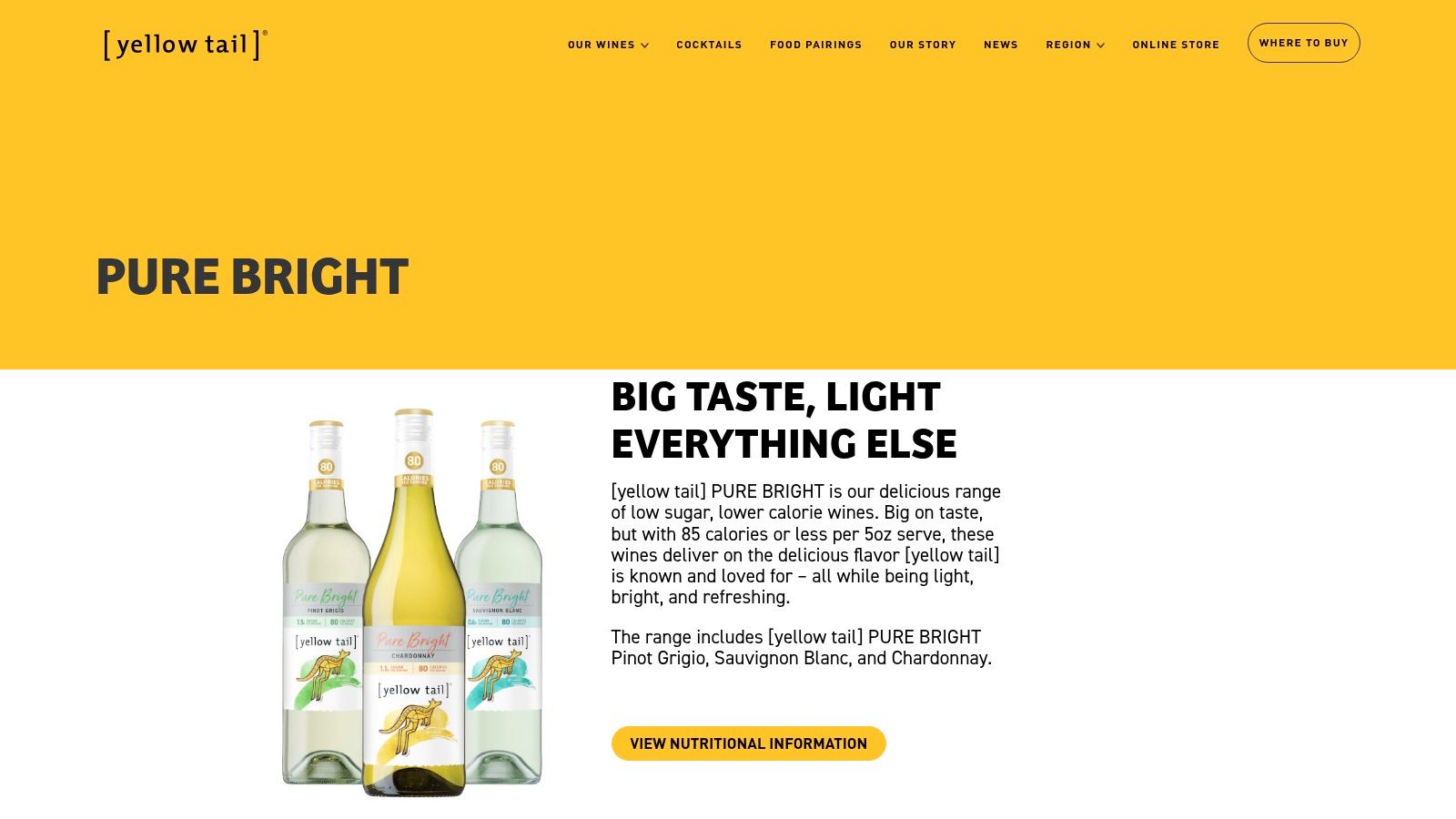
At 80 calories per 5-ounce serving, about 8.5% ABV, and approximately 0.6 grams of carbs, the [yellow tail] Pure Bright Sauvignon Blanc](https://www.yellowtailwine.com/en-us/our-wines/pure-bright) posts the lowest numbers among the fully alcoholic wines here. It also sits in the budget range, making the trade-off easy to understand: fewer calories and a lighter body in a familiar bottle format.
That calorie count comes mainly from lower alcohol, while the listed carb figure gives you another useful shopping check. The 5-ounce serving matters too. Pour a larger glass and the numbers rise, even if the bottle's label stays the same. Pure Bright is fully alcoholic, not alcohol-removed, so expect wine character with less weight rather than a zero-proof substitute.
Where Pure Bright fits
Choose Sauvignon Blanc with fish tacos, grilled vegetables, or simple chicken. Pinot Grigio works better when you want a quieter white, while Chardonnay brings rounder fruit and less sharp acidity. Select varietals are vegan-friendly, which helps if that preference guides your purchase.
The range runs around 80 to 85 calories per 5-ounce serving, depending on the wine. Do not treat every bottle as identical. Check the specific label or product page, especially if you are comparing carb information or choosing between varietals.
The clear cost is body. Pure Bright can feel noticeably lighter than standard wine, particularly beside a richer Chardonnay or full-strength red. Its fruit-forward style also favors easy drinking over complex regional character.
That makes it a strong casual option. Buy Pure Bright when you want an accessible, clearly labeled, fully alcoholic bottle for everyday meals. Among the choices here, it earns the budget pick title by combining low listed calories, modest alcohol, and straightforward shopping.
4. Sunny with a Chance of Flowers
A wine can taste bone dry and still carry calories from alcohol. Sunny with a Chance of Flowers attacks the other lever: its wines are positioned around zero sugar, about 85 calories per 5-ounce serving, and approximately 9% ABV on the Sunny with a Chance of Flowers website.
That combination makes the range a strong choice for shoppers who prioritize low sugar without giving up a more traditional wine identity. The lower calorie count comes from modest alcohol and no listed sugar. Check the specific bottle before buying, since the label remains the best guide for the wine in your hand.
A lighter wine with real food options
The Sauvignon Blanc fits salads, shellfish, and goat cheese. Choose Rosé for picnic food or grilled chicken. Pinot Noir gives you a lighter red with familiar wine character, while Cabernet works better with burgers and roasted dishes. These are fully alcoholic wines, so expect more wine character than an alcohol-removed option, but a lighter body than standard versions with higher alcohol.
The 5-ounce serving matters. A larger pour adds calories even when the bottle's listed serving information stays unchanged. The lower alcohol also keeps the mouthfeel lighter, especially in the red wines. That is the trade-off: fewer calories and less sugar, with less weight and intensity than a conventional Cabernet or Pinot Noir.
The producer is also a certified sustainable estate winery with wind energy on site. That gives the brand a clear environmental angle, although it does not make the wine healthier.
Availability is the main drawback. You may see the brand in many stores, but the exact varietal can differ by location. Choose Sunny when low sugar plus a convincing wine experience matters most. Choose Kim Crawford Illuminate when you want more zip and an even lower calorie target in an alcoholic Sauvignon Blanc or sparkling style.
5. Mind & Body
Mind & Body earns its place for a reason: it offers a lower-calorie red option that doesn't force you into white wine or rosé. The Trinchero Family Estates line includes Pinot Grigio, Rosé, Cabernet, and sparkling styles. Its wines target approximately 90 calories per 5-ounce serving and about 9% ABV, according to the Mind & Body product site.
The calorie difference comes mainly from reduced alcohol, not a tiny serving. Mind & Body partially removes alcohol, then blends the wine for balance. Brand materials describe an average analysis of around 4.9 grams of carbs, with vegan, gluten-free, and non-GMO positioning. Check the individual bottle before buying, since the range description may not match every label.
The red wine compromise
Mind & Body Cabernet is the practical pick for turkey burgers, grilled mushrooms, pizza, or roast chicken when full-strength Cabernet feels too heavy. Expect a lighter body and less tannic grip than conventional Cabernet. Tannin creates the drying sensation from grape skins and seeds, while lower alcohol can make that structure feel less forceful.
That trade-off is the point. You get fewer calories and a red-wine format, but not the dense structure or intensity of a fully alcoholic Cabernet. A 5-ounce pour keeps the comparison fair. Pour more, and the calorie advantage narrows.
The Pinot Grigio is the easiest everyday choice. Rosé suits casual lunches and snacks. Choose sparkling when the bubbles and serving ritual matter more than a fuller body. Spinning-cone technology helps preserve aromatics after alcohol reduction, but it cannot make the wine taste like a full-strength bottle.
Choose Mind & Body when varietal flexibility and a red option matter more than the lowest possible calorie count. Retail pricing varies by market, so compare shelf prices rather than assuming every store lists the line the same way.
6. Bota Box Breeze
The most underrated calorie lever is pour size, and no format on this list manages it better than a box with a tap. Bota Box Breeze suits value, flexible portions, and drinking wine over time. Its lineup includes Sauvignon Blanc, Pinot Grigio, Chardonnay, Dry Rosé, Cabernet, and Red Blend. Many options provide around 80 calories per 5-ounce serving and roughly 8% to 8.5% ABV. The Pinot Grigio lists 80 calories and 3 grams of carbs per 5-ounce serving on the Bota Box Breeze range.
The format changes both the buying decision and the calorie math. Breeze comes in 3-liter boxes, approximately four bottles, and 500-milliliter minis. The box stays fresh for up to a month after opening, so you can pour one glass without opening a new bottle each night.
Portion control without bottle drama
A box does not make you drink more. It lets you pour a set amount, close the tap, and stop. A measured 5-ounce glass is the standard serving used for comparison here, as shown by MedlinePlus's standard wine serving guidance. A large restaurant pour can add calories even when the wine itself has not changed.
Bota Box uses earlier-picked grapes and lower Brix, the measure of sugar in grape juice, to keep alcohol lower. That produces a straightforward, fruit-focused style rather than a full-bodied wine with greater weight. Breeze works well for camping, parties, casual dinners, and by-the-glass sipping over several weeks.
The trade-off is practical. You gain lower alcohol, controlled portions, and less waste, while giving up some polish and complexity. For a formal dinner or a wine worth discussing, choose another bottle. For easy serving and reliable calorie control, choose Breeze.
7. Giesen 0%
Nineteen calories per glass changes the conversation. Giesen 0% is not just a lighter table wine. It is an alcohol-removed wine, and that distinction shapes its flavor, body, and best use. The 0% Sauvignon Blanc contains approximately 19 calories per 5-ounce serving, while the alcohol-removed wines contain 0.5% ABV or less, according to the Giesen non-alcoholic Sauvignon Blanc information.
That makes Giesen the lowest-calorie option on this list by a wide margin. The calorie reduction comes primarily from removing alcohol, not from serving less wine or choosing a lower-sugar style. Use a measured 5-ounce pour when comparing it with fully alcoholic bottles, because a larger glass changes the calorie total even when the wine does not.
Giesen uses a spinning-cone process to retain varietal flavors. The range includes Sauvignon Blanc, Pinot Grigio, Rosé, Riesling, Sparkling Brut, and red styles, giving you more choices than a single alcohol-free white. Start with the Sauvignon Blanc. Its bright acidity and citrus character suit the lighter body better than a style built around richness.
What you gain and give up
Pour Giesen at lunch, a work event, or an evening when you are skipping alcohol. It delivers recognizable Sauvignon Blanc character without the usual alcohol calories, but it does not have the warmth, weight, or finish of a fully alcoholic wine.
That lighter mouthfeel is the clear trade-off. You gain the lowest calorie count and minimal alcohol, while giving up some texture and depth. Drinkers who want a more classic wine experience may prefer a lower-ABV alcoholic bottle such as Illuminate.
Do not treat a non-alcoholic bottle as sweet grape drink. This perspective on non-alcoholic wine makes the useful point that flavor and structure still matter. Buy Giesen 0% when avoiding alcohol comes first, not when you want a full-bodied Cabernet experience.
Top 7 Low-Calorie Wines Comparison
| Product | Implementation complexity 🔄 | Resource requirements ⚡ | Expected outcomes ⭐📊 | Ideal use cases 💡 | Key advantages ⭐ |
|---|---|---|---|---|---|
| Kim Crawford Illuminate (NZ + Italy) | High, spinning‑cone dealcoholization + blending | Specialized equipment, cross‑region sourcing; higher cost | ~70 cal / 7% ABV; aromatic, light body | Low‑cal sparkling or SB for calorie‑conscious drinkers | Very low calories; preserves NZ-style aromatics |
| Cupcake LightHearted (California, USA) | Moderate, earlier harvest vinification | Mainstream production; multiple varietals, transparent labeling | ~80 cal / 8% ABV; <1 g sugar; fruit‑forward | Everyday drinking; variety seekers at mainstream price | Broad lineup; familiar, approachable flavors |
| [yellow tail] Pure Bright (Australia) | Low, simpler low‑ABV winemaking via earlier picking | Mass production, wide distribution, budget packaging | ~80–85 cal / 8–8.5% ABV; simple ripe profile | Casual sipping; budget low‑cal option | Very affordable; easy to find nationally |
| Sunny with a Chance of Flowers (Monterey, CA) | Moderate, zero‑sugar winemaking at estate level | Estate resources, sustainability investments (wind power) | ~85 cal / ~9% ABV; zero sugar; balanced flavor | Consumers prioritizing sustainability and low sugar | Certified sustainable; genuine low‑sugar profile |
| Mind & Body (California, USA) | High, partial alcohol removal (spinning‑cone) + blending | Dealcoholization tech; dietary positioning (vegan, GF) | ~90 cal / ~9% ABV; ~4.9 g carbs; balanced | Low‑cal options including reds; daily drinking | Includes low‑cal red; balanced, approachable wines |
| Bota Box Breeze (California, USA) | Low–Moderate, earlier picking, boxed packaging | Box logistics (3L), cost‑efficient large formats | ~80 cal / 8–8.5% ABV; good value per glass | Parties, camping, by‑the‑glass over time | Best value per glass; long freshness after opening |
| Giesen 0% (New Zealand), Non‑Alcoholic | High, full alcohol removal (≤0.5%) via spinning‑cone | Advanced dealcoholization; NA distribution; premium pricing | ~19 cal / ≤0.5% ABV; retains varietal character (NA mouthfeel) | Non‑alcohol occasions; lowest‑calorie choice | Extremely low calories; wide NA style range |
Choose the Trade-Off You Actually Want
Start with your real priority, not the word “light” on the front label.
Choose Giesen 0% when minimizing calories and alcohol matters most. Its 0% Sauvignon Blanc has approximately 19 calories per 5-ounce serving, and the broader line stays at 0.5% ABV or less. You'll get the lightest body here, but you'll also get the clearest answer for alcohol-free drinking.
Choose Kim Crawford Illuminate when you want a very low-calorie alcoholic Sauvignon Blanc or sparkling option. At about 70 calories and 7% ABV per 5-ounce serving, it gives you more wine-like warmth than an alcohol-removed bottle while staying far lighter than many conventional wines.
Choose Bota Box Breeze when value, formats, and slower sipping matter. The 3-liter box, 500-milliliter minis, and freshness after opening make it the practical choice for casual glasses, parties, camping, or a household that doesn't finish a bottle quickly.
Choose Cupcake LightHearted or Sunny with a Chance of Flowers when varietal choice matters. Cupcake offers a broad mainstream lineup. Sunny is the sharper choice if zero sugar and sustainability are part of your shopping priorities. Choose Mind & Body when you specifically want a lower-calorie Cabernet or other flexible everyday styles.
Keep your comparison honest. Check the serving size, ABV, and sugar or carb information on the specific label. In the United States, wine producers generally don't have to display nutrition information, but a product making a calorie or carbohydrate claim must provide supporting information under current TTB guidance. Wines below 7% ABV follow different labeling rules and must carry a Nutrition Facts panel under TTB materials on low-ABV wine.
Pick one bottle, pour a measured 5-ounce serving, and notice how its body and flavor fit your priorities. If you want more confidence choosing wine without memorizing grape trivia, take the A to Wine free quiz and use the result to guide your next bottle.
A to Wine gives you short daily wine lessons that take about 5 minutes, practice quizzes, and an AI sommelier for real decisions like choosing a lower-calorie bottle or pairing wine with dinner. Visit A to Wine and start building a wine path that fits what you like to drink.