How to Pair Wine with Cheese Without Overthinking It
Stop treating cheese and wine like a fixed marriage. The cheese should lead, because texture, salt, fat, and intensity decide whether the bottle tastes flat, harsh, or just right. If you want to know how to pair wine with cheese, forget the old red-wine default and start by reading the cheese first.
Table of Contents
- Why Your Cheese Plate Keeps Fighting Your Wine
- Read the Cheese Before You Read the Label
- The Texture Ladder That Does the Pairing
- Easy Pairings Worth Ordering This Week
- Why Some Pairings Actually Work
- Pairing Mistakes That Make Cheese Taste Wrong
- A Two-Cheese Tasting You Can Run Tonight
Why Your Cheese Plate Keeps Fighting Your Wine
A cheese board usually loses because the wine was chosen first. That order puts the bottle in charge and leaves the cheese to take the hit. Soft, creamy cheeses can make a tannic red taste dry and stubborn, while salty blue cheese can wake up a sweet wine and make it feel alive.
The old rule that red wine goes with cheese is too crude to help. Sensory research from France's national agriculture and food institute found that cheese changed how wines were perceived and usually made them more enjoyable, with dry white wines often working better than reds, especially for beginners (INRAE sensory analysis on wine and cheese pairing). Cheese does not sit beside the glass. It changes the wine in the glass.
The question to ask first
Ask, “What does this cheese need?” If the cheese is fresh, mild, or creamy, it wants lift, not force. If it is aged, firm, or salty, it can handle more structure.
A practical rule helps when the board is mixed. Start with dry, bright whites before reaching for red. That keeps the early bites clean instead of muddy.
A University of California, Davis summary found that consumers and experts generally agreed on good cheese matches, which matters because pairing is not secret code for sommeliers (UC Davis wine and cheese combos summary). Learn the cheese's shape, salt, and weight, then pour to match. That is the whole trick.
Read the Cheese Before You Read the Label
Start with three simple questions. How fatty is it? How salty is it? How loud is the flavor? Those three answers tell you more than the grape name on the bottle ever will.
A fresh chèvre is light, tangy, and low in intensity. It wants a wine with snap, not a wine with heavy oak. A runny Brie brings more fat and softness, so it needs acidity to keep it from feeling sleepy. Roquefort, on the other hand, is salty, pungent, and powerful, so it needs a wine that can stand up to it instead of getting bullied.
Use the texture ladder
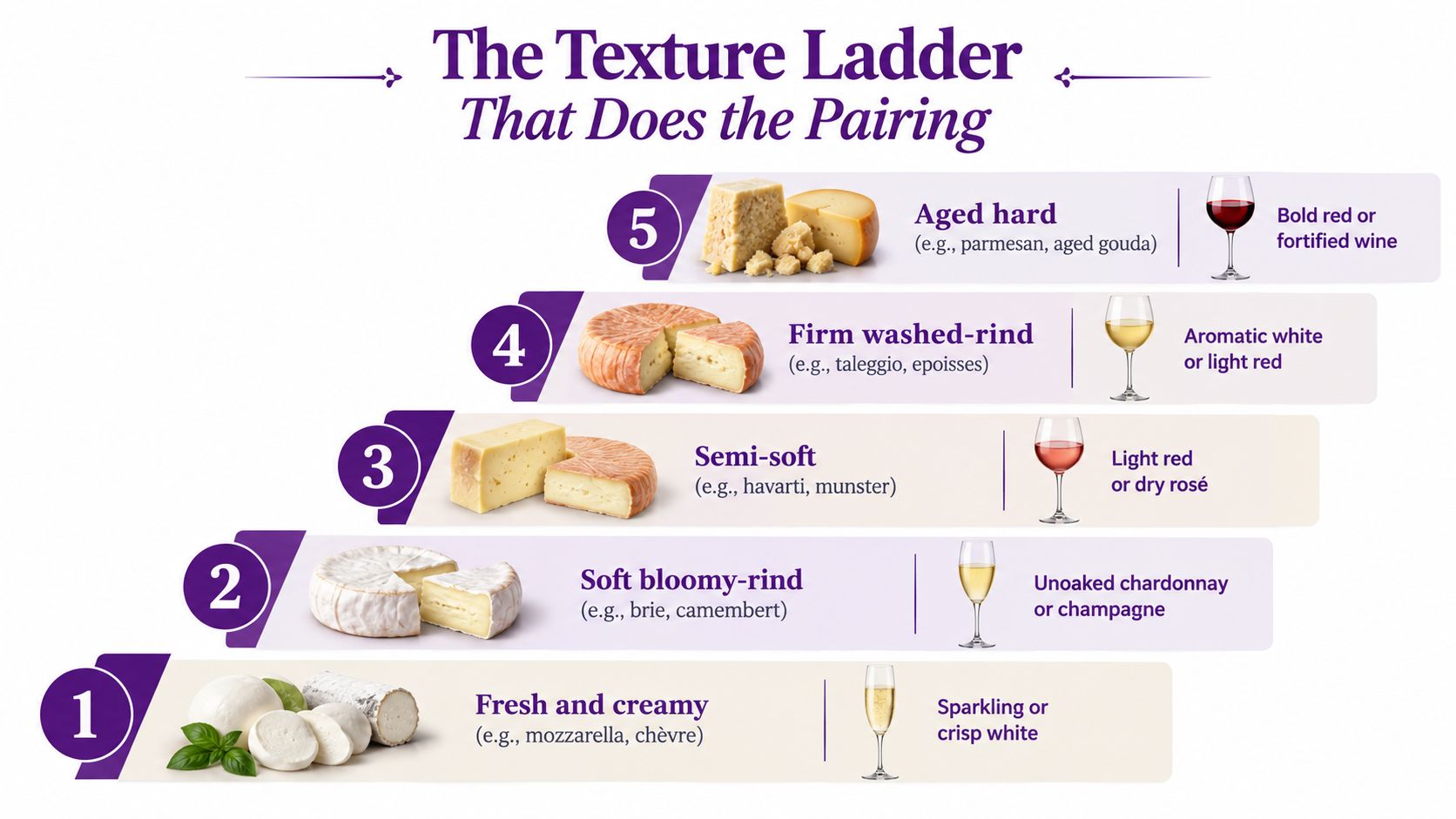
Here's the easiest way to think about it. Move from fresh and creamy toward aged and pungent, and let the wine get more structured as the cheese gets bolder. That keeps you from pouring a heavy red at the start of the board and exhausting the palate before the good stuff shows up.
Use this quick checklist when you're staring at an unfamiliar wedge:
- Creamy and mild: reach for sparkling wine or a crisp white.
- Soft and bloomy-rind: choose a dry white with enough freshness to cut the fat.
- Firm and savory: try a light red or a fuller white with grip.
- Aged and nutty: move into wines with more body.
- Blue and salty: bring sweetness into the conversation.
If you want a broader food-pairing mindset, the same logic applies in this guide to how to pair wine with food without guessing. Cheese just makes the lesson more obvious because the flavors hit faster.
The Texture Ladder That Does the Pairing
The cleaner rule is simple, soft cheese wants fresher wine, firmer cheese can take more structure, and blue cheese needs sweetness. That gives you a better starting point than chasing grape names. A cold board is easier to read by texture than by region.
Fresh cheeses like goat cheese, mozzarella, or ricotta call for crisp Sauvignon Blanc, dry sparkling wine, or another bright white with enough acidity to keep the cheese lively. Soft bloomy-rind cheeses such as Brie and Camembert also want freshness, and Champagne handles them well because the bubbles cut through the richness instead of letting it sit on the palate. A light Pinot Noir can work too, as long as it stays in the background.
Firm cheeses give you more room. Comté and Gruyère can handle a lightly oaked Chardonnay because the wine has enough body to meet the nutty flavor without flattening it. A fruity red can fit here as well if it stays moderate and doesn't dump too much tannin into the pairing.
Washed-rind cheeses like Époisses ask for something with personality. Aromatic whites, especially Gewürztraminer, keep pace with the funk because their fragrance stands up to the cheese's intensity. Light red works only if it stays light and avoids heavy barrel flavor.
Blue cheese is its own lane. Roquefort, Gorgonzola, and Stilton make the most sense with sweet wine like Sauternes, late-harvest styles, or Port. Salt pushes the sweetness forward, so the wine tastes richer instead of clumsy.
Once you start using the ladder, the order of the board gets easier too. Open with the freshest cheese and the brightest wine, then move toward the firmer, funkier pieces as the tasting builds. That keeps the palate awake and stops the heavier pairings from trampling the delicate ones.
If you want a quick visual reference while you shop, this wine pairing chart is a useful companion.
Easy Pairings Worth Ordering This Week
Skip the trophy bottle. Start with the cheese's texture and weight, then pick the wine that meets it there.
| Cheese | Wine | Why It Works |
|---|---|---|
| Brie | Champagne | The bubbles cut through the creaminess and keep the cheese from feeling heavy |
| Aged cheddar | Cabernet Sauvignon | The cheese has enough depth to stand up to the red's structure |
| Manchego | Tempranillo | Firm, savory cheese meets a red that stays in the same register |
| Goat cheese | Sauvignon Blanc | Bright wine matches the cheese's clean tang |
| Gruyère | Lightly oaked Chardonnay | The wine brings enough body for the nutty cheese without going too far |
| Blue cheese | Sauternes | Sweetness and salt line up in a way that works |
If Champagne feels too pricey for Brie, open Crémant instead. It gives you the same lively lift without the splurge. For Cabernet with cheddar, choose a younger bottle if the cheese is still sharp, or a more mature cheddar if you want the pairing to feel rounder. With blue cheese, any sweet wine in the same style family can do the job.
At the cheese counter, ask for the cheese's age, milk type, and texture. That tells you more than the label on the rind. “Fresh and tangy” points you toward a crisp white. “Firm and nutty” gives you room for a red. “Bold and salty” means you should look for sweetness.
For a mixed board, start with Goat cheese, Brie, and Gruyère. They are the easiest crowd-pleasers and the least likely to box you into one narrow bottle choice. If you want a quick reference while you shop, use this wine pairing chart as a simple backup.
Aged cheddar earns a permanent spot in the fridge because it can handle more bottle styles than fresh cheese can. Cabernet Sauvignon works best once the cheddar has real maturity. Young cheddar and big red often fight each other.
Why Some Pairings Actually Work
Start with the cheese, not the bottle. Creamy, fatty cheese wants acidity because acidity cuts through the fat and resets the palate, which is why sparkling wine and crisp whites keep showing up in smart pairings. A low-acid white beside rich cheese often feels flat.
Tannin is the drying grip in red wine, and it behaves better with aged, protein-rich cheese than with delicate cheese. Fat and protein soften that grip, while a fresh, low-fat cheese can make tannin taste chalky or metallic. A big red with fresh mozzarella usually falls apart fast, while the same wine can make sense beside an aged cheddar. For a plain-English guide to that grip, see what tannin means in wine.
Sweetness and salt are an easy match. Salty blue cheese pulls sweetness into balance, which is why Port, Sauternes, and other sweeter styles work so well with pungent cheese. The result does not taste sugary, it tastes complete.
Use this quick filter at the counter:
- High acidity for creamy, fatty cheese.
- Moderate tannin for firm, aged cheese.
- Some sweetness for salty blue cheese.
- Lower oak and alcohol for mild, fresh cheese.
Remember the UC Davis finding from earlier? The same study ranked Gewürztraminer as its most versatile white and Sauvignon Blanc as the least. That lines up with the basic logic here. Some wines can flex across more cheese styles because they keep acidity, texture, and flavor in balance.
Wine-enology guidance from Virginia Tech notes that fat and protein can bind with tannins, while sweetness and acidity matter a lot in food-and-wine structure (Virginia Tech wine-enology guidance). The rule is simple. Do not ask whether the wine sounds powerful. Ask whether it stays balanced after a bite of cheese.
If the wine gets hotter, harsher, or more bitter after the cheese, the pairing misses. A good match makes both parts taste clearer, not louder.
Pairing Mistakes That Make Cheese Taste Wrong
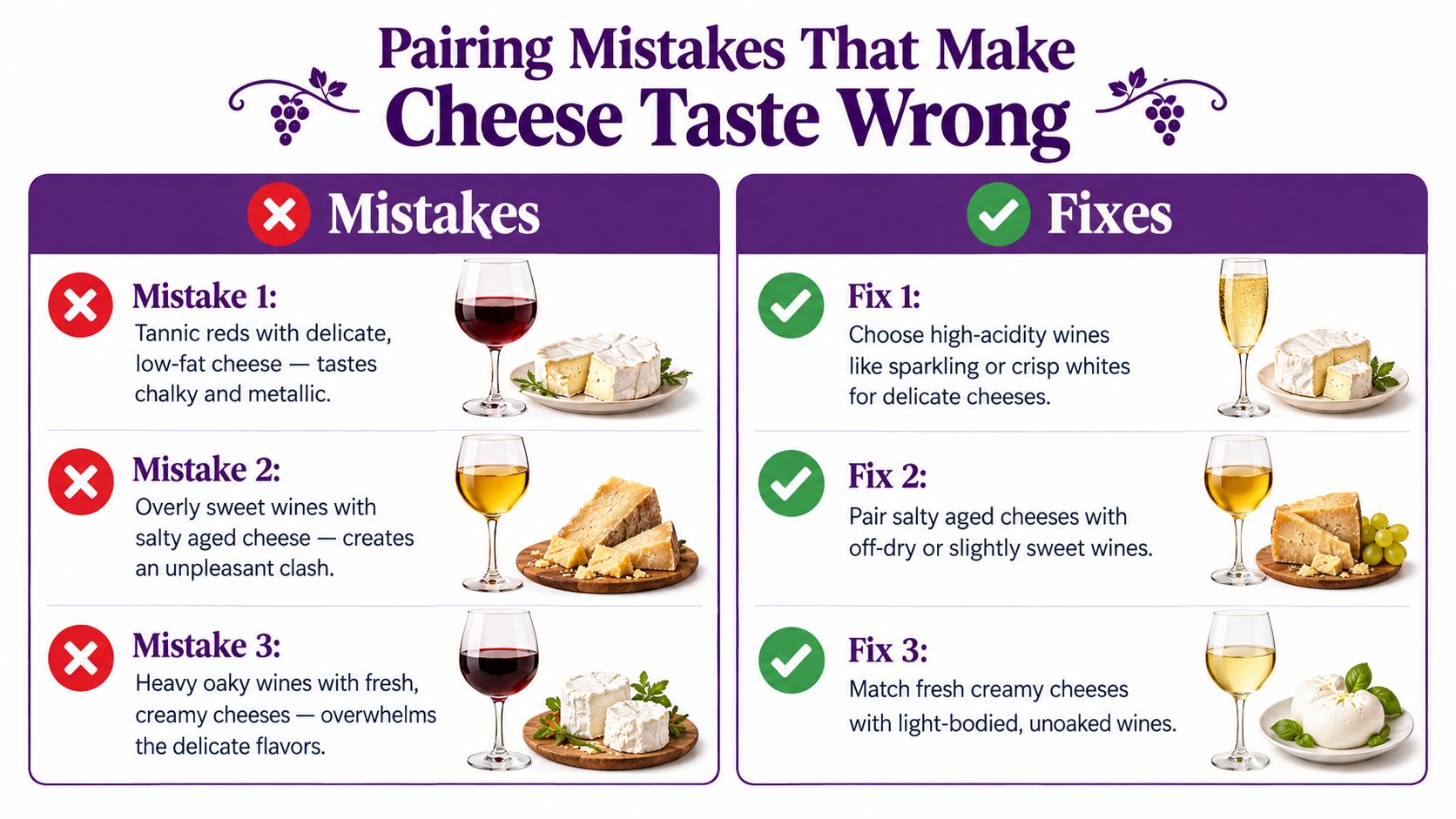
The most common mistake is still the same one, pouring a tannic red with delicate cheese and hoping it will behave. It usually does not. The wine turns chalky or metallic, and the cheese loses its shape.
That same red can miss with aged, umami-heavy cheese too. Umami is the deep savory note you get in long-aged cheeses, and tannin can grab onto it in a way that makes the wine feel rougher, not smoother.
Dry red with salty blue cheese is another bad trade. Salt makes the dryness feel harsher, so the wine comes off shrill. Sweetness handles that job better than more tannin.
What to swap instead
Fresh, mild cheese wants a crisp white or sparkling wine. Salty blue cheese wants off-dry or sweet wine. Creamy, soft cheese needs something light on oak and easy on alcohol.
- Tannic red with fresh cheese: choose Sauvignon Blanc or another bright white.
- Dry red with blue cheese: choose Sauternes, Port, or a similar sweet style.
- Oaky white with mild cheese: choose an unoaked white or sparkling wine.
The core rule is simple. Strong cheese does not automatically call for strong red. Sometimes it calls for more acidity, sometimes more sweetness, and sometimes just less oak. A University of California, Davis summary found that the most versatile white in its set was Gewürztraminer, while Sauvignon Blanc was the least versatile, which is a good reminder that aromatic strength alone does not guarantee flexibility.
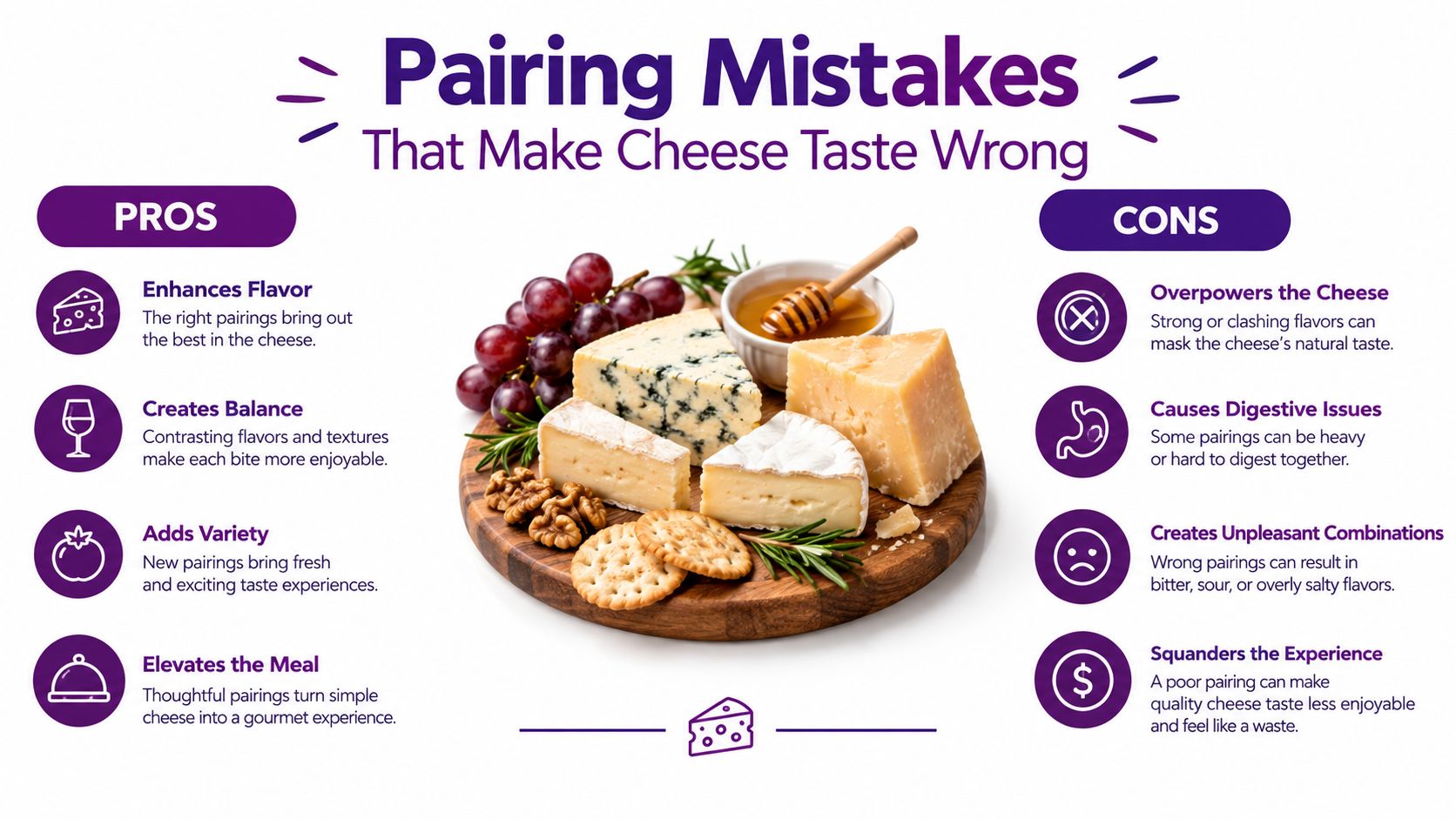
Stop defending a bottle just because it sounds serious. Cheese asks for balance, not a lecture.
A Two-Cheese Tasting You Can Run Tonight
Open one bottle and put out two cheeses. Keep it simple. A Sauvignon Blanc or a Pinot Noir works well because both can show a clear difference between a mild cheese and a stronger one.
Start with the wine alone. Then taste the milder cheese with it, and notice whether the wine feels sharper, flatter, or cleaner. After that, try the stronger cheese and pay attention to what changes in the finish. If the second bite makes the wine seem hollow or bitter, you've learned something useful.
A good home test looks like this:
- Pour a small glass of the wine.
- Taste the wine by itself.
- Try a mild cheese, then the wine again.
- Try a stronger cheese, then the wine again.
- Decide which cheese made the wine taste better, not just louder.
That one exercise teaches more than a memorized chart. It shows you what your palate likes, and that matters more than following a pairing rule you don't trust.
If you want help choosing the bottle before you even open the fridge, A to Wine has short daily wine lessons, practice quizzes, and an AI sommelier that makes pairings feel a lot less random.
Try this tonight with one crisp white, one mild cheese, and one stronger cheese. Once you see how much the cheese changes the wine, you'll stop guessing and start pouring with confidence.