Light Red Wine Explained: What It Is and How to Pick One
Light red wine is a red that tastes fresh and fruit-driven, with low tannin, bright acidity, and usually less weight than big reds, often under about 12.5% ABV.
But “just buy Pinot Noir” isn't enough advice. The grape gives you a clue, not a guarantee. How the winemaker handles it, how much alcohol it contains, and how cold you serve it can change what lands in your glass.
Table of Contents
- What Light Red Wine Means and How to Spot One
- What You Actually Taste
- Grapes and Regions That Make Light Reds
- How Winemakers Keep Reds Light
- How to Serve Light Red Wine at the Right Temperature
- Pairing Light Red Wine With Food
- Pick Your Next Light Red From a Label or Menu
What Light Red Wine Means and How to Spot One
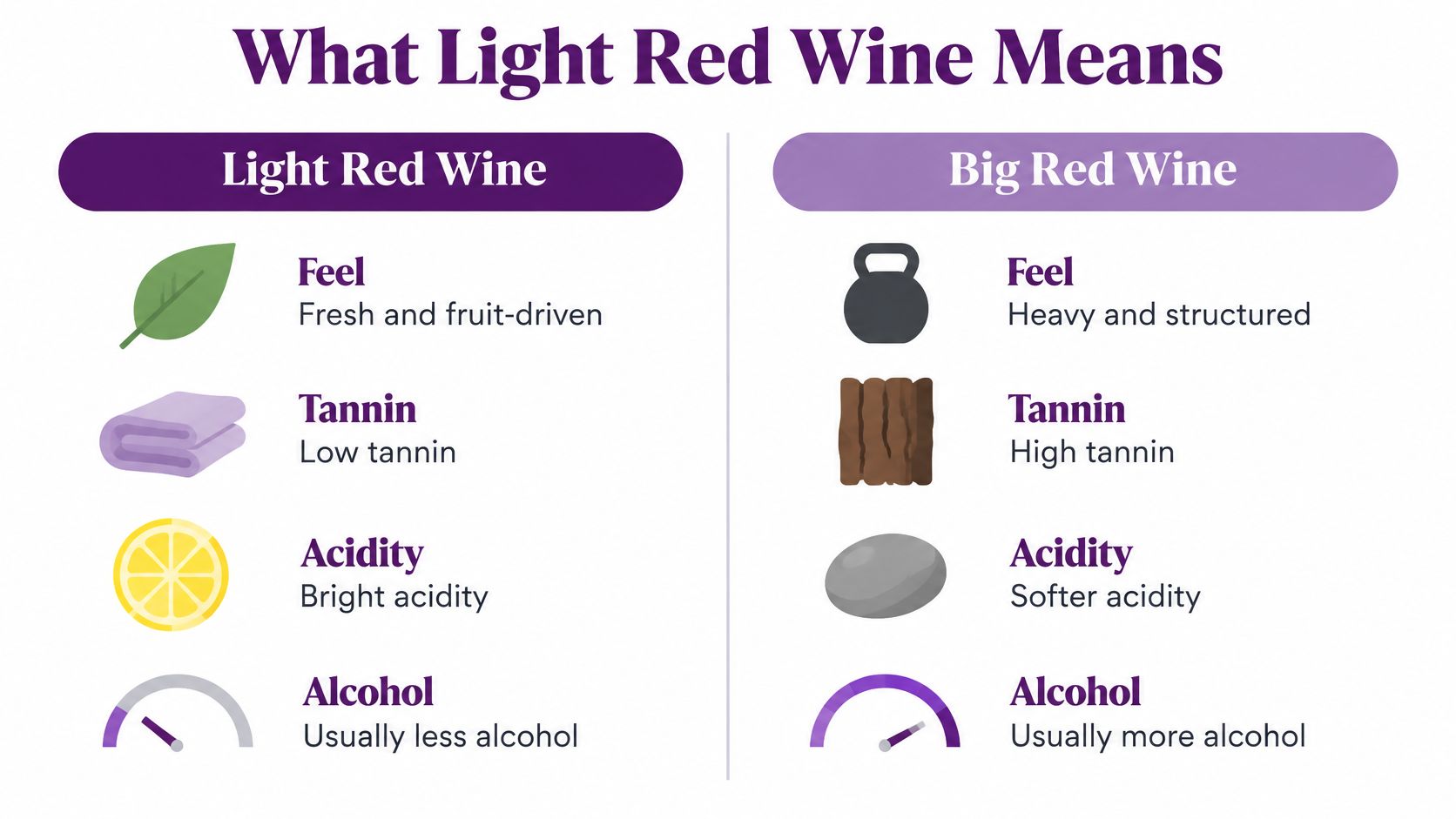
Light red is a style, not a fixed grape or region. Look for a delicate texture, fresh fruit, and little drying grip. A lighter red can still taste vivid, like a thin sweater that keeps you warm without weighing you down.
Light reds often sit below about 12.5% ABV, or alcohol by volume, the percentage printed on the bottle. Climate, grape ripeness, and winemaking can push a bottle outside that range, so use the number as a clue rather than a rule.
Light red versus full-bodied red at a glance
| Trait | Light red | Full-bodied red |
|---|---|---|
| Body | Light to medium, thin on the palate | Full, heavy, or chewy |
| Tannin | Low, little drying grip | High, mouth-drying grip |
| Acidity | Bright and fresh | Often softer and less lively |
| Alcohol | Often under about 12.5% ABV | Often above 12.5% ABV |
| Flavors | Strawberry, red cherry, raspberry | Blackcurrant, plum, pepper, oak |
| Typical grapes | Pinot Noir, Gamay | Cabernet Sauvignon, Syrah |
The table shows common patterns, not strict categories. A full-bodied red can still have lively acidity, while a pale red may feel warm and powerful. Color offers a hint, but it cannot tell you the whole story.
Light doesn't mean weak
Skim milk and cream are both dairy, but one feels much lighter in the mouth. Red wine works similarly: a lighter style can carry plenty of flavor without coating your palate.
Acidity adds a mouthwatering freshness, like biting into a tart apple. It helps fruit taste crisp rather than jammy, and it does not mean the wine should taste unpleasantly sour.
To spot a light red, check how it moves across your tongue, how much dryness it leaves, and what kind of fruit comes through. A wine that glides easily, leaves little grip, and leans toward cherry or strawberry rather than dense fruit preserves is likely on the lighter side. Body, tannin, and alcohol work together, so no single clue settles the question.
What You Actually Taste
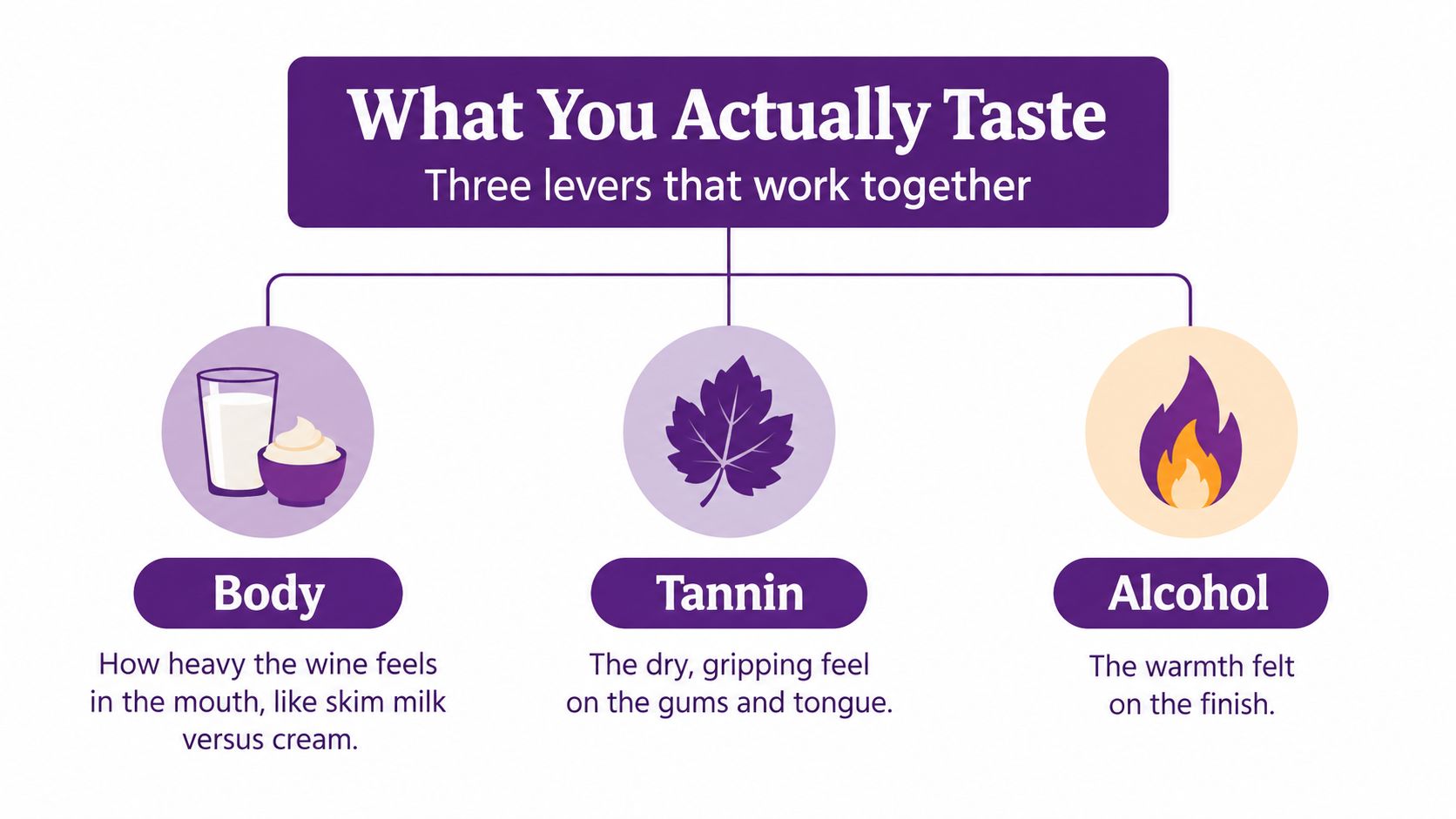
Body, tannin, and alcohol are separate things you can notice in the same sip. Treat them like adjustable controls, not interchangeable names for “strong.”
Body is the wine's overall weight in your mouth. Does it move easily, or does it feel broad and coating? Flavor intensity isn't the same thing: a delicate wine can smell strongly of raspberries without feeling heavy.
Tannin is the dry, gripping sensation on your gums and cheeks. Strong black tea gives you a useful reference. It's a texture, not the tart, mouthwatering feeling of acidity.
Separate the sensations
Alcohol often appears as warmth toward the back of your throat and extra weight on the finish, the sensation that remains after swallowing. A smooth wine can still deliver noticeable warmth.
Low tannin doesn't guarantee low alcohol. A wine might feel silky at first, then leave a warm finish. Likewise, light-bodied, low-alcohol, and no-alcohol describe different things.
Light is a feel, built from body, tannin, and alcohol together.
The diagram gives each sensation its own place.
Try a three-sip check
- Notice weight. Take a small sip. Does the wine glide across your tongue or coat it?
- Check your gums. After another sip, notice whether your cheeks and gums feel dry or grippy.
- Follow the finish. Swallow and pay attention to warmth, rather than immediately taking another sip.
Don't hunt for a perfect tasting note. “Light, a little grippy, warm finish” tells you more about your preferences than a borrowed list of obscure fruits.
Also, berry flavor doesn't automatically mean sweetness. A dry red can smell like ripe strawberries while containing little perceptible sweetness. Ask yourself whether it actually tastes sugary, not whether it reminds you of fruit.
Grapes and Regions That Make Light Reds
Start with Pinot Noir and Gamay. Pinot Noir usually offers dry, light- to medium-bodied wine with strawberry, red cherry, raspberry, and sometimes earthy flavors. It's the foundation of red Burgundy and New Zealand's principal black grape.
Gamay is the grape to recognize in Beaujolais. Expect fruit, floral aromas, and generally gentle tannin, though more structured examples exist.
Light red grapes and where to find them
| Grape | Where it comes from | Typical flavors | Tannin | Acidity |
|---|---|---|---|---|
| Pinot Noir | Burgundy, New Zealand, Oregon | Strawberry, red cherry, raspberry | Low to medium | High |
| Gamay | Beaujolais, France | Red berries, floral notes, fresh fruit | Low | Moderate to high |
| Frappato | Sicily, Italy | Strawberry, red cherry, floral notes | Low | Bright |
| Schiava (Vernatsch) | Alto Adige, Italy | Delicate red berries, floral notes | Low | Lively |
Read “where it comes from” as places to shop for the style, not an exhaustive list of growing regions. You don't need to memorize every place name to make a good choice.
For a concrete example, Decanter describes Beaujolais Gamay made with carbonic maceration as about 10% alcohol, light in tannin, and rich in fruitiness. That describes a particular expression, not every bottle of Beaujolais.
Choose by the experience you want
- Choose Pinot Noir when you want red fruit with a savory or earthy edge. It's a useful option for someone who enjoys delicate texture but still wants complexity.
- Choose Gamay when juicy fruit matters more than drying structure. It's an easy place to begin if heavier reds put you off.
- Try Frappato or Schiava when you want to explore beyond familiar names. Ask for a delicate, fresh example rather than assuming every bottle will taste identical.
Growing conditions matter. Riper grapes can produce warmer, fuller wines, even when the variety usually makes lighter styles. A producer's choices can change the result just as much.
Use the grape varieties chart to compare these options with other wines you already enjoy. At a shop, a practical opening request is Pinot Noir from Burgundy or Gamay from Beaujolais, followed by “fresh, delicate, and not heavily oaked.”
How Winemakers Keep Reds Light
Making a light red is a little like brewing tea. Leave the tea bag in longer and you usually get more grip. Pull it earlier and you can keep the drink gentler.
Winemakers control extraction, meaning how much color, tannin, and other material moves from grape skins and seeds into the wine. More extraction doesn't automatically mean better wine.
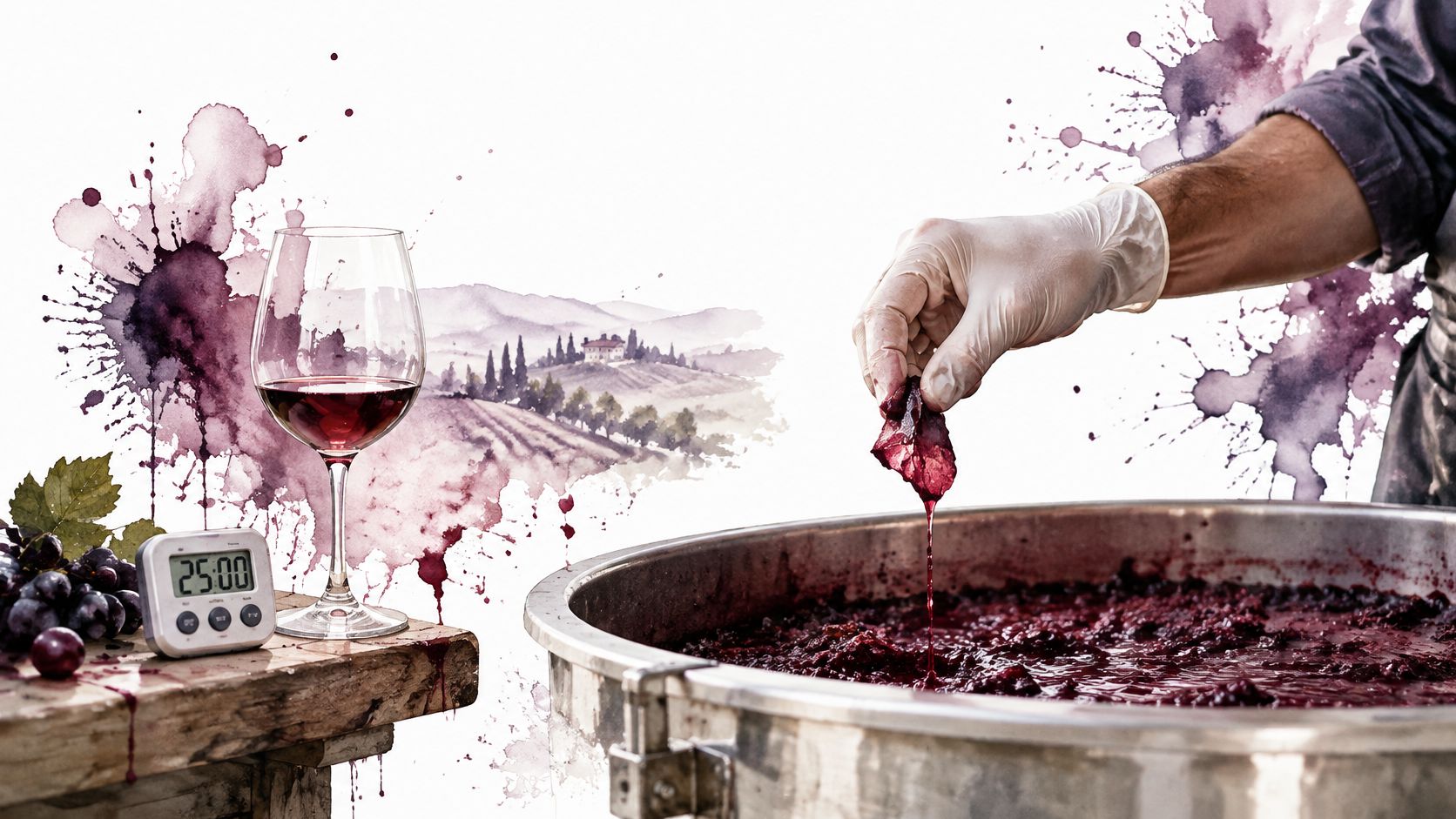
Skin contact is one of the key decisions behind the finished texture.
Look for these winemaking clues
- Short maceration. Maceration means contact between juice and grape skins. The South African Journal of Enology and Viticulture summarizes findings that about three to six days commonly produces high levels of red pigments and strong color development. Tannin can keep increasing with longer contact, so darkness alone won't tell you how grippy the wine feels.
- Cool fermentation. Virginia Tech's red-wine production guide describes fermentation around 20–25°C (68–77°F) for light, fruity wines. Cooler fermentation can favor fresh fermentation aromas.
- Carbonic maceration. Whole berries begin fermenting in a carbon-dioxide-rich environment. This can emphasize vivid fruit while limiting harsh tannin, a familiar approach in fruity Beaujolais styles.
- Lightly oaked or unoaked. These phrases suggest less influence from wood. They can help you find fruit-led wines, though they don't guarantee light body.
Whole cluster means fermenting with intact bunches, including stems. Treat it as a conversation starter, not a low-tannin promise: stems can contribute grip too.
Buying rule: Favor descriptions of gentle extraction and fresh fruit over promises of power, density, or heavy oak.
The same grape can become a pale, lively wine or a much firmer one. The winemaker isn't just bottling a grape name.
How to Serve Light Red Wine at the Right Temperature
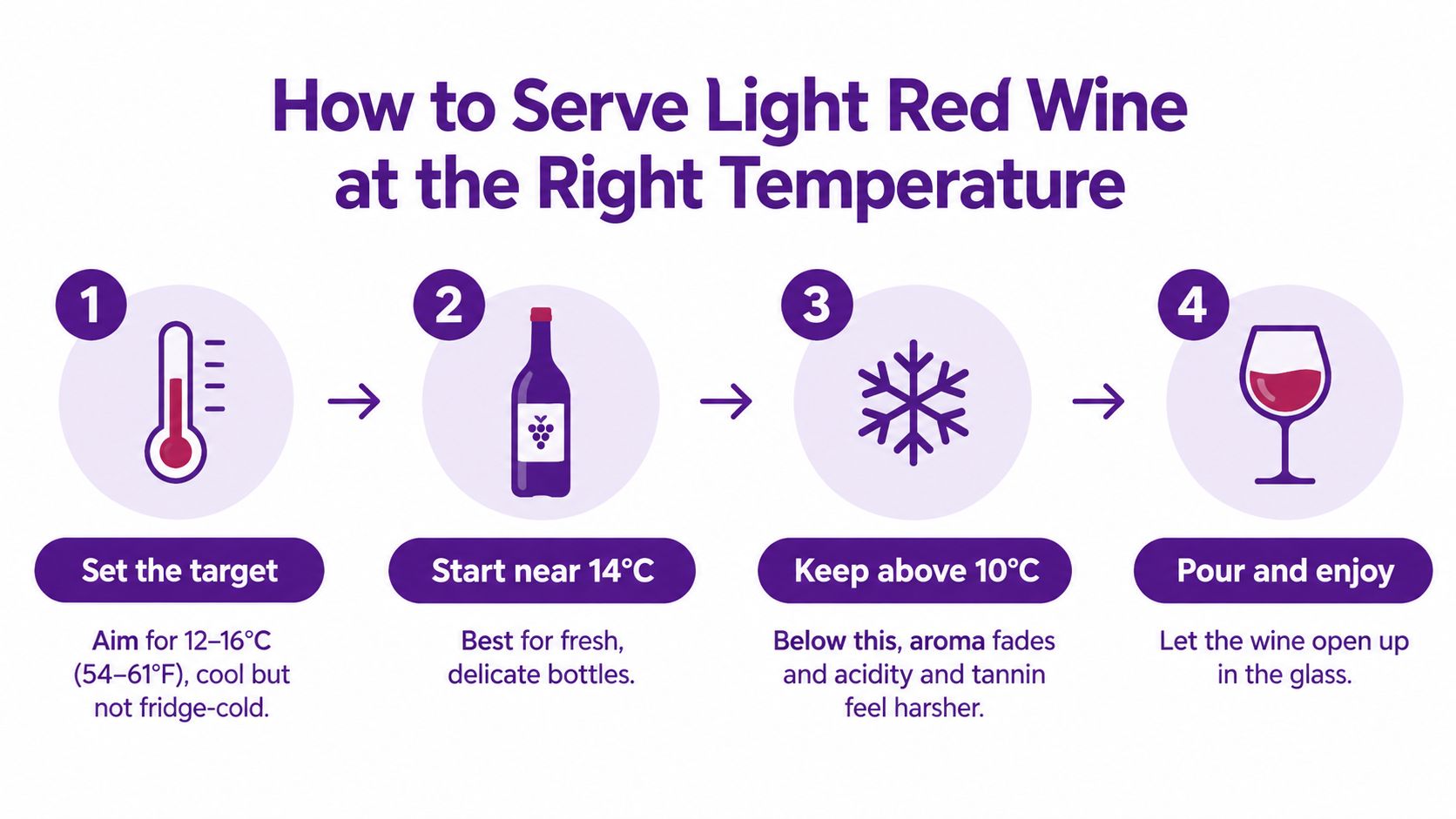
Aim for approximately 12–16°C (54–61°F), starting near 14°C for a fresh, delicate bottle, as outlined in the red-wine serving-temperature guidance. You want cool, not refrigerator-cold.
Chilling isn't a contest. A bottle kept in the refrigerator can be colder than the useful serving range, so let it warm before deciding it has no flavor.
Keep this temperature guide handy when you pour.
Adjust the bottle, not your expectations
Too much cold can mute aromas and make acidity and tannin seem sharper. Too much warmth can make the alcohol stand out. Neither result means you bought the wrong wine.
- Cool and check. Put a room-temperature bottle in the fridge for 20 to 30 minutes, then check with a wine thermometer. Timing is only a starting point; pour when it reaches the target range.
- Pour your first sample. If the bottle is refrigerator-cold, let it warm first. Don't use an overchilled pour as your baseline.
- Let another sample warm. Pour a second glass and leave it on the counter for 10 to 15 minutes.
- Compare the feel. Which sample smells fruitier? Which feels less sharp without becoming warm?
- Record your preference. Note the temperature and bottle name so you can repeat the result.
If it tastes sharp and smells muted, wait five minutes. If it feels warm and dull, chill it for ten minutes more. These are practical adjustment intervals, not guarantees.
The red-wine serving-temperature guide helps you apply the same approach to fuller bottles.
Watch the serving demonstration, then try the comparison with your own glass.
Pairing Light Red Wine With Food
Light reds usually bring enough acidity to refresh your mouth after rich food, without much tannin to add drying grip. Their lighter weight also makes them useful with dishes that a powerful red might overwhelm.
Start with the whole plate, not just the protein. Roast chicken with herbs is a different pairing from chicken covered in a sweet, smoky barbecue sauce.
Light red pairings for everyday meals
| Food | Light red to try | Why it works |
|---|---|---|
| Grilled salmon | Pinot Noir | Silky texture and red fruit suit the richness of the fish |
| Roast chicken | Pinot Noir or Gamay | Gentle tannin avoids adding a drying sensation alongside lean meat |
| Mushroom risotto or earthy dishes | Pinot Noir | Earthy notes echo the mushrooms |
| Tomato pasta | Frappato or Gamay | Bright acidity matches the tomato |
| Charcuterie and soft cheese | Gamay | Fresh fruit and light grip balance salt and fat |
| Spicy takeout | Gamay, served slightly chilled | Low tannin reduces the risk of a bitter, harsh pairing |
With spicy food, alcohol matters too. A warm, high-alcohol red can make chili heat feel more intense, so a light-bodied label alone won't settle the choice.
Make the match easier
- Match intensity first, then flavor. Delicate fish needs a gentler bottle than a heavily charred burger. After that, look for shared flavors, such as earthy wine with mushrooms.
- Use a slight chill for spicy or fried food. A cool, fruit-driven red can feel refreshing alongside crisp fried chicken or moderately spicy takeout. Don't expect chilling to rescue a very alcoholic bottle.
The sauce often matters more than the meat. Choose for the strongest flavor on the plate.
A wine pairing chart is useful when dinner involves several dishes. For a specific menu, a personal sommelier can help narrow the choice.
For salmon with mushrooms, try Pinot Noir. For pizza night with cured meats, try Gamay and let its fruit contrast with the salt. Keep Frappato in mind for tomato-based pasta, especially when you want the wine to stay lively rather than dominate dinner.
Pick Your Next Light Red From a Label or Menu
A light feel in the glass does not tell you how much alcohol is in the bottle. Body, tannin, and alcohol work together to shape how a red feels, but each gives you a different clue. Read the ABV when alcohol matters to your choice. IWSR's coverage of no- and low-alcohol wine describes no- and low-alcohol wine as distinct choices for people seeking moderation.
Your label checklist
- Read the ABV. A lower number can contribute to a lighter impression, but it does not tell you the wine's tannin or texture.
- Recognize the grapes. Pinot Noir and Gamay are useful starting points.
- Use regional clues. Beaujolais points to Gamay; red Burgundy points to Pinot Noir.
- Check the style language. Carbonic maceration, gentle extraction, and light oak can suggest a fresher, less weighty style. Treat whole cluster as a clue to ask about, not a guarantee.
On a menu, look for Beaujolais or Gamay by the glass. For a delicate Pinot Noir, ask which option has the least oak and feels freshest. You can also order by the qualities you want:
Order with confidence: Ask for a fresh, low-tannin red without heavy oak, rather than simply asking for something smooth.
Choose a light-bodied wine for freshness and texture. Choose a lower-alcohol wine if you want less alcohol, or a wine labeled alcohol-free if avoiding alcohol is your goal. Check the stated alcohol content: dealcoholized wine is not necessarily completely free of alcohol.
A light feel does not make a wine automatically healthy. Keep the taste choice separate from the alcohol choice.
For your next bottle, try a fresh Gamay or Beaujolais, and ask for it lightly chilled. Take the free wine quiz to find your wine level and a useful starting point.
A to Wine offers a personalized wine path with short daily lessons, practice quizzes, and an AI sommelier. Visit A to Wine to put body, tannin, and alcohol into practice as you choose a real bottle.