How to Pair Wine with Duck Like You Mean It
You're at the table, the duck just landed, and the wine list is doing that annoying thing where every choice feels slightly wrong. Don't overthink it. Pair wine with duck by reading the plate for what matters most, fat, sauce, and how browned the meat is, then pick a wine shape that clears the fat and doesn't bully the dish.
Table of Contents
- The Moment You Stall at the Wine List
- What Duck Actually Asks of a Wine
- Roast Duck and Crispy Breast
- Confit, Magret, and Smoked Duck
- Duck à l Orange and Other Fruit Sauces
- When the Sauce Is Sweet, Spiced, or Asian
- A Pocket-Sized Duck Pairing Cheat Sheet
The Moment You Stall at the Wine List
The trap is obvious. You don't want to order a bottle that smothers the duck, but you also don't want something so timid it gets flattened by the skin and sauce. That fear is real. The cure is not memorizing a grape chart like you're cramming for an exam.
Duck has a small set of repeatable needs, and once you know them, the menu gets easier fast. Think in bottle shapes, not trivia. A cool-climate Pinot Noir, a bright off-dry Riesling, or a sparkling wine with real freshness can cover a lot of ground.
Practical rule: if the duck is rich, the wine needs enough acidity to stay clean. If the sauce is sweet or fruity, the wine has to respect that sweetness instead of fighting it.
That's the whole game. Duck is fat plus sauce, so the wine has to cut through fat and stay friendly with whatever's on the plate. Everything else is just details.
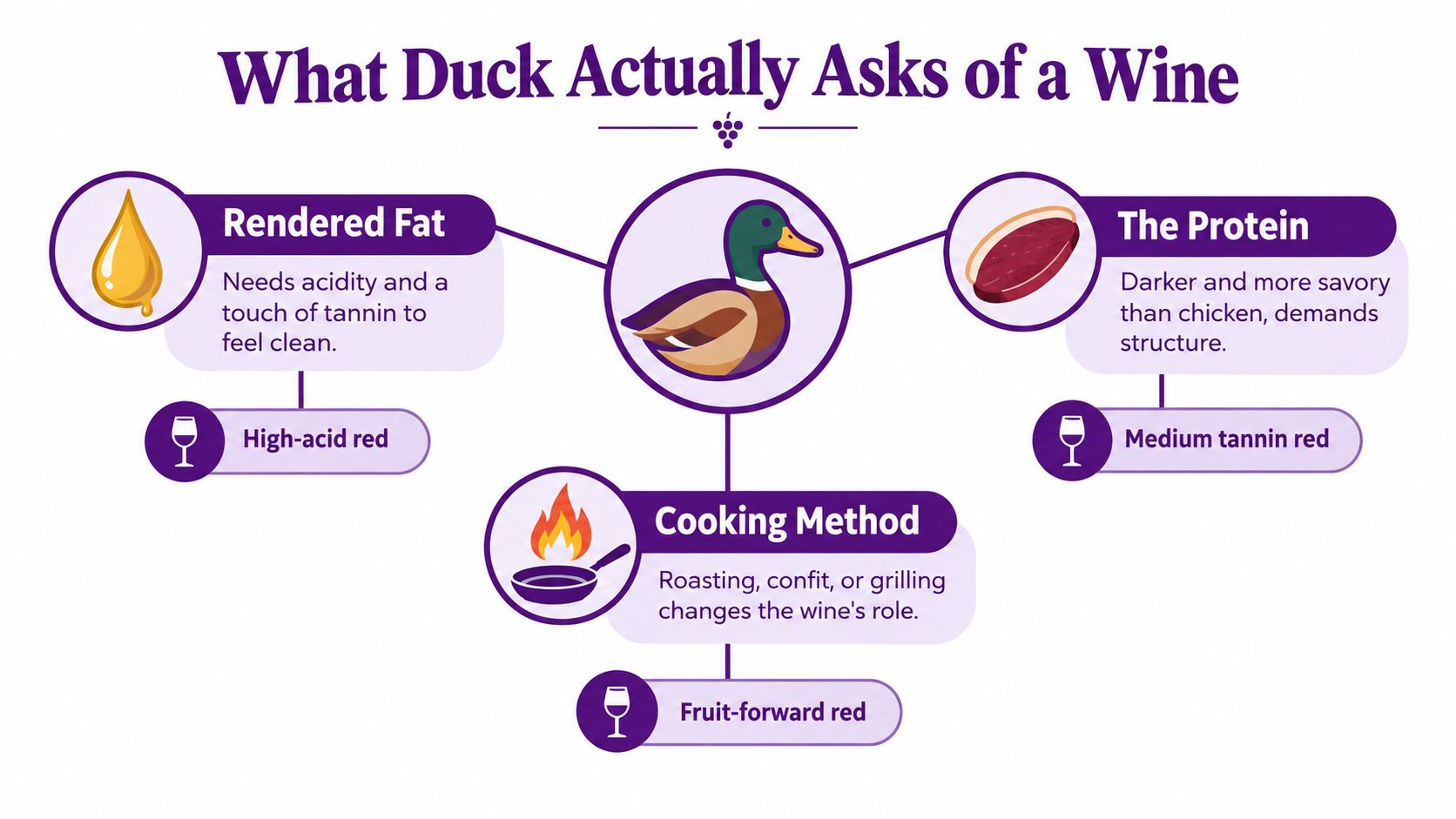
What Duck Actually Asks of a Wine
Duck is not chicken in a darker outfit. It brings more fat, more savoriness, and usually more browning, which means the wine has to do real work. Acidity is the first thing you should look for, because it refreshes your mouth after a fatty bite and keeps the pairing from turning muddy.
Think of it like a balancing scale
On one side sits the duck, rendered fat, browned skin, and that deeper, almost meaty flavor. On the other side sits the wine, and it needs freshness to keep the whole bite lively. The sauce sits in the middle and decides whether the wine should lean red, white, or sparkling.
Tannin is the grippy, drying feel you get from red grape skins. A little helps with browned meat, but too much can taste harsh next to salt, umami, or sweet sauce. That's why the best duck wines are usually medium-bodied, not huge.
For a useful mental shortcut, ask three questions before you pour:
- How fatty is the duck? More fat means more need for acidity.
- How sweet or spiced is the sauce? More sweetness pushes you toward less tannin and more fruit.
- How browned is the meat? More browning can handle a little more structure.
If you want a simple outside-the-restaurant guide for this logic, the same cause-and-effect works in plenty of food pairings, too, and this pairing framework keeps the focus on structure instead of grape names.
Refresh the palate first. Match the sauce second. If a bottle can't do both, it's the wrong bottle.
Roast Duck and Crispy Breast
Roast duck is where people usually mess this up. They see the crispy skin and reach for something big, oaky, and loud. That's backwards. Duck's high fat content makes acidity the primary structural requirement in the pairing, which is why medium-bodied, cool-climate Pinot Noir with restrained oak and moderate alcohol is the reliable baseline for roast or pan-seared duck. Wine Traveler
What works at the table
Start with cool-climate Pinot Noir. Burgundy is the classic move, and lighter styles from places like Chambolle-Musigny make sense because they bring fresh fruit, fine tannins, and enough lift to keep the skin from feeling greasy. A fresh cru Beaujolais also does the job when you want something a little juicier and less serious.
A light Merlot can work if it stays on the lighter side and doesn't come loaded with oak. The point is not “red wine because duck.” The point is medium weight, clean acidity, and enough fruit to meet the meat.
If the duck breast is especially crisp on the outside and rosy inside, that's your sign to stay delicate rather than force a heavy wine into the room. A rough, high-alcohol bottle will flatten the skin and make the sauce taste bitter. That's the common mistake. Don't do it.
A small service trick matters here, too. Serve the red a little cool, around 14 to 16°C, so the acidity stays sharp and the alcohol doesn't start puffing up the richness.
Best default: plain roast duck without a sweet sauce wants a cool, medium-bodied red with bright acidity and restrained oak.
Confit, Magret, and Smoked Duck
These are three different problems, so treat them like three different plates. Duck confit is salty, savory, and loaded with fat. Magret is closer to roast duck, but the seared breast and pink center can handle a slightly lighter touch. Smoked duck brings a different wrinkle, because smoke can make aggressive tannin taste blunt and dry.
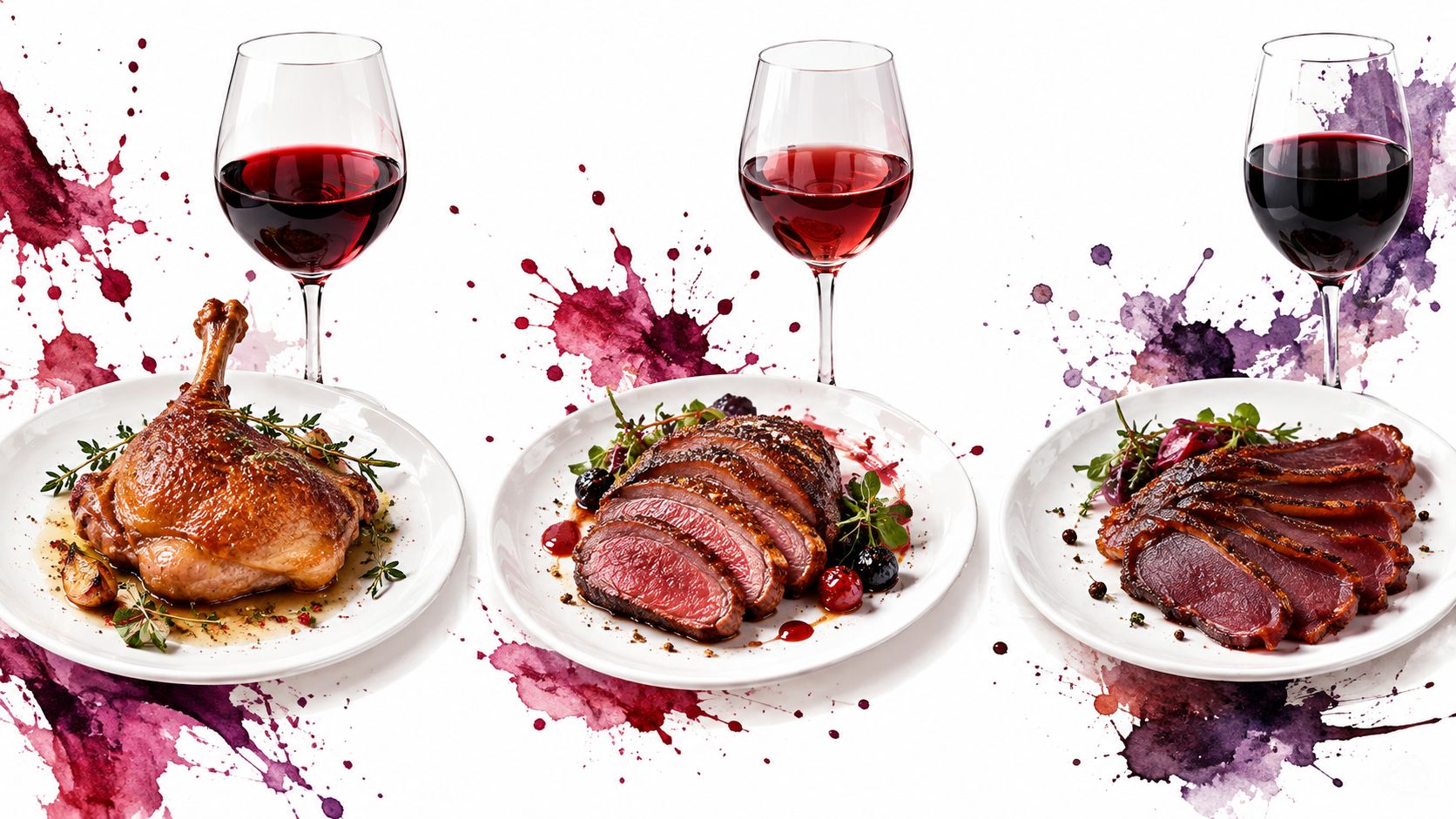
Duck confit asks for a wine with enough fruit and acidity to keep up with salt and umami. Young, aggressively tannic reds or heavily oaked bottles can seem drier and more bitter here, which is exactly what you don't want. A medium-bodied Pinot Noir, cru Beaujolais, or a fresh Southern Rhône blend makes more sense because the fruit stays alive and the tannin doesn't turn hard. Sommy Wine
Magret can go in a similar direction, but it gives you a bit more room to nudge lighter if the plate leans elegant rather than rich. Smoked duck is the one that can surprise people. Smoke pushes the pairing toward wines with more fruit and a softer edge, because hard tannin can taste especially stern beside smoke.
Three useful bottle shapes:
- Duck confit: Pinot Noir, cru Beaujolais, or a fresh Southern Rhône blend, because they bring fruit without harshness.
- Magret: cool-climate Pinot Noir or another medium-bodied red, because it keeps the sear in balance.
- Smoked duck: fruit-forward red or a gently sweet style, because smoke and dry tannin can clash.
Cooking method matters more than the word “duck” on the menu. That's the rule worth keeping.
Duck à l Orange and Other Fruit Sauces
Duck à l'orange is not the place for a muscle-flexing red. It's a sweet-and-tart plate, which means the wine has to respect both the citrus brightness and the sauce sweetness. Duck à l'orange combines rich duck fat, orange-sauce acidity, and sauce sweetness, which is why a fruity, fresh red such as Chinon or Burgundy Pinot Noir works; very tannic reds can taste harsh beside the sauce's sweet-and-tart profile. Avenue des Vins
Go for fruit, not power
A young Chinon works because it stays fresh and red-fruited. A Burgundy Pinot Noir works for the same reason, especially if the bottle isn't heavy-handed with oak. What you want is a wine that tastes like it can shake hands with orange, not wrestle it.
This logic stretches to cherry, plum, and blackberry sauces too. Match the mood of the sauce, not just the meat. If the sauce tastes bright and glossy, the wine should feel bright and juicy. If the sauce is darker and more reduced, stay in the medium-bodied red lane and keep tannins polite.
High-alcohol, heavily extracted reds are the wrong move here. They can make the sauce feel jammy and push the whole bite into blunt sweetness. That's not balance, that's clutter.
When the sauce tastes like fresh fruit, the wine should taste like fresh fruit too.
If you like this kind of matching, the same no-nonsense logic applies to Thai flavors and other sweet-sour dishes, and this food pairing guide keeps the rules simple.
When the Sauce Is Sweet, Spiced, or Asian
The old duck-plus-red-wine reflex breaks fast here. Peking duck, plum sauces, star-anise glazes, and other sweet-savory duck dishes want wines that can handle sugar, spice, and crisp skin without turning bitter or blunt. High-tannin reds usually lose that fight.
White wine is the sharper move
Peking duck has one of the clearest wine pairings because the dish brings crisp duck skin, pancakes, scallions, and hoisin sauce together in one bite. In that setup, off-dry Riesling, especially Spätlese, is a strong choice because its residual sugar matches the hoisin while its acidity cuts through the fat. Sommeliersuite
That is why a white can beat a bigger red. It has the right structure, plain and simple. If sweetness leads, choose off-dry Riesling. If the dish is more about crisp texture and lacquered skin, sparkling wine makes more sense. If the plate stays mostly savory with only a little glaze, light Pinot Noir still holds up.
For a practical read on the table:
- Sweet sauce first: pick off-dry Riesling.
- Crisp skin first: pick sparkling wine.
- Savory roast first: pick light Pinot Noir.
Rosé Champagne also earns a spot here, especially when you want bubbles with more red-fruit lift. Duck pancakes with hoisin do not need a heavy red. A good aromatic white can do the job better when sugar and spice are running the show.
The same sweet-savory logic applies to Thai food, and this Thai pairing guide shows how sugar and spice change the wine choice.
A Pocket-Sized Duck Pairing Cheat Sheet
Duck gets easier once you stop memorizing recipes and start reading the sauce. Fat wants acidity, sweet glaze wants more lift, and smoky or salty duck wants fruit, not brute force. Use that logic and the right bottle shows up fast.
| Duck Preparation | Dominant Sauce | Best Wine Styles | What to Avoid |
|---|---|---|---|
| Roast duck, crispy breast | No heavy sauce, pan jus | Cool-climate Pinot Noir, fresh cru Beaujolais, light Merlot | Heavy, high-oak reds |
| Duck confit | Salty, savory, rich | Pinot Noir, cru Beaujolais, fresh Southern Rhône blend | Young tannic reds, heavily oaked reds |
| Duck à l'orange | Orange, sweet-tart | Chinon, Burgundy Pinot Noir | Very tannic reds |
| Peking duck | Sweet-savory, hoisin | Off-dry Riesling, sparkling wine, light Pinot Noir | Bold tannic reds |
| Smoked duck | Smoky, savory | Fruit-forward red, gentle sparkling rosé | Harsh, drying reds |
Roast duck and crispy breast stay simple. A clean red with bright fruit fits the meat, while big oak crushes the skin. Duck confit wants the same kind of balance, just with more grip from the salt and richness. That is why Pinot Noir and cru Beaujolais keep showing up.
Duck à l'orange shifts the target toward brightness. Chinon works because it keeps the fruit line sharp without piling on tannin. Peking duck follows the same rule in a sweeter key, so off-dry Riesling or bubbles beat a muscular red every time. Smoked duck is the easiest call of all. Pick a fruit-forward red or a gentle sparkling rosé and let the smoke stay in charge.
If you want help building the habit instead of guessing every time, this wine pairing chart is worth keeping handy. Use it as a quick check, then order with confidence.