Pinot Noir German Guide: Spätburgunder Styles and Pairings
You're standing in front of a German wine shelf, and the bottles all say Spätburgunder. That word is just the German name for Pinot Noir. Same grape, different country, and a wider range of styles than most shoppers expect.
German Pinot Noir is not one wine. A bottle from a warm southern site can taste ripe and structured, while a cooler pocket of land gives a lighter, fresher pour. The soil under the vines shifts the flavor again, and the vintage printed on the label tells you what kind of year the grapes came from.
Three clues sit on every bottle: region, soil, vintage. Learn to read them, and you can pick the exact style you want instead of guessing.
Table of Contents
- Why Spätburgunder Is Germany's Leading Red Grape
- Where German Pinot Noir Grows and How Regions Differ
- How Soil and Climate Shape Each Bottle
- German Pinot Noir Compared to Other Pinot Noir
- Flavor Profile and How Vintage Changes the Glass
- Food Pairings for German Pinot Noir
- How to Order Your First German Pinot Noir
Why Spätburgunder Is Germany's Leading Red Grape
One word does most of the decoding work on a German red wine label: Spätburgunder. It translates roughly as “late Burgundy”, a nod to the grape's late-ripening habit and its historic ties to the Pinot family of Burgundy. Late-ripening means the grape takes its time on the vine, building flavor deep into autumn.
On a shelf or wine list, the word works like a fingerprint. Spot it, and you know two things at once: the grape is Pinot Noir, and it was grown in Germany. Some producers also print “Pinot Noir” on the label, yet many lead with the German word alone. Spätburgunder is the one worth memorizing.
An old grape with a major place in Germany
Spätburgunder has a documented history in Germany reaching back to at least the ninth century, which puts it among the longest-grown varieties in the country's vineyards. (German Wine USA)
Its position today rests on more than seniority. The planting figures cited earlier put it ahead of every other red grape in Germany, and the total keeps climbing. Plantings have expanded steadily since the early 1990s, tracking the wider rise of German red wine and growers' increasing confidence in ripening this demanding, late-maturing variety.
That last point deserves a second look. Pinot Noir earned a reputation for being fussy, and for years Germany was seen as white-wine country. The expansion of Spätburgunder tells you both assumptions have aged poorly.
Shelf shortcut: Treat Spätburgunder as a category of styles. Three clues narrow any bottle down: the region printed on the label, the soil that region is known for, and the vintage year.
The name gets you into the right aisle. Region, soil and vintage pick the bottle.
Where German Pinot Noir Grows and How Regions Differ
Spätburgunder turns up in nearly every German wine region, which can make the map look crowded. In practice, a handful of regions account for most of the planting. The figures cited earlier break down like this: Baden leads with 5,029 hectares, ahead of the Palatinate at 1,739, Rheinhessen at 1,504, and Württemberg at 1,302. The Rheingau holds 403 hectares, and the Ahr just 342.
Those numbers tell you where to look. They say little about what the bottle will taste like. A region name works like a neighborhood name on an apartment listing: it narrows your options and hints at character, while the individual property still matters. Producers inside one region make different choices, and single sites differ in warmth, elevation, and exposure.
A practical first read of the map
Baden sits in Germany's warm south and grows more Spätburgunder than anywhere else. Start here if you want riper, fuller German Pinot. The Kaiserstuhl district is the best-known name in the region, though the regional label alone won't fix the body or the oak level in advance.
The Palatinate, often printed as Pfalz, and Rheinhessen also grow the grape at scale. Styles there shift a lot by village and producer, so scan the label for extras such as a named site or a note on barrel aging. Württemberg rounds out the major plantings and adds bottles you may not see in quick introductions to German red wine.
The Ahr is small, yet it counts for more than its size suggests. Spätburgunder covers most of its vineyard area, making it the closest thing Germany has to a red-wine specialist region. In the Rheingau, plantings cluster around the village of Assmannshausen.
What a region name can and can't tell you
Use region to set a rough expectation. A bottle from a cooler northern area tends toward freshness and a lighter frame. A warmer southern site can give riper fruit and more body. Treat those as leanings, because winemaker decisions can override them.
So make region your first question when ordering: fresh and light, or ripe and structured? A sommelier who hears "something lighter, maybe from the Ahr" or "a fuller Baden" can reach for the right shelf quickly. Then let the producer, the site details, and the vintage refine the choice. Two bottles can share the Spätburgunder name and still drink like different wines.
How Soil and Climate Shape Each Bottle
Terroir is a short way of talking about a place's growing conditions: its soil, slope, weather, and sun. It helps explain why a region name can't tell the whole story. German Pinot Noir grows on varied ground, and that variety can influence how a wine feels, smells, and develops in the glass.
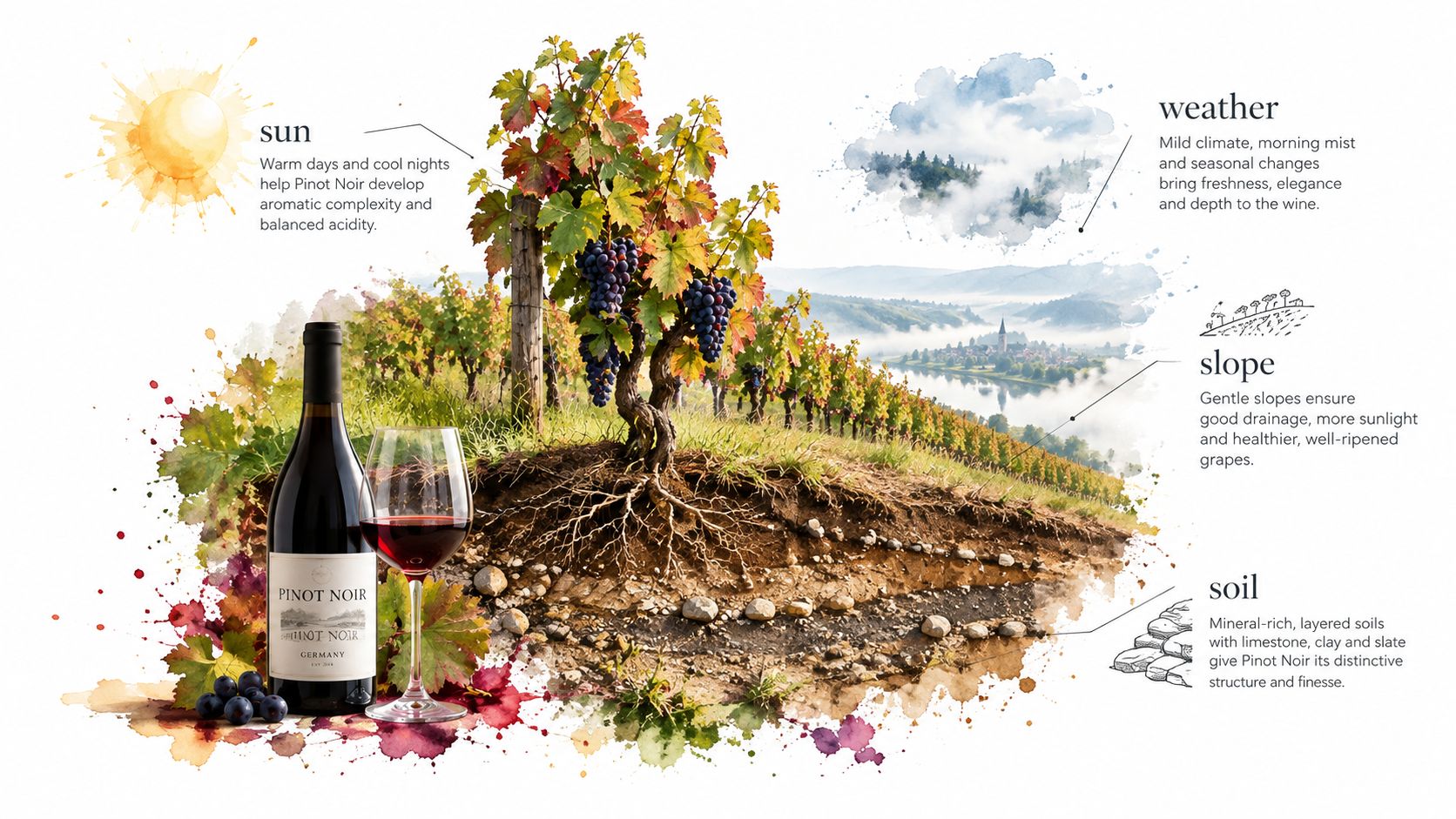
Baden includes limestone, sandstone, granite, basalt, loess, and clay. The Ahr includes slate, greywacke, basalt, loam, and loess. The Palatinate and Rheinhessen also have combinations of limestone, marl, sandstone, and loess. (Decanter)
From ground to glass
Calcareous soils, including limestone and marl, are often linked with firmer acidity, savory or mineral impressions, and a finer structural feel. Warmer sites and deeper, more fertile soils can give broader fruit and higher alcohol when growers control yields. These are useful tendencies, not guarantees. A winemaker's choices can shift the final character.
Climate matters, too. Pinot Noir needs enough time and warmth to ripen, but heat can change the balance. A warmer site may give the grapes riper fruit, while a cooler place can preserve a brighter, more lifted feel. Slope and sun exposure affect how much warmth a vineyard receives, and soil influences water availability. Together, these conditions help explain why two bottles from the same broad region can differ.
Winemaking adds another layer. Extraction means drawing color, flavor, and tannin from grape skins during fermentation. Gentle extraction can keep a Pinot's texture supple instead of forceful. Some producers destem the grapes, removing the stems before fermentation; others may use some whole clusters. Either choice can shape the wine's aromas and structure.
Malolactic conversion is a second fermentation that changes sharper malic acid into softer lactic acid. Producers may also use oak barrels to add texture and flavors such as spice, but measured oak lets the grape and site remain noticeable. Oak isn't a simple quality signal. It's a style choice.
Taste it this way: Compare two bottles from different regions, then check whether one has more oak. You'll get a better feel for place and winemaking than by relying on the region name alone.
German Pinot Noir Compared to Other Pinot Noir
Burgundy is the reference point many people reach for when they think about Pinot Noir. German Pinot can share Burgundy's emphasis on freshness and detail, but it isn't a copy. Germany's warmer southern sites can also produce fuller, riper wines, so the easy shortcut “German means light” won't always hold.
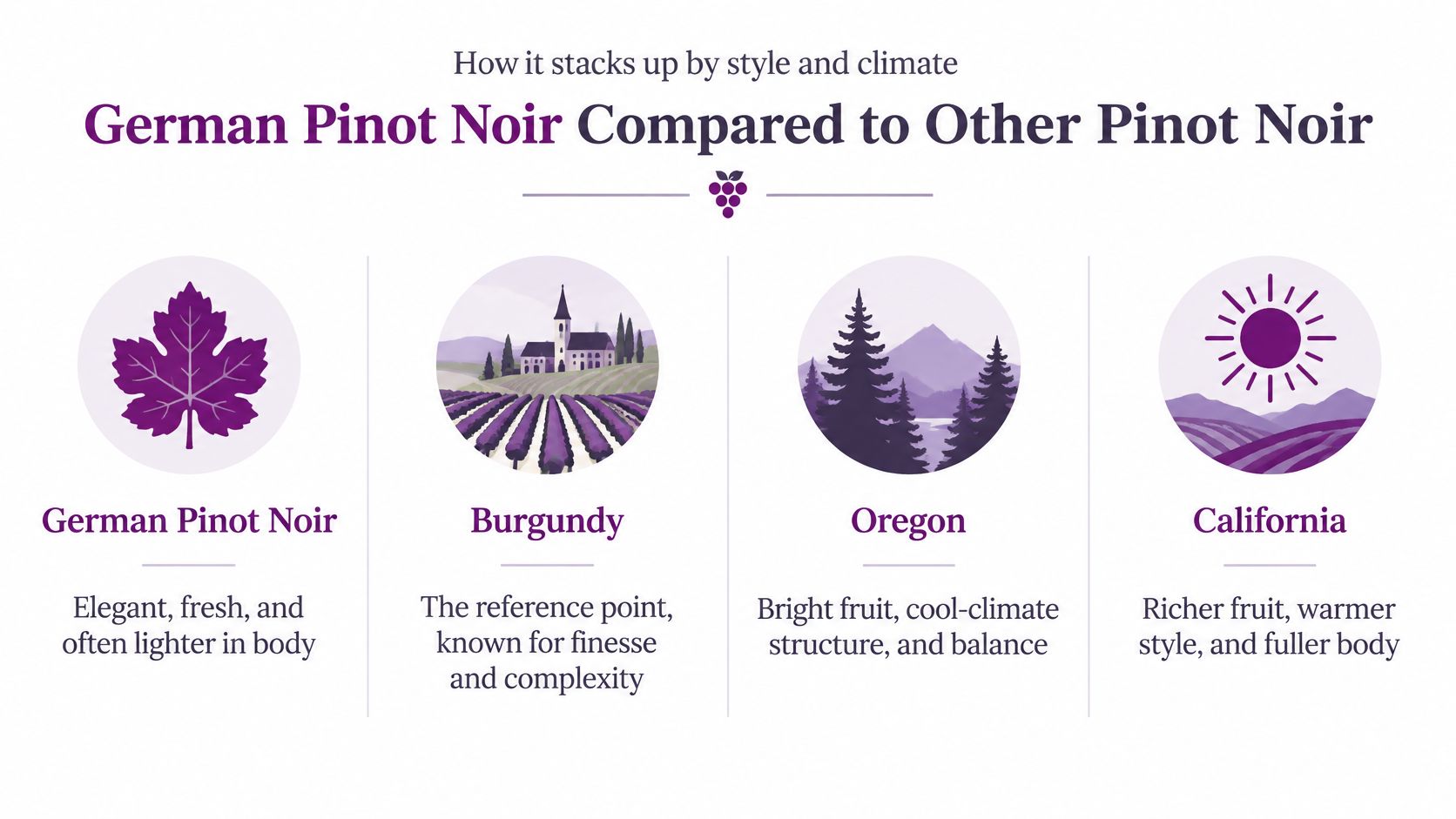
To compare bottles, focus on body, acidity, tannin, oak, and alcohol. Body is the wine's weight on your tongue. Acidity is the mouthwatering tang. Tannin is the drying grip you may feel on your gums. Oak and alcohol can add a sense of warmth, spice, or weight, depending on the wine.
Four places, several possible styles
| Region | A useful starting expectation |
|---|---|
| Germany | A broad range, often fresh and elegant, with fuller styles from warmer sites |
| Burgundy | A reference point for finesse and complexity, though bottles vary by site and producer |
| Oregon | Often a good match for drinkers who like bright fruit and cool-climate structure |
| California | A useful starting point if you prefer riper fruit and a fuller feel |
These are broad comparisons, not rules that every bottle follows. German Pinot may overlap with any of these styles depending on region, site, vintage, and oak. If you like the bright red fruit of cooler-climate Oregon Pinot, try a northern or slate-influenced German bottle. If you usually reach for richer California Pinot, look for a warmer German region or a bottle aged in oak.
For another way to think about these regional tendencies, see this guide to Old World vs. New World wine. The labels are broad, but they can help you ask better questions about freshness, fruit, and winemaking.
The key isn't to decide which place is “best.” It's to identify what you enjoy. A wine with lively acidity and lighter body may fit a weeknight meal, while a riper, oak-aged example can feel more substantial at the table.
Here's a video to help put the style differences in context:
Flavor Profile and How Vintage Changes the Glass
German Pinot Noir often shows red-fruit flavors with savory or earthy edges. Depending on the region and how the wine was made, you might notice a lighter, brighter feel or denser fruit and more structure. A little spice can come from oak aging.
Don't let the word “light” mislead you. Pinot can be pale in color and still have flavor, freshness, and a satisfying finish. And German Pinot isn't always pale or thin. A warmer site or a riper vintage can lead to a fuller wine with more concentrated fruit.
A small tasting vocabulary
Acidity is the tang that makes your mouth water. Tannin is the drying grip, often easiest to feel on your gums. Body is the wine's weight on your tongue. You don't need to identify every aroma to use these terms. Ask yourself whether the wine feels fresh or soft, light or full, and smooth or grippy.
Vintage matters because weather and growing conditions change from year to year. A difficult season can mean less fruit and a different balance than a year with favorable ripening. The German Wine Institute reported that 2024 Pinot Noir vineyards yielded about 35 hectoliters per hectare, while good years can reach 100 hectoliters per hectare. The report described the vintage as producing small quantities but good quality. (Wines of Germany)
Don't assume German means underripe
Recent warm vintages, including 2018, 2019, 2020, and especially 2022, have been described as bringing greater ripeness and quality. That challenges the outdated idea that German Pinot must be thin or underripe. (Deutsche Weine)
But warmth isn't an automatic win. Riper fruit can bring a richer style, and excessive heat can reduce aromatic freshness. That's why region and vintage work best as a pair. A warmer year may mean plush fruit in one bottle and a less lifted profile in another, depending on site and harvest decisions.
When comparing two bottles from the same producer, check the vintage before deciding that one is “better.” You may be tasting a difference in growing conditions, not a change in the producer's basic approach.
Food Pairings for German Pinot Noir
Pair German Pinot Noir by matching the wine's weight to the food. A lighter, brighter bottle can be overwhelmed by a very rich dish. A fuller wine with more tannin and oak may feel out of place beside delicate food. You don't need a strict pairing chart. Think about what will meet the wine halfway.
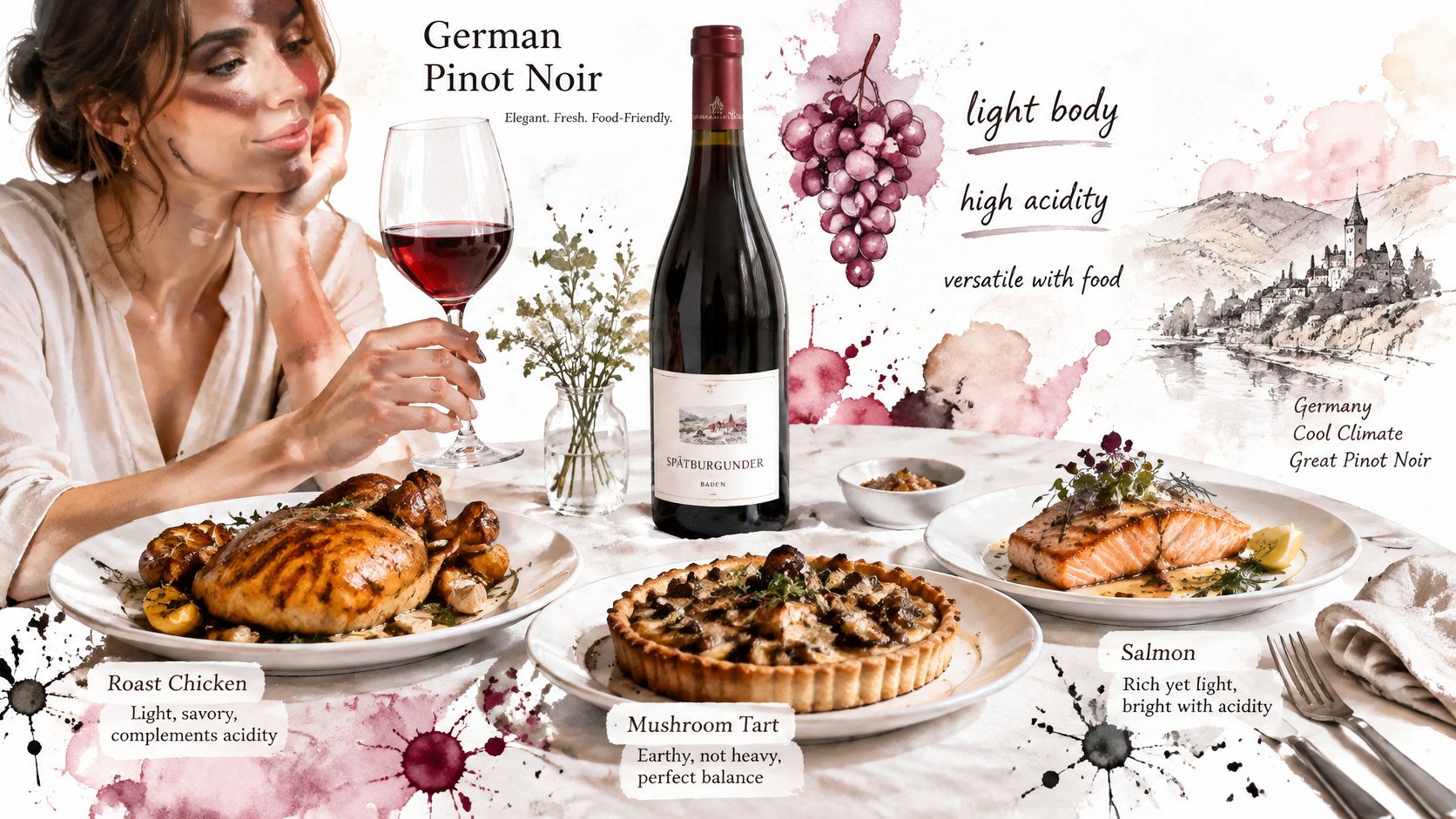
Match lighter wines with savory, lighter dishes
A fresh, lighter-bodied Spätburgunder works well with roast chicken, salmon, and mushroom dishes. Its acidity brings lift to savory flavors, while its red-fruit character complements rather than covers the food. Tomato-based dishes can also be a good match, especially when the wine has enough freshness to balance the sauce.
Try a lighter bottle with a mushroom tart or roasted mushrooms. The earthy flavors in the dish echo the wine's savory side. With salmon, keep the preparation straightforward so the fish and wine don't compete with heavy sauces or strong spice.
A lightly chilled, lighter red can also work with charcuterie and firm cheeses. Chilling the wine a little can make its fruit and acidity feel especially refreshing. Avoid serving it ice-cold, which can mute aromas and make the wine seem harder.
Give fuller bottles richer food
A fuller, barrel-aged Spätburgunder can handle roast pork, duck, or grilled meats. The richer texture of the dish can meet the wine's greater weight, while the fruit and oak can stand up to savory flavors. If the dish has a sweet glaze or a very spicy sauce, though, the wine may taste less balanced. Match the sauce as well as the main ingredient.
When a menu leaves you unsure, ask how the dish is cooked and whether its sauce is rich. Roast chicken with herbs points toward a lighter bottle; duck with a rich pan sauce may suit a fuller one. This wine pairing chart can help you think through similar choices without memorizing a long list of rules.
At a restaurant, you can keep the question simple: “I'm choosing between the chicken and the duck. Is the Spätburgunder lighter and fresh, or fuller and oak-aged?” That gives the server a useful cue and helps you order for the actual wine in the glass.
How to Order Your First German Pinot Noir
German Pinot is worth ordering on purpose because it gives you more than one style to explore. Don't look for a single “correct” bottle. Choose the kind of experience you want, then use the region, vintage, and winemaking details as clues.
Try one of these starting points:
- For freshness: Choose a northern or slate-influenced bottle. Expect a brighter, lighter feel, though producer and vintage still matter.
- For riper fruit: Look for Baden. It's the largest center for German Pinot, and warmer sites can offer a fuller expression.
- For more structure: Pick a barrel-aged bottle if you enjoy a rounder feel and oak spice.
Read the region and vintage together. The region helps you picture the growing conditions; the vintage gives you a clue about that year's ripeness and freshness. If the label lists a named vineyard or notes barrel aging, those details can help you narrow your choice further.
If wine labels still feel like a puzzle, this guide to reading wine labels without guessing can help you spot the useful clues. You don't need to memorize German wine terms before ordering. Just look for Spätburgunder, choose the style you're curious about, and ask the server for a recommendation if the details aren't clear.
Your next step is simple: take the free two-minute wine quiz to find your wine level and a good place to begin. Then look for Spätburgunder on your next wine list and order it with a dish you already know you enjoy.
Want short daily wine lessons that take about five minutes, practice quizzes, and an AI sommelier to help with choices like German Pinot Noir? Visit A to Wine and build a wine-learning path around what you like.