Is Pinot Noir Sweet? the Real Answer
Pinot Noir is usually dry, but it can land in the off-dry to sweet range when winemakers leave more sugar behind through late harvest or by stopping fermentation early. If it tastes sweet to you, you're not necessarily wrong. You may be tasting ripe fruit, soft tannin, and balance instead of real sugar.
That's the part many people miss. They search for “pinot noir sweet” and expect a yes-or-no answer, but the central question is usually bigger. Are you looking for a wine that feels soft and fruity, or one with actual residual sugar? Those are not the same thing, and Pinot Noir can show up in both camps.
Table of Contents
- Pinot Noir Sweet or Dry
- Understanding Residual Sugar and Dry Wine Rules
- Why Dry Pinot Noir Can Taste Sweet
- How Sweet Pinot Noir Styles Are Made
- Still, Sparkling, and Late Harvest Pinot Noir Compared
- How to Pick and Taste Pinot Noir with Confidence
Pinot Noir Sweet or Dry
Pinot Noir is usually a dry red wine, but dry doesn't mean boring, thin, or flavorless. It just means most of the grape sugar has been fermented into alcohol. The tricky part is that Pinot Noir's red fruit can make it taste sweeter than it really is.
Two different things get confused all the time
A glass can taste plush because of ripe cherry, raspberry, or pomegranate aromas, low tannin, and a round texture. That feeling is real. It just isn't the same as measurable sugar in the wine.
Practical rule: if you want actual sweetness, don't trust “lush,” “jammy,” or “fruit-forward” on the label. Check the wine's residual sugar if the producer shares it.
For many, the search for pinot noir sweet really splits into two needs. Some want a gentle red that won't feel harsh with food. Others want a noticeably sweeter bottle for sipping or dessert. Pinot Noir can serve both, but the bottle has to be chosen with intent.
Cool-climate Pinot Noir often leans toward freshness and savory edge. Warmer-climate bottles can feel riper and rounder, which is why people sometimes assume they're sweet. That's a perception issue, not proof of sugar.
If you've ever taken one sip and thought, “This tastes sweet, but the bottle says dry,” you're not confused. You're noticing aroma and balance. That's a useful skill, not a mistake.
Understanding Residual Sugar and Dry Wine Rules
Residual sugar is the grape sugar left after fermentation. Yeast eats sugar and turns it into alcohol. Whatever sugar remains is what wine people measure as RS, or residual sugar.
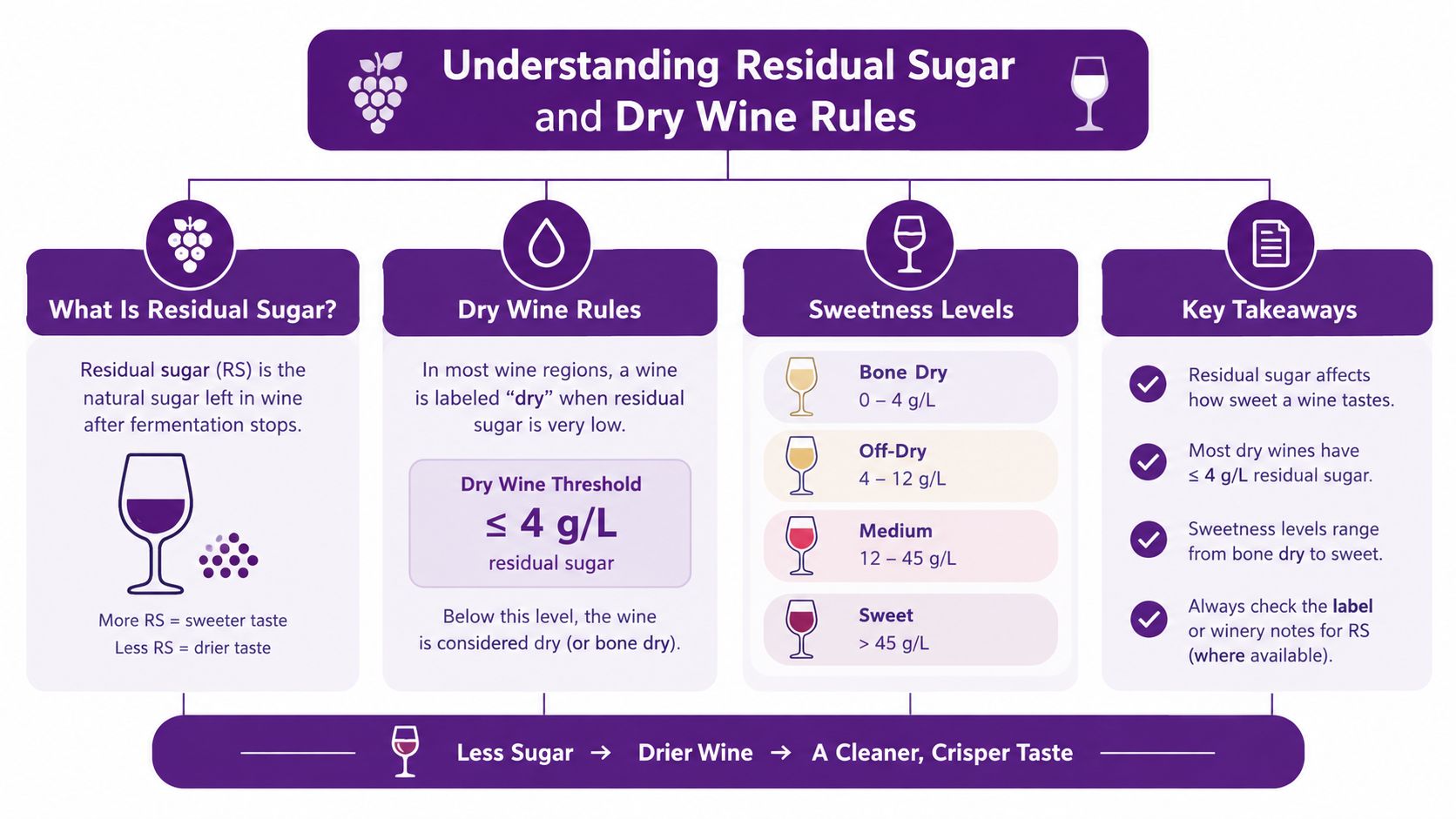
Under European Union rules for still wine, a wine can be labeled dry at up to 4 g/L RS. That ceiling can rise to 9 g/L when acidity is high enough to balance the sugar, so a wine can still feel dry even with a little leftover sugar (Decanter on residual sugar).
Why the label can fool you
A bottle that smells like cherries and raspberries may not be sweet at all. Fruit aroma is not the same thing as sugar. That's why a practical buyer looks for three things together, not one word on the front label.
- Residual sugar, to know how much sugar is left.
- Total acidity, because acidity keeps sweetness from feeling flat.
- Alcohol, because higher alcohol can make a wine feel warmer and rounder.
The technical sheet beats marketing language every time. In the United States, sweetness terms are not regulated the same way they are in the EU, so words like “dry” or “sweet” on an American label aren't standardized in the same way (TTB sweetness labeling guidance). That's why producer data matters more than tasting-note fluff.
If you remember one thing, make it this. Dry wine can still taste fruity. Fruity wine can still be dry. The number that settles the argument is RS.
Why Dry Pinot Noir Can Taste Sweet
A dry Pinot Noir can taste sweet because your nose is doing part of the work before your tongue even gets involved. Ripe cherry, raspberry, and pomegranate aromas create a sweet impression, even when the wine has very little residual sugar. That impression gets stronger when the wine is soft, warm, and low in tannin.
The body matters as much as the fruit
Pinot Noir is naturally delicate in tannin, which means sweetness feels more obvious than it would in a firmer red. Tannin is the drying, grippy feeling you get in some red wines. When that grip is light, fruit reads louder.
Serving temperature matters too. A slightly cooler Pinot Noir can feel tighter and fresher. A warmer glass can feel softer and more generous, which many people interpret as sweetness. That doesn't mean the wine changed chemically, just that the balance shifted in the glass.
A simple comparison helps. Taste a cool-climate Pinot Noir next to a warmer-climate one, then compare both with a clearly off-dry wine. The off-dry wine will usually have obvious sugar. The Pinot may only seem sweet because the fruit is vivid and the tannin is gentle.
If you taste sweetness in a dry Pinot Noir, trust your palate, but don't confuse aroma with sugar.
This is the cleanest habit to build. Stop asking, “Is it sweet or not?” and start asking, “Is this fruit sweetness or residual sugar?” That question saves a lot of bad bottle choices.
How Sweet Pinot Noir Styles Are Made
When Pinot Noir is sweet, somebody made that choice on purpose. The grape didn't turn sweet by accident. Winemakers either let the fruit hang longer, stop fermentation early, or use other concentration methods to leave more sugar behind.
Late harvest is the classic route
In a late-harvest style, grapes stay on the vine longer than normal. Sugar and fruit flavor concentrate as the fruit hangs on, and that can push the finished wine into a sweeter range. Pinot Noir works for this because its thin skin and early ripening can fit cool-climate growing patterns where healthy fruit can stay on the vine longer.
A modern example comes from Ohio, where a 2023 late-harvest Pinot Noir made from limestone-grown fruit was scheduled for release in September, which shows that the style isn't limited to Europe (Cleveland.com on the Ohio winery release).
Pinot Noir's wider global planting footprint also helps explain why these styles show up in more places now. A 2025 wine-economics study says Pinot Noir's share of the world's wine-grape bearing area rose from about 0.8% in 1990 to 2.4% in 2016, and its ranking moved from 30th to 10th in the world during that span (Wine Economics study PDF). That spread matters because more cool-climate regions can experiment with late harvest and dessert styles.
Sweetness is still a balancing act. If sugar goes up but acidity stays low, the wine can feel heavy. If acidity stays firm, the sweetness feels cleaner and more refreshing.
Still, Sparkling, and Late Harvest Pinot Noir Compared
If you're shopping for Pinot Noir sweet, the bottle type matters as much as the grape name. “Pinot Noir” alone doesn't tell you whether you're buying a dry still red, a sparkling wine, or a late-harvest wine. Those are very different experiences.
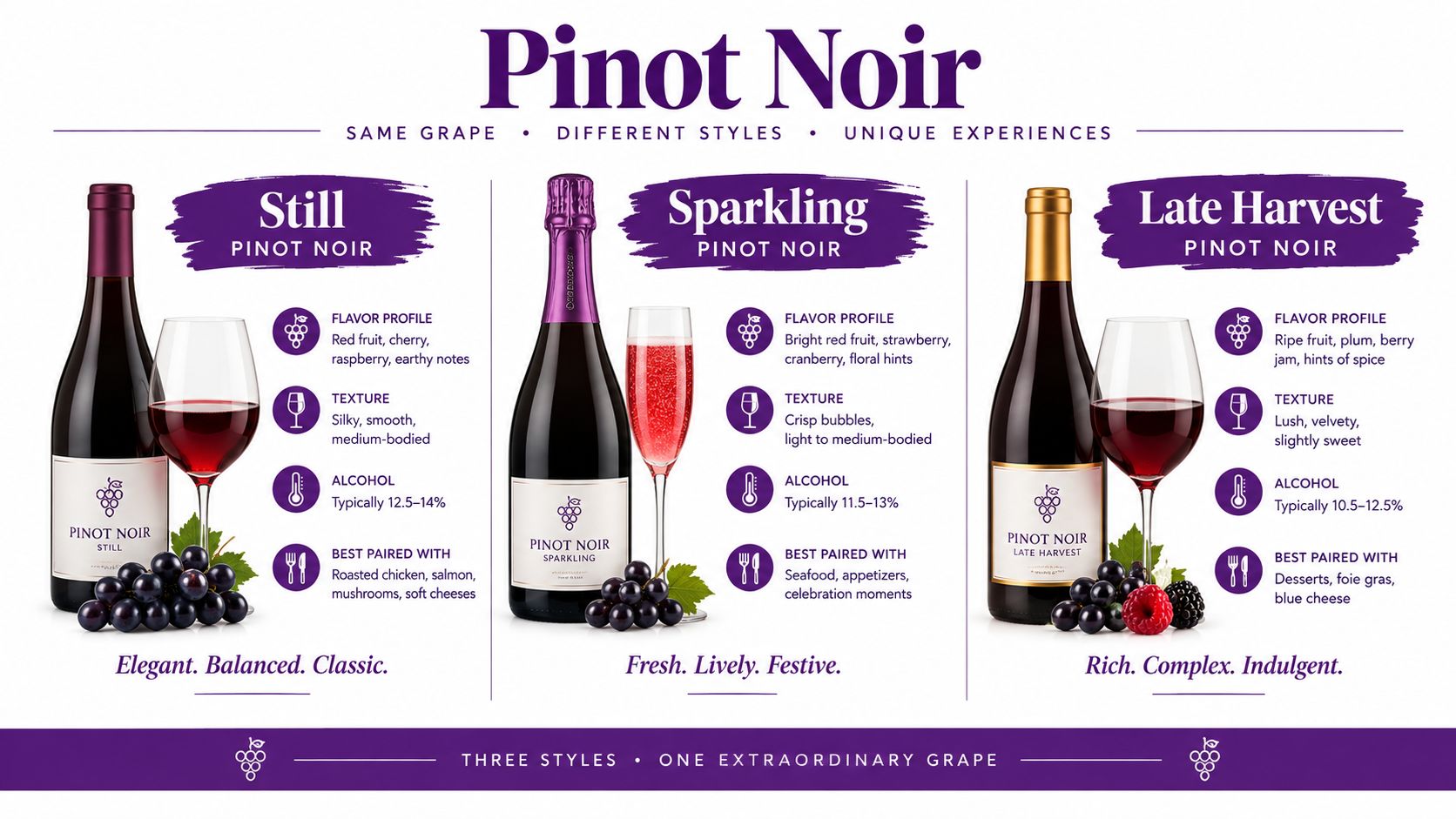
| Style | What to expect | Sweetness clue |
|---|---|---|
| Still Pinot Noir | Usually red, usually dry, often cherry-driven | Soft fruit can seem sweet without much sugar |
| Sparkling Pinot-based wine | Can range from brut to sweeter styles depending on dosage | Dosage changes sweetness after fermentation |
| Late-harvest Pinot Noir | More likely to show actual sugar and richer fruit | Best bet if you want real sweetness |
Sparkling styles add another wrinkle. Pinot Noir can be used in sparkling wine, and dosage, the small sugar addition before final bottling, can push the wine toward brut, off-dry, or sweeter expression. If you want to compare sparkling styles in a broader way, the guide to sparkling wine types helps show where sweetness can enter the picture.
A simple buying map
If you want soft tannins and ripe fruit, pick a still Pinot Noir from a warmer region. If you want genuine sugar, look for late-harvest wording, sparkling dosage terms, or direct producer data.
Sweetness follows the category first, then the grape name.
That's the shortcut. Don't shop by “Pinot Noir” alone. Shop by format, then by sugar.
How to Pick and Taste Pinot Noir with Confidence
Start with the back label or the producer's site. Look for residual sugar, then check acidity and alcohol together. If the bottle only gives you cherry, vanilla, or jam notes, those are flavor clues, not proof of sweetness.
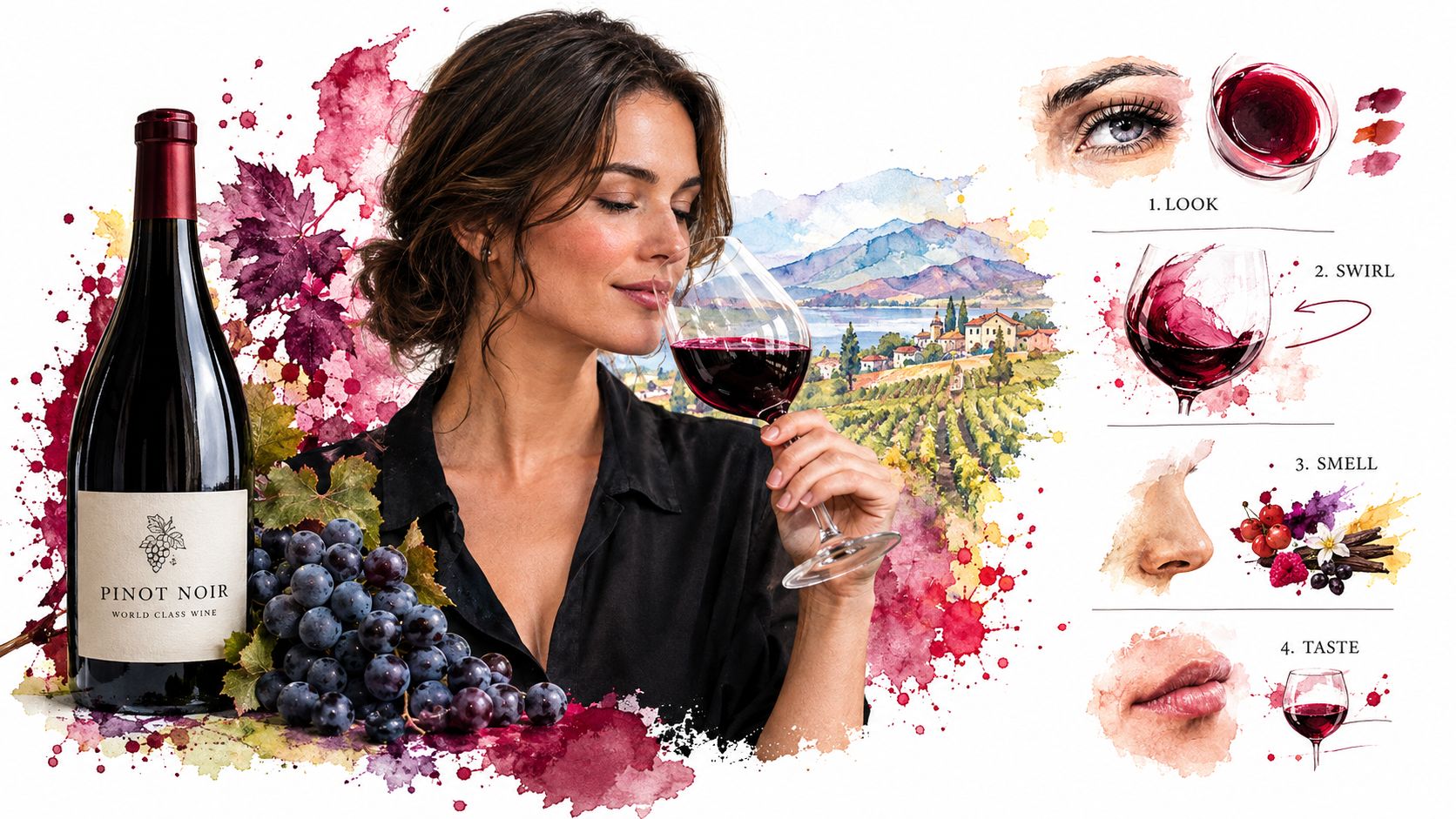
A quick tasting test that actually works
Pour three wines if you can, or find them one at a time.
- Taste a cool-climate Pinot Noir. Notice the acidity and the leaner fruit.
- Taste a warmer-climate Pinot Noir. Watch for riper fruit and a softer feel.
- Taste a clearly off-dry wine. Use it as your sugar reference point.
That side-by-side comparison teaches your palate faster than memorizing labels. You'll start to notice when a wine is truly sweet and when it just tastes generous.
A little shorthand helps here. Wines in the roughly 4–12 g/L RS range can feel off-dry and work well with spicy food, salty food, or mildly sweet dishes, as long as the acidity stays firm (Flight Wine Bar on residual sugar and sweetness perception). Pinot Noir's delicate tannin makes that sweetness easier to notice than it would be in a bigger red.
Try one bottle with roasted chicken, one with salmon, and one with a spicier dish. You'll learn faster than you think. And if you want more short daily lessons, practice quizzes, and an AI sommelier to help you choose, A to Wine is built for exactly that kind of confidence.