Pork Chops Wine Pairing: A Practical Guide
You're standing in front of the wine shelf with pork chops on the menu, and the usual rules feel fuzzy. Do you grab a red because it's meat, a white because the sauce looks bright, or something in between because the chop is lean but the glaze is sweet? That confusion is normal, because pork chops wine pairing is less about memorizing a bottle list and more about reading the finished dish.
The good news is that pork chops are one of the easiest foods to pair once you stop treating them like a single category. A plain grilled chop, a butter-basted chop, and a chop with apple glaze all ask for different bottles, even though they share the same protein. The best match usually comes from the dish's flavor intensity, sauce, and structure, not the word "pork" on its own.
Use acidity as the deciding factor
White wine works because pork doesn't need heavy tannin
Adjusting Your Pour for Sauces and Glazes
Pan-seared and oven-roasted chops like elegance
Why White Wines Often Beat Reds for Pork
Sauce and Glaze Pairing Matrix
Grilled and smoked chops want fruit and restraint
The Core Rule for Matching Wine Structure to Meat
Think of the chop as a blank page
Why Pork Chops Are the Ultimate Pairing Canvas
Table of Contents
- Why Pork Chops Are Such a Flexible Pairing
- The Core Rule for Matching Wine to the Dish
- Choosing Wines Based on Cooking Methods
- Adjusting Your Pour for Sauces, Glazes, and Preparations
- When White Wines Work Especially Well with Pork
- Quick Reference Guide for Pork Chop Pairings
Why Pork Chops Are Such a Flexible Pairing
Pork chops can move in a lot of directions at the table. Some are mild and simply seasoned. Others are smoky, creamy, mustardy, sweet, or spicy. That range is exactly why one fixed wine rule does not help much.
A better starting point is to think about the whole plate. General pairing guidance from WSET and pork-specific advice from Decanter's pork pairing guide both point in the same direction: match the wine to the dish's weight, flavor intensity, acidity, sweetness, and richness, not just to the meat.
Think of the chop as a base, not a rule
A pork chop picks up character quickly from the way it is cooked and sauced. A smoky grilled chop tastes very different from one that's pan-seared in butter or finished with apple and mustard.
Practical rule: don't ask, "What wine goes with pork?" Ask, "What happened to the pork on the plate?"
That shift keeps the decision simple. Lean meat can still carry bold seasoning. A rich or fatty preparation can still work with a light, refreshing wine if that wine brings enough acidity or lift. Sauce, browning, smoke, sweetness, and heat often tell you more than the cut alone.
Sommy's pork chop pairing guide
If you keep that in mind, the choice gets easier. You're not choosing a "pork wine." You're choosing the right bottle for the dish's final shape.
The Core Rule for Matching Wine to the Dish
Wine structure sounds technical, but the basics are simple. Acidity feels bright and mouthwatering, tannin creates grip and dryness, and body is the wine's perceived weight and fullness in the mouth.
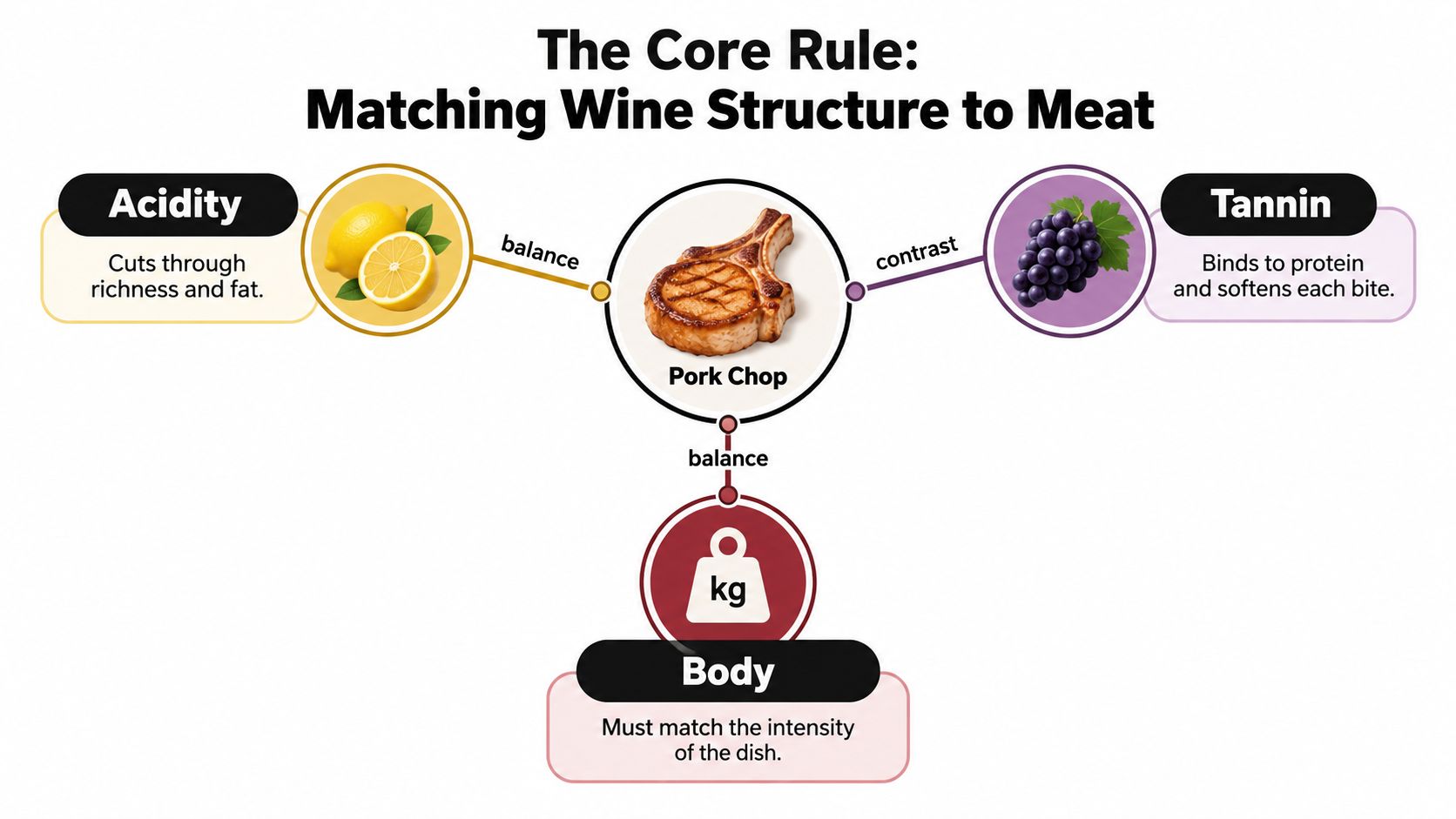
Most pork chops do not need a giant wine. If you pour something too tannic, the wine can feel drying and the meat can seem flatter by comparison. If you pour something with lively acidity and moderate structure, it usually keeps the bite fresher and leaves more room for the food. That is one reason guides like Decanter's pork pairing guide so often favor bright whites and low-tannin reds for many pork dishes.
Read the plate before you read the label
Start with a few simple questions. Is the chop gently cooked or deeply browned? Is the main signal smoke, butter, herbs, cream, mustard, sweetness, or chili heat?
For a clean, lightly seasoned chop, medium-bodied whites with good acidity or low-tannin reds often make the most sense. Once the chop gets grilled or pan-seared, the browning adds savory intensity, and that is where wines with enough flavor and freshness tend to do better than wines that rely on heavy oak or aggressive grip.
Quick decision rule: match the wine's weight and flavor intensity to the dish. Acidity can refresh rich preparations, while salt, fat, and protein can soften the perception of tannin.
If you're at a shop and you do not know the exact bottle, use that as a shortcut. Ask for a wine with bright acidity and restrained tannin, or a white with enough texture to stand up to butter and sear. The more browned, smoky, sweet, or richly sauced the chop becomes, the more the wine should lean on balance and flavor clarity instead of sheer power.
Choosing Wines Based on Cooking Methods
The cooking method changes the pairing more than you might expect. A gently roasted chop with herbs needs a different bottle from a chop that spent time over charcoal, because smoke and browning add a savory edge that plain seasoning does not have.
Grilled and smoked chops want freshness and flavor
Grilled pork chops often work best with Pinot Noir or Beaujolais, especially when the char is light and the seasoning is simple. That is the kind of prep where the wine does not need to overpower the food. It just needs enough fruit, acidity, and savory interest to keep up with the grill notes, which is consistent with recommendations from Armchair Sommelier's pork chop pairing overview and the International Wine & Food Society pairing guide.
If the chop has deeper browning, more smoke, or a darker rub, you can step up in flavor intensity without automatically reaching for more alcohol, heavier body, or tougher tannin. A more savory Pinot Noir, a fuller Beaujolais cru, or a medium-bodied red with good acidity can make more sense than a heavy, oaky red.
A chop with sweet paprika or smoked paprika can handle that extra flavor because those seasonings add aroma and smokiness more than heat. If the dish is actually hot from chili, hot paprika, or another spicy element, the pairing changes a bit. In that case, lower alcohol and restrained tannins help avoid making the burn feel stronger, and an off-dry wine can be useful if the heat level is noticeable, a principle supported by WSET's guidance on pairing drinks with spice.
Pan-seared and oven-roasted chops like balance
For pan-seared or oven-roasted chops, consider how deeply the surface is browned and whether butter, herbs, or a pan sauce dominate the dish. That gives you room for either elegant reds or structured whites, depending on the preparation.
Think of Pinot Noir as the safe, polished choice when the chop is browned but not heavily sauced. It brings enough freshness to keep the bite lively, and usually enough softness to avoid fighting the meat. If the chop is simply roasted with herbs, a clean white can also work well, especially one with texture rather than heavy oak.
For an earthy mushroom pan sauce, Pinot Noir is still a natural fit because its brightness cuts through the richness while its gentle tannins stay friendly next to pork. A classic example of that style pairing appears in this mushroom pork chop and Pinot Noir combination.
If you're choosing white here, style matters. A fresh, lightly oaked Chardonnay can work with butter and sear. A dry Chenin Blanc with good acidity and some texture can also be a smart choice when the dish is savory rather than sweet.
Chardonnay with good acidity and well-integrated oak can complement butter, cream, and browned flavors; choose a style whose oak intensity does not overwhelm the dish.
Don't over-correct for "meat"
The trap is assuming every pork chop needs a red because it's meat. That rule falls apart quickly when the chop is gently cooked or seasoned with herbs, citrus, or butter.
A gently cooked chop usually wants a gentler wine. A chop browned hard on the grill can take more flavor intensity, but not so much that the wine starts bullying the food.
Familia Morgan's pork chop pairing guide
Adjusting Your Pour for Sauces, Glazes, and Preparations
On many pork chop plates, the sauce is the real decision-maker. The same chop can taste tart, sweet, creamy, earthy, or spicy depending on what sits on top.
The most useful way to think about it is simple. Sweet sauces can make dry tannic reds taste harsher. Creamy sauces usually need freshness so the dish does not feel flat. Mustard and tart citrus want brightness. Chili heat tends to work better with lower alcohol, low tannin, and sometimes a touch of sweetness.
Sweetness needs a little extra care. A tart citrus sauce is not the same thing as a sugary citrus glaze, and a fruit-based sauce does not automatically require an off-dry wine. What matters is how sweet the finished sauce actually tastes. An off-dry wine may work with moderately sweet glazes, but it may not have enough sweetness for every sugary, sticky sauce. For sweeter glazes, choose a wine with enough sweetness to remain balanced alongside the sauce.
Sauces, Glazes, and Preparations Pairing Guide
| Sauce or Preparation | Flavor Profile | Ideal Wine Style |
|---|---|---|
| Apple glaze, moderately sweet | Sweet, tart, fruity | Off-dry Riesling with bright acidity and low alcohol |
| Apple glaze, very sweet or sticky | Sweet, glossy, concentrated | A wine with enough sweetness to stay balanced alongside the glaze |
| Apple sauce or fruit sauce, mostly savory or only lightly sweet | Fruity, tangy, lightly savory | Dry Riesling, dry Chenin Blanc, or Pinot Noir with low tannin |
| Mustard sauce | Sharp, bright, savory | Fresh, lightly oaked Chardonnay or other crisp, medium-bodied white |
| Citrus sauce, tart and savory | Zesty, fresh, aromatic | Sauvignon Blanc or dry Riesling |
| Citrus glaze, moderately sweet | Sweet, bright, glossy | Off-dry Riesling or another lightly sweet, low-tannin wine |
| Citrus glaze, very sweet and sticky | Sweet, bright, concentrated | A wine with enough sweetness to remain balanced alongside the sauce |
| Cream sauce | Rich, smooth, fatty | Fresh, lightly oaked Chardonnay or dry Chenin Blanc |
| Breaded or fried chop | Crisp, rich, salty | Sparkling wine or a high-acid white |
| Mushroom cream sauce | Earthy, rich, savory | Pinot Noir or a textured, dry white |
| Chili-spiced glaze or hot, spicy sauce | Sweet-hot or savory-hot | Off-dry Riesling, or another low-alcohol wine with low tannin |
Use that chart like a cheat sheet, not a law book. If the sauce tastes sweet, be careful with tannic reds. If the dish is creamy or fatty, freshness matters. If the dish is truly spicy, focus on low tannin and lower alcohol as much as acidity.
The smartest move is to taste the sauce, not just the meat. Once you do that, the bottle choice gets much clearer.
When White Wines Work Especially Well with Pork
The old rule says red wine goes with meat. Pork chops are one of the clearest examples of why that shortcut is too simple.
White wines can be excellent with pork when the dish needs cut, precision, or a lighter touch. That is especially true for buttered, citrusy, creamy, apple-forward, or spicy preparations, where a heavy or tannic red can feel clumsy.
White wines shine when cut and texture matter most
A chop with lemon, butter, or cream usually asks for something that cuts rather than grips. That is where Sauvignon Blanc, dry Chenin Blanc, dry to off-dry Riesling, and lightly oaked Chardonnay can shine.
Style matters here:
- Sauvignon Blanc works best when the dish is tart, herbal, or citrusy.
- Dry Chenin Blanc is useful when you want both acidity and a little texture.
- Dry Riesling suits tart or savory sauces, while off-dry Riesling is especially helpful when the dish is moderately sweet, spicy, or both.
- Lightly oaked Chardonnay fits butter, cream, and gentle browning especially well.
Choose by style, not by color alone
If you're choosing between red and white, ask which wine has the right shape for the dish. Red wines can also bring high acidity, and sometimes that is exactly why Pinot Noir, Gamay, or another fresh, low-tannin red works so well with pork.
That does not mean white is always better. It means white often works especially well when the sauce is doing most of the flavor work, or when you want refreshment without tannin. If you want a simple label-reading habit, look for style cues such as crisp, dry, lightly oaked, low tannin, off-dry, or fresh. Those words tell you more than the grape name alone.
Quick Reference Guide for Pork Chop Pairings
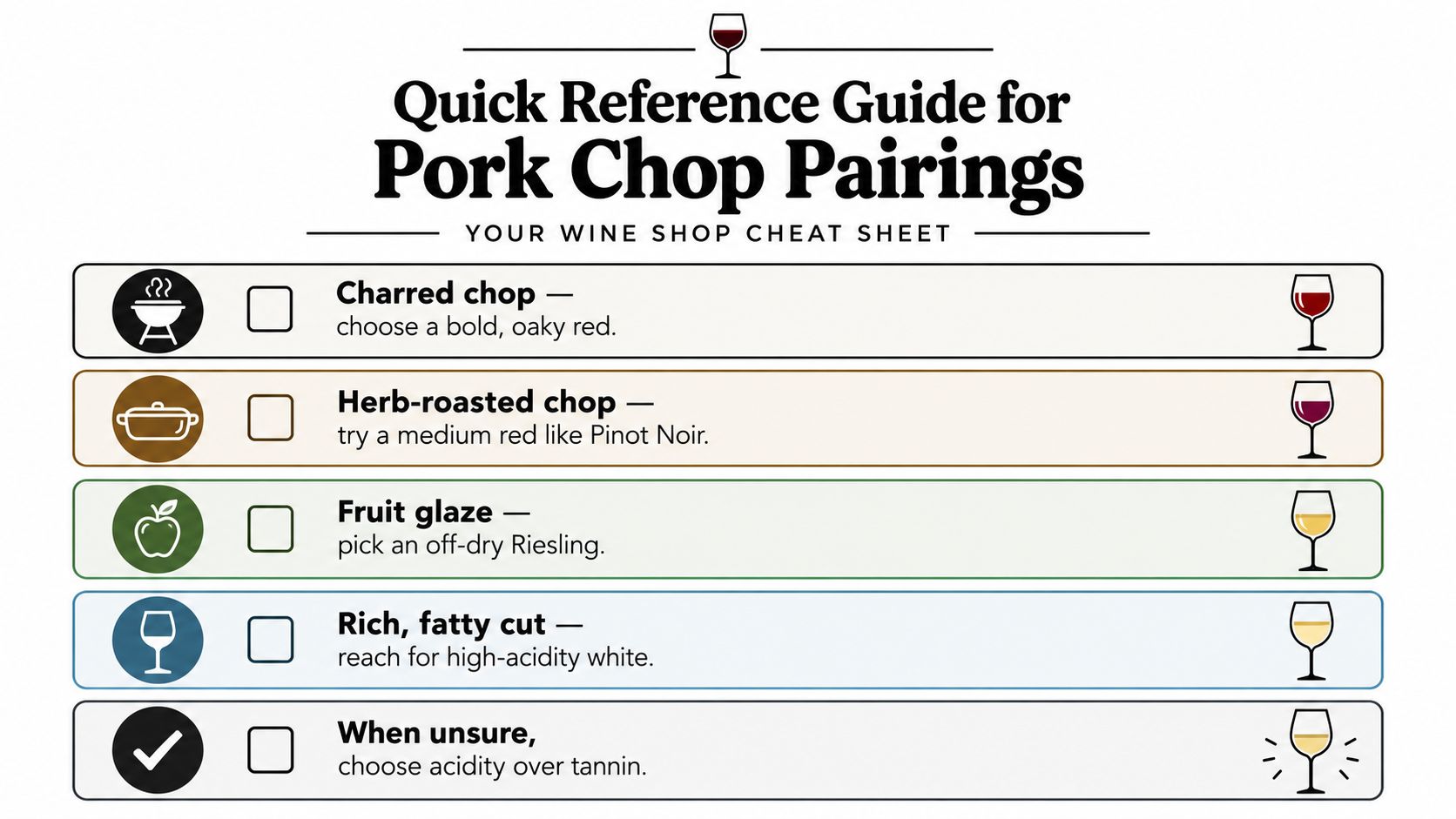
If you're in a store or at a restaurant, keep the choice simple. Start with the cooking method, then check the sauce, then choose the wine's structure.
- Lightly charred or simply grilled chop: choose Pinot Noir or Beaujolais, especially when the seasoning is straightforward.
- Deeply browned or smokier grilled chop: stay with fresh, balanced reds, but move up in flavor intensity rather than just reaching for more tannin.
- Herb-roasted or pan-seared chop: try Pinot Noir, a fresh lightly oaked Chardonnay, or a dry Chenin Blanc.
- Fruit sauce or glaze: let the actual sweetness guide you. Dry wines work with tangy or lightly sweet sauces, while off-dry wines can work with moderately sweet glazes.
- Very sweet, sticky glaze: choose a wine with enough sweetness to remain balanced alongside the sauce.
- Rich, creamy, or fatty preparation: reach for a wine with enough acidity to refresh the palate. It can be white, sparkling, or a fresh low-tannin red.
- Spicy preparation with chili heat: choose lower alcohol, low tannin, and consider off-dry styles.
- When unsure: follow the sauce and the cooking method before you follow the color.
For a fast visual reminder, keep this wine pairing chart for pork chops in mind when you shop or order. The goal is not to force a perfect match every time. It's to make a sensible one quickly.
If you remember only one thing, make it this. Pork chops do not demand one wine. They demand the right wine for the way they were cooked, sauced, and seasoned. Once you start reading the plate instead of memorizing a grape, the whole category gets much easier.
If you want more straightforward help choosing wine without the guesswork, A to Wine is built for that exact kind of everyday decision. You'll find practical wine guidance, food pairing help, and clear explanations that make bottles, labels, and menu choices feel less intimidating.