Sparkling Red Wine Explained: Styles, Bubbles, Pairings
Sparkling red wine is real red wine with bubbles, usually made via a second fermentation, and it ranges from bone-dry Lambrusco secco to dessert-sweet Brachetto d'Acqui. Sweetness depends on the style, not the color.
That challenges the most popular advice about wine. Red wine doesn't have to be still, heavy, or served warm. Sparkling red isn't automatically sweet, cheap, or unserious either. Champagne can be complex and dry, while still red wine can be casual. Sparkling red sits comfortably between those worlds.
The label may say “red,” but the glass can feel bright, juicy, and refreshing. Once you know what to check, you can choose a bottle, read its sweetness, serve it properly, and pair it with dinner without guessing.
Table of Contents
- How Sparkling Red Wine Differs From Still Red
- How Sparkling Red Wine Gets Its Bubbles
- The Sparkling Red Styles Worth Knowing
- Reading the Label for Sweetness
- How to Serve Sparkling Red Wine
- Food Pairings That Actually Work
- Your Next Step With Sparkling Red Wine
How Sparkling Red Wine Differs From Still Red
Sparkling red wine is red wine that carries dissolved carbon dioxide, the gas behind its bubbles. Red grapes provide the color, while fermentation or another sparkling-wine method creates the fizz. The result is a broad family of wines, not one fixed flavor or level of sweetness.
Lambrusco is the clearest reference point. Production centers on Emilia-Romagna in Italy, where the relevant vineyards cover approximately 16,600 hectares, including about 10,000 hectares devoted to Lambrusco. Core DOC wines produce more than 46 million bottles annually, while Lambrusco Emilia IGT adds approximately 115 million bottles. Together, that makes about 161 million bottles. WineNews describes Lambrusco's production and global reach
More than 95% of Lambrusco production is sparkling, and around 60% is exported, with Germany and the United States among its largest foreign markets. Lambrusco is therefore a widely made table wine with an audience far beyond its home region, rather than a novelty found only on specialist shelves.
Why the category feels confusing
The word “red” suggests weight, tannin, and warmth. Tannin is the drying sensation found in black tea or a young Cabernet Sauvignon. Bubbles and acidity create a different experience. They make the wine feel lively, fresh, and thirst-quenching.
That combination explains why dry Lambrusco suits pizza, burgers, and cured meat. Its red-fruit flavor still feels recognizably red wine, while the fizz and acidity keep the finish light and moving. A dense, still red can feel heavier beside the same food.
Sweetness causes a second source of confusion. Sparkling red wine ranges from crisp and savory to gently sweet. Brachetto d'Acqui can taste like a floral dessert wine, while dry Lambrusco can work as a refreshing dinner red.
The practical point: color tells you less than the sweetness wording. A red bottle can be dry, lightly sweet, or dessert-like, so read that wording before choosing what to buy.
How Sparkling Red Wine Gets Its Bubbles
The bubbles usually come from a second fermentation, not from just injecting carbon dioxide like soda. Yeast converts sugar into alcohol and carbon dioxide. The winemaker captures that gas in a controlled environment, then keeps it in the wine.
Think of the three main methods as three ways to make the same kind of fizz. One makes bubbles in a large batch, one makes them bottle by bottle, and one catches fermentation before it finishes.
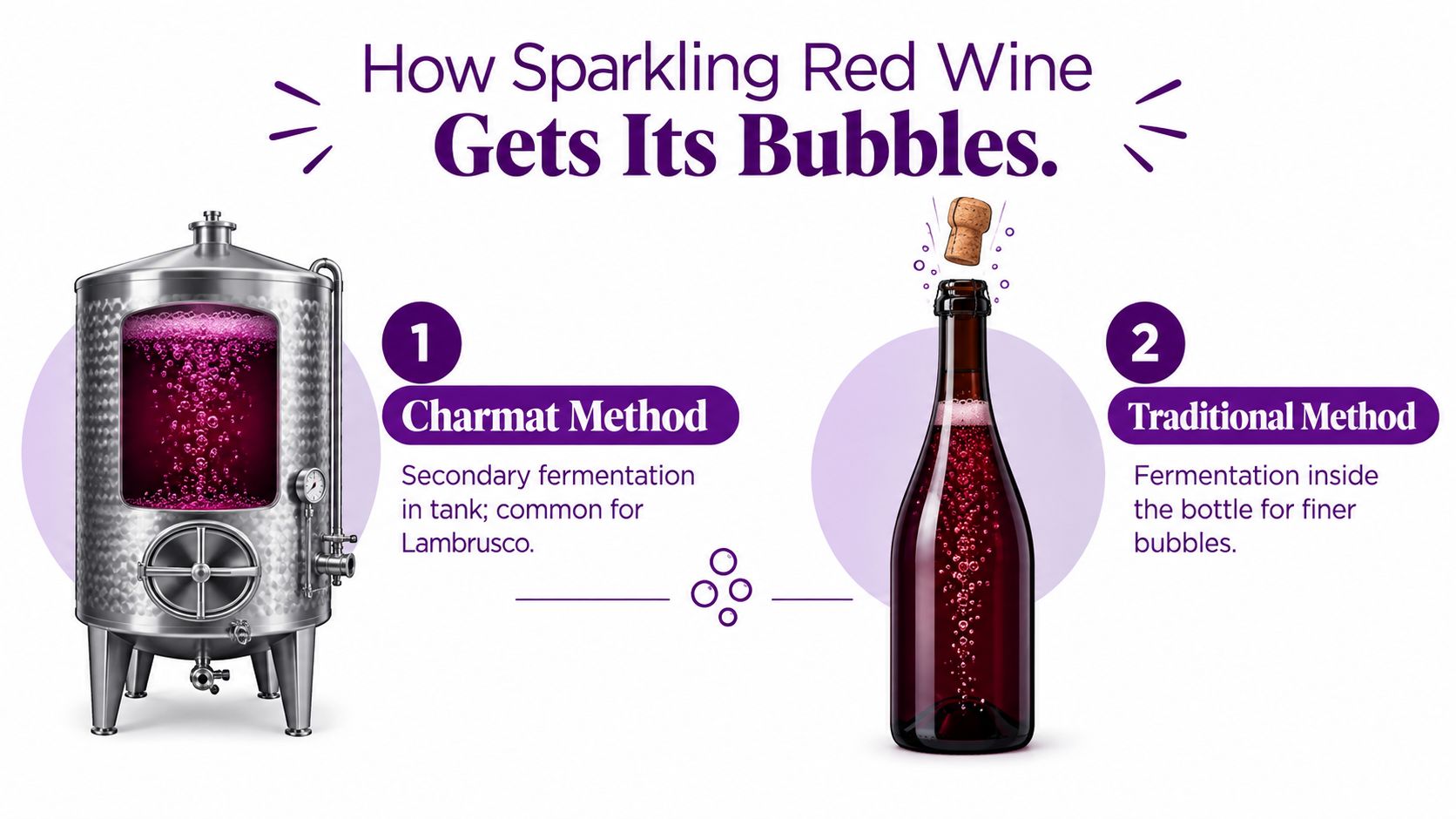
The tank method
In the Charmat method, a still base wine undergoes its second fermentation inside a pressurized stainless-steel tank. The tank holds the carbon dioxide created by fermentation. The wine is then filtered and bottled under pressure. This explanation of sparkling-wine production covers the process in plain terms.
This method is widely used for Lambrusco and Brachetto. It tends to protect fresh, primary fruit flavors, meaning the direct smell and taste of the grapes. That suits wines meant to be chilled, opened, and enjoyed with food.
If a label mentions Charmat or metodo Martinotti, expect a style focused on freshness and fruit rather than extended bottle-aged flavors. That doesn't make it simple in a bad way. It makes it useful at the table.
The traditional method
The traditional method makes the second fermentation inside each bottle. The wine later goes through riddling, which moves yeast sediment toward the neck, and disgorgement, which removes that sediment.
You'll often see this method called metodo classico on Italian labels. It can create finer bubbles and more developed flavors. In sparkling red wine, it's less common than the tank method, but it gives you a useful clue when you're shopping.
The ancestral method
The ancestral method catches fermentation while it's still underway. The wine is sealed in the bottle before fermentation is complete, and the remaining grape sugar creates the bubbles.
This approach may produce a more rustic, less polished style. The wine can be cloudy if the sediment remains. That's not automatically a fault. It's just a different winemaking choice.
The Sparkling Red Styles Worth Knowing
Start with three reference points. They aren't interchangeable, and choosing one instead of another can change the entire meal.
Lambrusco comes from Emilia-Romagna and is the world's most commercially significant sparkling red-wine family. It's often ruby-colored, floral, fruity, and built for the table. The family includes dry, off-dry, traditional-method, and ancestral-method wines. A Lambrusco secco is the bottle to order when you want something crisp with pizza or salty cured meat.
Brachetto d'Acqui comes from Piedmont. It must be made exclusively from the Brachetto grape. It's low in alcohol, floral, and clearly sweet, so it belongs closer to a lightly sweet dessert wine than to a dry dinner red. Choose it with chocolate, fruit desserts, or when you want a soft, aromatic after-dinner pour.
Australian sparkling Shiraz is the bolder option. It usually brings darker fruit and more body, so it makes sense with grilled meat or a heavier burger. Treat it like a full-flavored red that happens to have fizz, not like a delicate aperitif.
| Style | Origin | Sweetness | Alcohol | Best With |
|---|---|---|---|---|
| Lambrusco | Emilia-Romagna, Italy | Dry to sweet, depending on the label | Varies by bottle | Pizza, burgers, cured meat |
| Brachetto d'Acqui | Piedmont, Italy | Sweet | 5.5% ABV minimum for frizzante, 6.0% for spumante | Dessert and fruit |
| Sparkling Shiraz | Australia | Check the individual label | Check the individual label | Grilled meat and rich savory food |
Brachetto's rules help explain its distinctive feel. The frizzante style has lighter pressure of about 1 to 2.5 atmospheres, while spumante has at least 3 atmospheres. Permitted residual sugar ranges from 35 to 50 grams per liter for frizzante and 32 to 45 grams per liter for spumante, with minimum alcohol levels of 5.5% ABV and 6.0% ABV, respectively. The production details for Brachetto d'Acqui are outlined here.
For a wider look at sparkling categories, compare this guide to sparkling wine types. But don't shop by name alone. Shop by the job you need the bottle to do.
Reading the Label for Sweetness
A bottle labeled “sparkling red” could be dry enough for pizza or sweet enough for dessert. The color won't tell you which one you're holding. The sweetness word will.
Lambrusco labels often use Italian terms. Secco means dry. It allows up to 12 grams of residual sugar per liter, or up to 15 grams per liter when the wine has at least 5 grams of total acidity per liter. These Lambrusco sweetness categories are explained here.
Semisecco, also called abboccato, falls between 12 and 32 grams per liter. Amabile runs from 30 to 50 grams per liter. Dolce contains more than 50 grams per liter. The ranges overlap slightly because acidity changes how sweet the wine tastes.
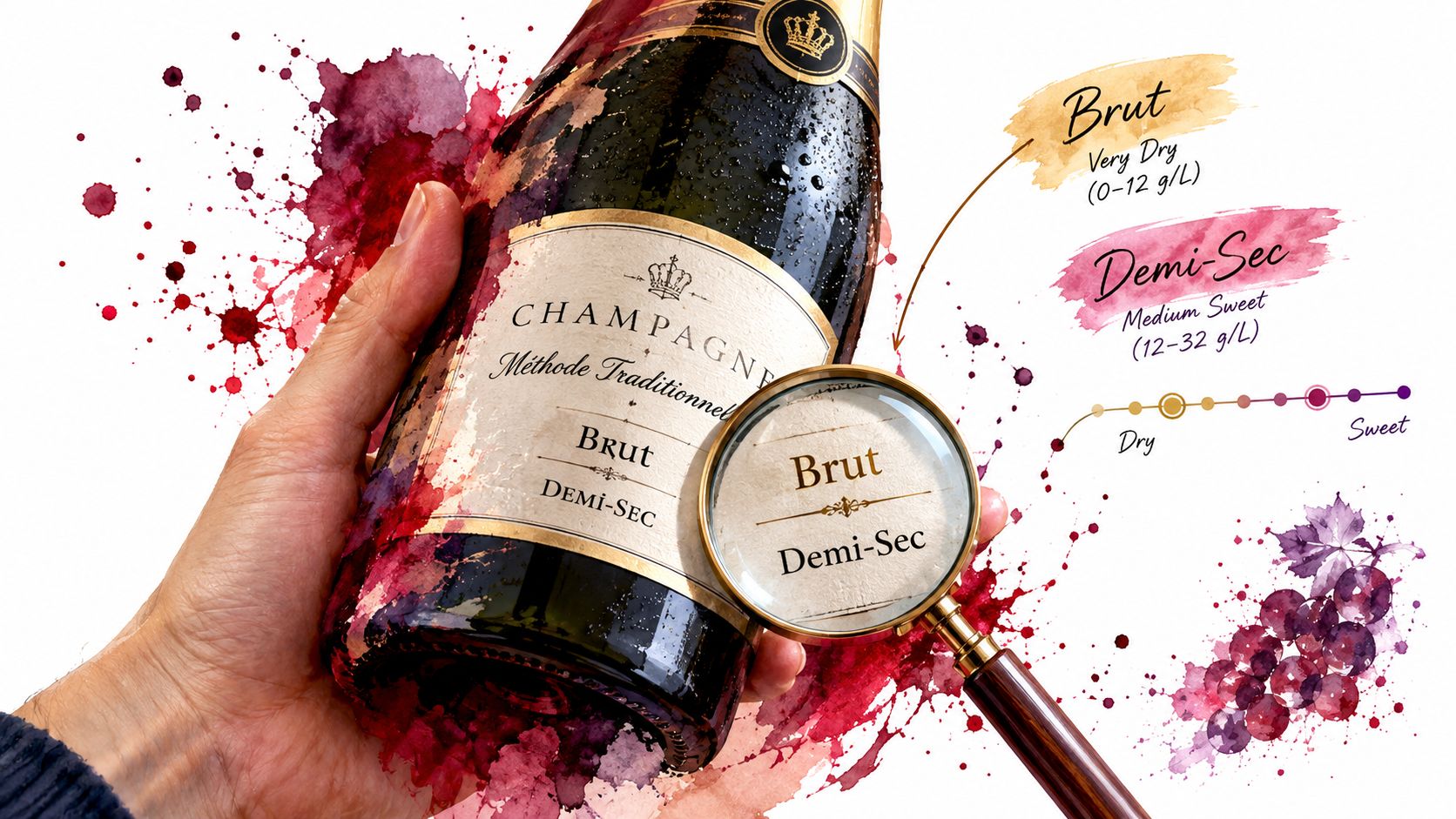
Use this four-step bottle check
Find the sweetness word. Look for secco, semisecco, abboccato, amabile, or dolce. If the label doesn't make it clear, ask the shop or check the producer's information.
Glance at ABV. Alcohol won't tell you the exact sweetness, but it helps set expectations. Brachetto d'Acqui, for example, has unusually low permitted minimum alcohol levels, which fits its sweet, floral style.
Look for the region or appellation. Lambrusco points you toward Emilia-Romagna. Brachetto d'Acqui points you toward Piedmont and a different drinking experience.
Match the bottle to the dish. Secco is the safer choice for pizza, burgers, and salty cured meat. Amabile or dolce may work better with spicy food or dessert.
The words on the label matter more than the words “sparkling red.”
A dry Lambrusco and a sweet Brachetto may both look red and bubbly, but they won't taste remotely alike. For a broader label-reading refresher, use this guide to reading wine labels without guessing.
How to Serve Sparkling Red Wine
The usual advice gets awkward here. Sparkling wines are commonly served around 40 to 45°F, while light-bodied, low-tannin reds are listed around 50 to 65°F. Fuller reds are listed warmer still, around 65 to 68°F. Virginia Tech's wine serving guidance shows why sparkling red wine sits between familiar rules.
Start with structure, not color. A light, sweet, or highly aromatic style usually benefits from more chilling. A fuller, dry style can taste better slightly warmer, because excessive cold suppresses aroma and can make the wine seem harsh or flat.
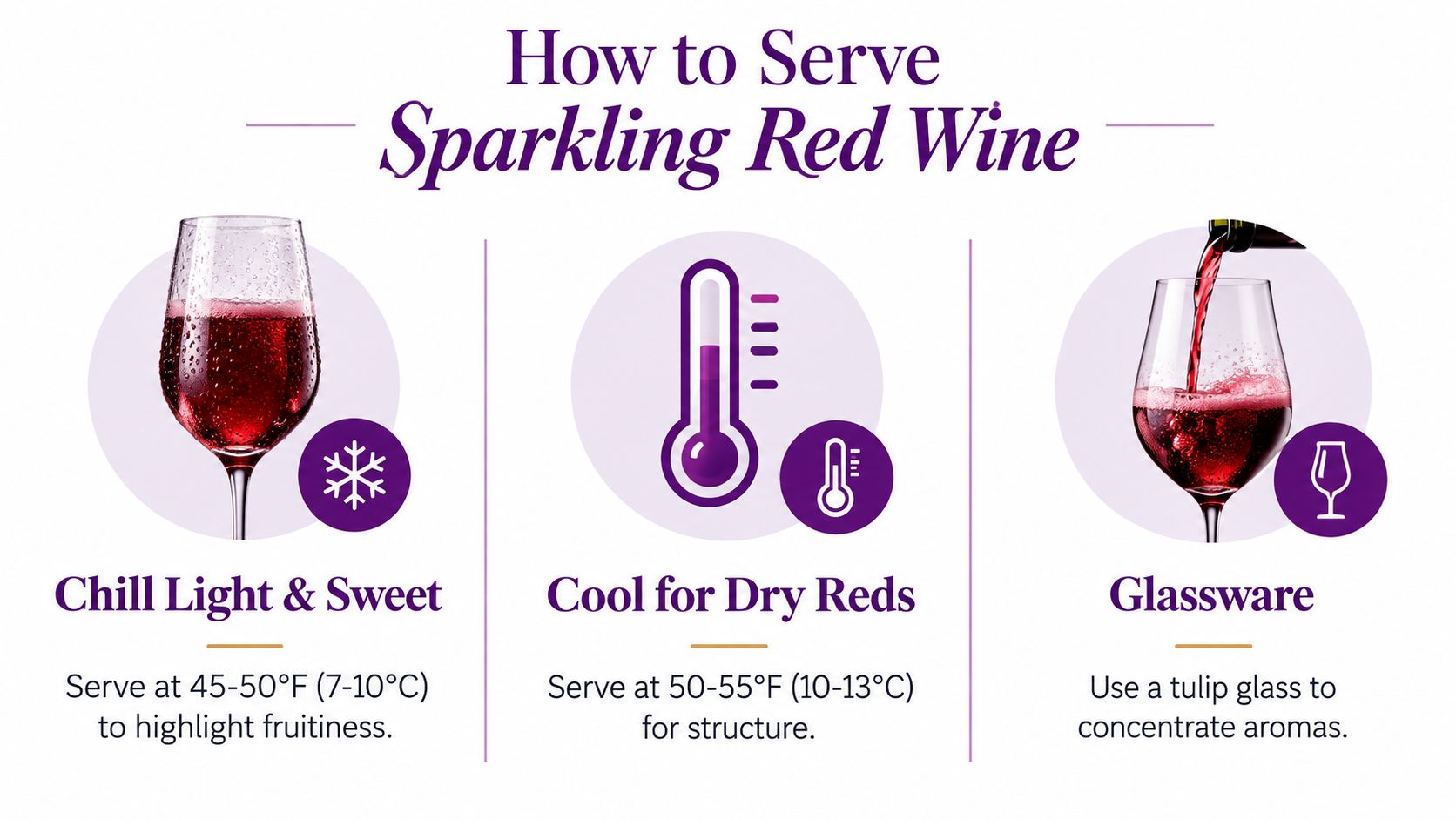
Try the two-temperature method
Put the bottle in the refrigerator, then begin with a light pour when it's cold. A target around 42 to 45°F works well for lighter, sweeter, or aromatic styles such as Brachetto and sweet Lambrusco.
For a dry, fuller Lambrusco, pour it cold and let the glass warm naturally. The first sip will emphasize freshness. Later sips may show more fruit and aroma as the wine opens.
Don't overthink the equipment. A flute helps preserve the bubbles and keeps the wine feeling brisk. A regular white-wine glass gives you more room to smell the fruit. A red-wine glass can work for a fuller sparkling Shiraz or a more structured dry red, but it may let the bubbles disappear faster.
The best home test is simple. Serve one glass cold, then wait a few minutes before judging the second pour. If the wine tastes flat, it may be too cold for its structure. If it tastes heavy or warm, chill it again.
Food Pairings That Actually Work
Pair sparkling red wine by sweetness, acidity, and body, not by color. Acidity is the mouthwatering, tart sensation that cuts through fat. That's why a crisp dry Lambrusco can refresh pizza better than a soft, low-acid red.
The EU specification for Lambrusco di Sorbara Rosso Spumante sets minimum total acidity at 6.0 grams per liter, expressed as tartaric acid. It describes the style as ruby-colored, relatively low in structure, and marked by average-to-high acidity with floral and fruity notes. The official EU specification helps explain why this kind of wine can balance rich food without feeling heavy.
Three dinners you can copy
Pizza night: Pick Lambrusco secco. The dry finish won't add extra sweetness to tomato sauce, while the bubbles and acidity refresh cheese, oil, and salty toppings. Pepperoni, sausage, mushrooms, and cured meat all make sense.
Spicy takeout: Move toward semisecco or amabile. A little sweetness softens the sensation of chili heat, while bubbles keep the wine lively. Try this with spicy noodles, hot chicken, or richly seasoned tacos.
Dessert: Choose Brachetto d'Acqui, especially if the dessert includes chocolate, berries, or fresh fruit. Its low alcohol, floral aroma, and obvious sweetness make more sense here than a dry Lambrusco.
Sparkling Shiraz belongs with the heavier plate. Its darker fruit and fuller shape can stand beside grilled beef, barbecue, or a substantial burger without disappearing.
The same bottle can work differently depending on temperature. Keep a dry Lambrusco cold for a fast, crisp pairing. Let a fuller style warm slightly in the glass if the food has more weight. For more practical pairing logic, use this guide on how to pair wine with food without guessing.
Your Next Step With Sparkling Red Wine
Buy two bottles this week: one Lambrusco secco and one Brachetto d'Acqui. Chill both to around 42 to 45°F, then taste them side by side with the same simple snack, such as cheese, fruit, or pizza.
That comparison will teach you the main lesson quickly. The color stays broadly similar, but the sweetness, alcohol, aroma, and food role change completely.
Use this decision framework whenever you shop:
- Check the sweetness word. Secco is the dry starting point. Amabile and dolce are sweeter.
- Glance at alcohol. It helps you predict whether the wine may feel light or more substantial.
- Match the dish. Dry for savory food, sweeter for spice or dessert, fuller styles for heavier meals.
You can build that confidence with short daily wine lessons that take about 5 minutes, practice quizzes, and an AI sommelier. Start with the free wine quiz, or use the Personal Sommelier when you have a specific dinner and no idea what to pour.
After a few minutes with this style, you should feel more confident ordering, buying, and serving sparkling red wine. No sommelier required.
A to Wine gives you short daily wine lessons, practice quizzes, and an AI sommelier for real questions like what to pair with pizza or which sparkling red to choose. Visit A to Wine and make your next bottle easier to understand before you open it.