What Does Full Bodied Wine Mean
A full-bodied wine is a wine whose body feels weighty and full in your mouth, and that feeling comes from alcohol, tannin, extract, and glycerol. It does not automatically mean high alcohol, and a wine with similar ABV can still feel light or balanced depending on structure.
You're staring at a wine list, the server is waiting, and half the labels sound like a dare. That's where body helps. It gives you a plain-language way to decide what will feel broad and plush versus lean and sharp.
Table of Contents
- What Full-Bodied Wine Actually Means in Your Mouth
- The Ingredients That Make a Wine Feel Full
- A Simple Mouthfeel Test You Can Run Tonight
- Quick Bottle Examples You Can Actually Find
- Full-Bodied Does Not Mean Red or High-Alcohol
- How to Use Body When You Order, Pair, or Buy
- A Confident Way to Think About Body
What Full-Bodied Wine Actually Means in Your Mouth
The freeze happens fast. One bottle says rich and bold, another says elegant, and your brain decides it needs a degree before dinner. It doesn't.
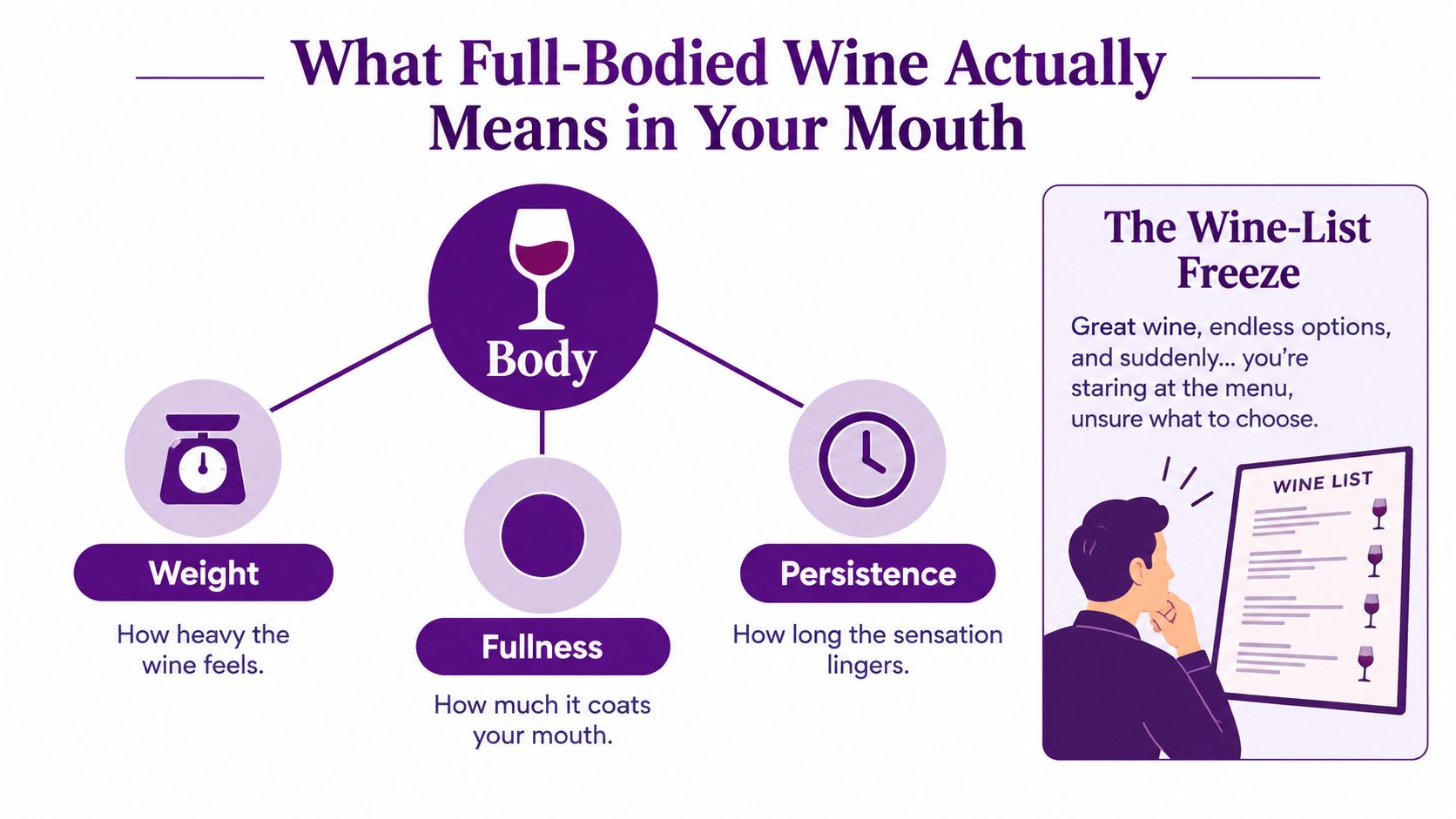
Wine body means the sense of weight, fullness, and persistence a wine creates in your mouth. Alcohol generally makes wine feel fuller, while tannin adds structure and grip. Penn State Extension
That's the core idea. Full-bodied is a texture judgment, not a quality score. A lighter wine can be excellent, and a fuller wine can still feel clumsy if the parts don't fit together. Body is about how the wine lands on your tongue, cheeks, and finish, not whether it's “better.”
What to notice first
Start with three questions. Does the wine feel light or weighty. Does it coat your mouth or disappear fast. Does the sensation linger after you swallow.
Practical rule: if you can feel the wine hanging around after the sip, you're already reading body, even if you don't know the grape.
That's why the phrase matters on a list. It helps you predict the feel of a wine before you buy it. If you want to go one layer deeper, pair this with a quick read on how acidity changes the feel of a wine.
The Ingredients That Make a Wine Feel Full
Body isn't one ingredient. It's a bundle. Picture a recipe where each piece pushes your palate in a different direction.
The main players
Alcohol usually adds warmth and a fuller feel. Tannin is the dry, slightly rough compound from grape skins, seeds, stems, and sometimes oak, and it adds grip. Extract is the dissolved material in the wine, the stuff that gives flavor density and texture. Glycerol adds a smoother, slightly oily feel, while acidity can pull the wine lighter by making it feel sharper and more mouthwatering.
Glycerol has a slightly viscous texture and can make wine feel rounder or silkier, which is one reason some full-bodied white wines feel substantial without red-wine tannin. UC Davis Wine Chemistry
Residual sugar can also make a wine feel weightier, because sweetness adds perceived density. That doesn't mean the wine tastes dessert-like. It just means the mouthfeel gets broader.
| Ingredient | What it adds | Sensation in the mouth |
|---|---|---|
| Alcohol | Warmth, body, fullness | A warmer, broader feel |
| Tannin | Structure, grip, dryness | Drying on the gums and cheeks |
| Extract | Flavor concentration, density | A more solid, layered feel |
| Glycerol | Roundness, silkiness | Smooth, slightly oily texture |
| Acidity | Lift, brightness | Sharper, lighter, mouthwatering edge |
| Residual sugar | Perceived weight | A softer, fuller impression |
Why people mix them up
A wine can smell intense and still feel light. It can also feel full without tasting sweet. That's why body is best treated as a mouthfeel question, not a flavor quiz.
For a deeper look at one of the biggest pieces of the puzzle, see what tannin means in wine.
A Simple Mouthfeel Test You Can Run Tonight
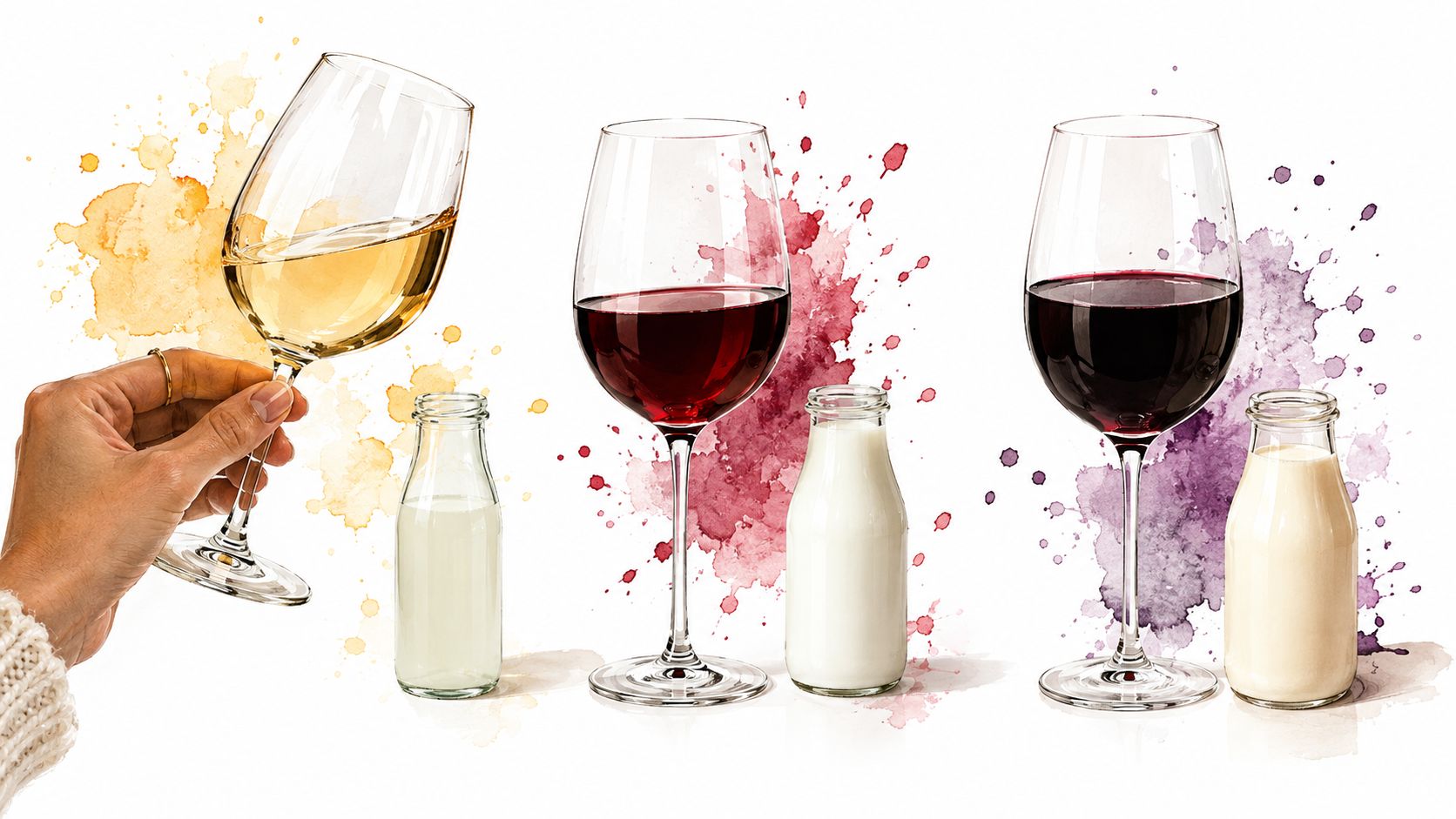
You don't need a perfect tasting room to feel body. A glass at your kitchen table works fine. The trick is to stop guessing and start comparing.
Step one, use milk as your mental ruler
Compare the wine's mouthfeel to skim milk, whole milk, or cream. That doesn't mean the wine tastes milky. It means you're giving your brain a simple scale for weight. A lighter wine sits closer to skim milk, while a fuller wine pushes toward cream.
Step two, notice what it does after the swallow
Does it coat the mouth. Does it disappear quickly. Or does it hang around and keep talking. That lingering feel is part of body, not just flavor.
Compare the wine's mouthfeel to skim milk, whole milk, or cream; notice whether it coats the mouth; then separate warmth from tannin and acidity, because body is a combined perception, not a single measurable property. Wine With Seth
Step three, split warmth from grip from brightness
Warmth shows up as heat in the throat. Grip feels drying on the cheeks or tongue. Brightness feels mouthwatering and a little sharp at the sides of the jaw. Once you separate those three sensations, body gets much easier to read.
The nice part is that this works on cheap bottles too. You're not looking for perfection. You're training your palate to notice texture, and that pays off fast.
Quick Bottle Examples You Can Actually Find

The fastest way to understand body is to compare bottles you've probably seen before. Same shelf, different feel. That's where the lightbulb goes on.
Red, white, and sparkling comparisons
Pinot Noir usually feels lighter because it often brings softer tannin and a more delicate frame. Cabernet Sauvignon tends to feel fuller because it commonly brings more tannin, more concentration, and more weight on the palate.
Pinot Grigio often lands on the lighter side, while an oaked Chardonnay can feel rounder and broader because oak and fuller texture push the wine toward body. A Brut sparkling wine usually feels leaner and brisker, while a richer lees-aged style can feel more textured and creamy because the wine has spent time on dead yeast cells, which adds softness to the mouthfeel.
Keep the moving parts in mind
Style matters. Producer matters. Vintage matters. The same grape can shift a lot depending on how ripe the fruit was and how the wine was made.
Use these bottles as anchors, not rules. The grape gives you a clue, but the producer and the cellar work decide how far that clue goes.
If you want a quick side-by-side way to build your palate, use the comparisons above on a restaurant list and see which bottle sounds more like the feel you want than the label you think you should order.
Full-Bodied Does Not Mean Red or High-Alcohol
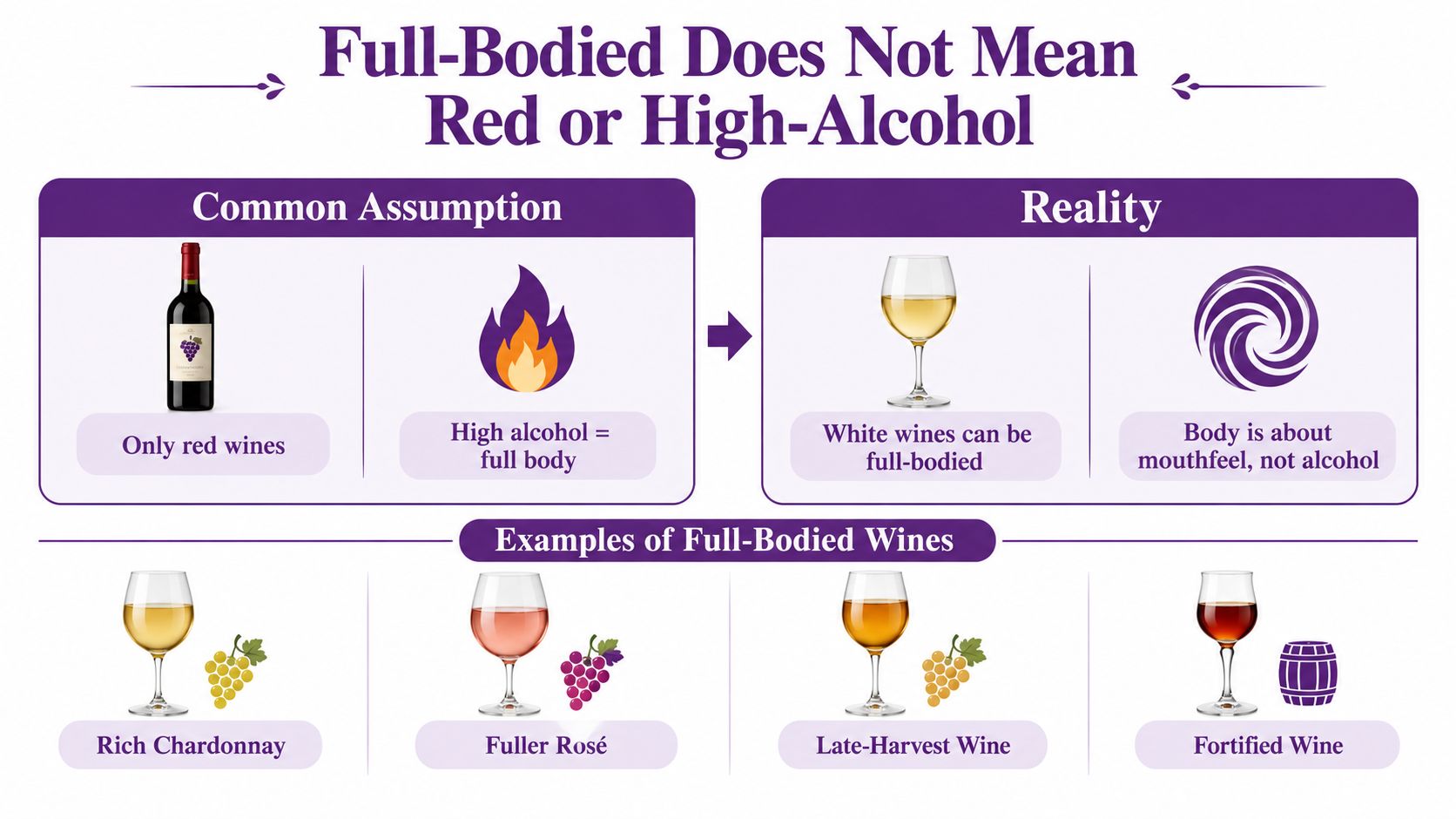
A lot of people still hear full-bodied and think red wine or strong wine. That's too simple. Body is about mouthfeel, not color, and not a moral judgment about alcohol.
A rich Chardonnay can feel full through texture, oak, and lees work. A fuller rosé can feel broader than you expect. Late-harvest wines and fortified wines like Port can also feel full, but they get there in different ways than a tannic red does.
Why this matters now
People are paying more attention to moderation, and that makes texture-first wines more useful. No- and low-alcohol wine reached roughly 28 million nine-liter cases as global wine consumption fell about 2.7% in 2025, reflecting a shift toward moderation that makes texture-first fullness more relevant. CaixaBank Research
That means you don't have to chase alcohol to get richness. You can look for lees-aged whites, oak-influenced wines, late-harvest styles, or fortified bottles when you want more presence in the glass without treating ABV like the whole story.
Full-bodied is a preference, not a verdict. If you like a wine that feels broad and lingering, that's valid whether it's red, white, pink, or sparkling.
How to Use Body When You Order, Pair, or Buy
Body is most useful when it changes a decision. At a shop, on a list, or at the table, you can use it to match the wine to what you're eating and how you want the meal to feel.
Order by weight, not by guesswork
A creamy pasta wants a fuller white because the dish has more weight. A burger wants a fuller red because the food can stand up to more grip and presence. A delicate fish usually wants something lighter so the wine doesn't crush the dish.
When you ask for help, skip the jargon. Say, “I want something fuller and rounder,” or, “I want something lighter and fresher.” That gets you much farther than asking for the “best” bottle.
Avoid the two easy traps
Don't choose by price alone. Don't choose by alcohol number alone. A higher ABV wine isn't automatically fuller, and an expensive bottle isn't automatically more your style.
For a simple food-pairing refresher, the guide at how to pair wine with food without guessing is a good companion read.
Best shortcut: match the wine's weight to the dish's weight. That one move gets you closer more often than memorizing grape names.
If you want a faster start for your own palate, take the free quiz at A to Wine. It's a quick way to figure out where your taste starts before you buy the next bottle.
A Confident Way to Think About Body
Body is texture, not quality. That's the whole game. A wine doesn't need to be huge to be good, and it doesn't need to be red to feel full.
The next time a label says full-bodied, don't translate it into expensive or powerful. Translate it into what your mouth is likely to feel. That small shift turns the wine list from a test into a choice.
A to Wine helps you read wine the way you taste it, with short daily lessons, quick practice quizzes, and an AI sommelier that answers real-world questions. If you want to get better at spotting body, choosing bottles, and ordering with more confidence, start with A to Wine and build from there.