What Is a Flight of Wine: The Smart Way to Compare
A wine flight is a curated group of small pours served together so you can compare wines instead of finishing a full glass of one. Most flights contain three to eight wines, with roughly 50–75 milliliters per pour, so the total amount may be closer to a full glass than the tiny samples suggest.
You're sitting at a winery or restaurant, looking at a tray of numbered glasses and wondering where to start. The answer isn't to sip randomly. A good flight has a purpose, a sensible order, and pours large enough to taste but small enough to keep the comparison useful.
The part many menus skip is the math. The number of wines tells you how many comparisons you'll make. The pour size tells you how much wine you'll drink.
Table of Contents
- What Is a Flight of Wine
- Comparison Flights vs Discovery Flights
- How Palate Fatigue Changes Your Tasting
- Building a Tasting Progression
- How to Build Your Own Flight at Home
- The Real Alcohol Math in a Wine Flight
- Your Next Step With Wine Flights
What Is a Flight of Wine
You get a board of small pours, each glass numbered, and the question is simple: are you here to compare, or just to taste around? A wine flight is a set of wines served together in small pours so you can judge them side by side, not one by one in isolation. Usually the wines share a thread, such as one grape across regions, several vintages from one producer, different winemaking choices, or a progression from lighter to fuller styles. Wine Travel Guides explains the flight format and typical serving range.
The format matters because comparison changes what you notice. Acidity, tannin, sweetness, alcohol, aroma, and texture are easier to spot when one wine follows another in a deliberate order.
Most flights contain three to eight wines. A common pour is about 50–75 milliliters, or roughly 1.7–2.5 U.S. fluid ounces, per wine. Put that together and the tray may add up faster than it looks. A four-wine flight reaches about 200–300 milliliters, and a five-wine flight reaches about 250–375 milliliters. That is why experienced tasters pay attention to both the number of glasses and the size of each pour.
There is no universal legal definition for flight size or volume. One winery may pour four generous samples. Another may pour six smaller ones. The setup can look nearly identical while the total alcohol intake is very different.
What to look for on the tray
- A clear theme: You should be able to say what links the wines.
- Numbered glasses: This helps you taste before the label or price shapes your opinion.
- A sensible sequence: Lighter, more delicate wines usually show better before richer, heavier ones.
- A spit cup and water: These are standard tasting tools.
Basic technique helps, too. Swirl, smell, taste, and jot down a note before you ask what is in the glass. If you want a refresher, this practical guide to tasting wine properly covers the process clearly.
Comparison Flights vs Discovery Flights
The first question to ask isn't “Which wine is the best?” It's “What is this flight trying to show me?”
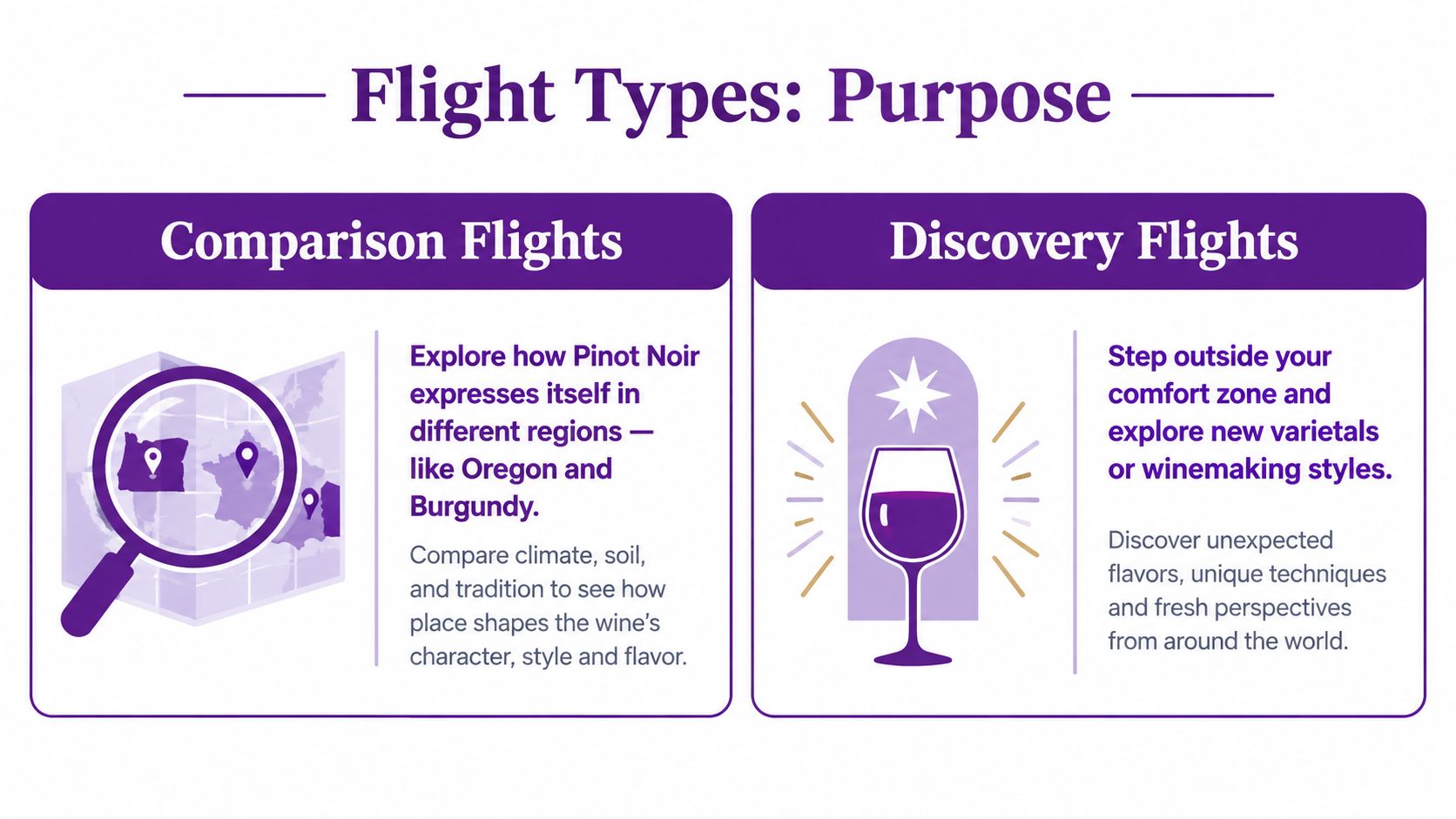
A comparison flight isolates a question. You might taste Pinot Noir from Oregon and Burgundy, or follow one producer across different vintages. The wines are related closely enough that you can look for cause and effect. Climate, place, grape growing, and cellar choices may change the flavor, even when the grape or producer stays connected.
A discovery flight is looser. It may combine unrelated grapes or styles to help you find what you like. You might taste a crisp white, a rosé, a light red, and a richer red. That format won't isolate one variable, but it can quickly reveal whether you prefer bright acidity, soft texture, bold fruit, earthy flavors, or a touch of sweetness. Familia Morgan's tasting-flight guide outlines the difference between themed comparison and broader discovery.
Which one should you order
Choose a comparison flight when you want to learn something specific:
- Same grape, different regions: Compare how place changes the wine.
- Same producer, different vintages: Notice how growing conditions and aging affect style.
- Different production methods: Look for texture, aroma, and body changes.
Choose a discovery flight when you're exploring without a fixed question. It's more fun and less demanding, but the trade-off is that you'll learn less about any single factor.
Ask the server, “Is this flight built around a comparison, or is it more of a discovery flight?” That answer tells you how to taste. For comparison, focus on the shared variable. For discovery, follow your own preferences. If you want to make blind tasting more playful, use these blind-tasting practice ideas.
How Palate Fatigue Changes Your Tasting
Your palate adapts. Adaptation is a short-term reduction in sensory acuity after continued exposure to a taste or aroma. Cross-adaptation happens when one compound changes how you perceive the sample that comes after it. Virginia Tech's enology materials explain why repeated exposure can alter sensory judgment during tasting in this sensory-analysis reference.
The practical effect is easy to feel. Taste a powerful, tannic red first, then try a delicate Pinot Noir. The Pinot Noir may seem thin. Taste a sweet wine, then move to a dry white. The dry wine may seem sharper and harsher than it would have tasted on its own.
High alcohol, heavy oak, strong acidity, sweetness, and tannin can all dominate what comes next. Tannin is the drying sensation you get from tea, grape skins, and some red wines. It can build across several samples, making later wines feel more astringent than they really are.
Practical rule: The biggest wine usually belongs near the end, not at the beginning.
Why order changes the result
Order isn't decoration. It controls the conditions of comparison.
If the first wine overwhelms your palate, later samples don't get a fair hearing. Water and plain crackers can reduce carryover, but they won't erase it completely. In formal sensory work, organizers may randomize serving order across tasters to separate genuine wine differences from order effects. In a casual or educational flight, a deliberate progression is usually easier to follow and kinder to your palate.
A well-built flight lets the lighter wines show their detail before the richer wines take over. That's why the sequence matters as much as the selection.
Building a Tasting Progression
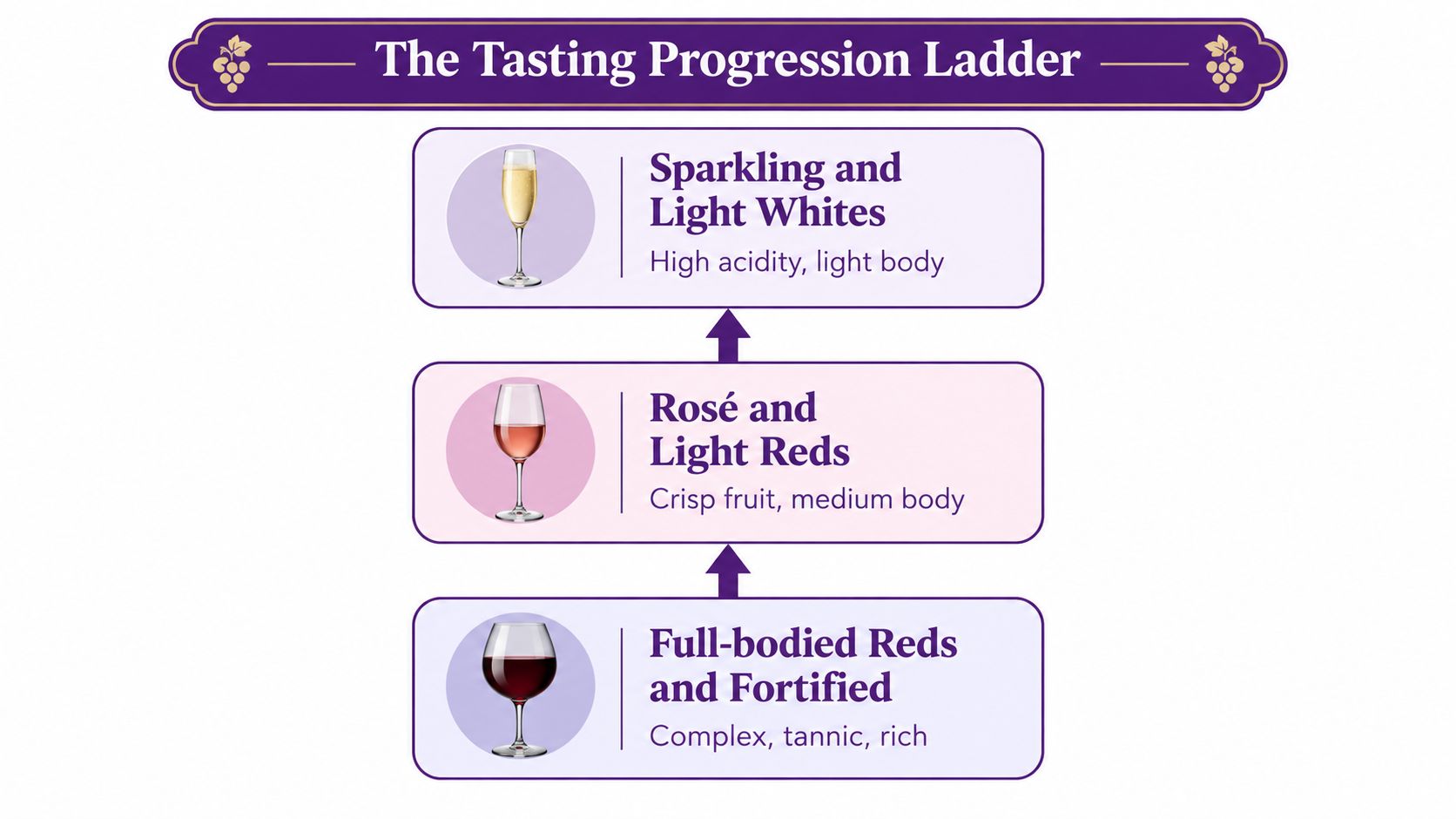
Set out a crisp Sauvignon Blanc, an oaky Chardonnay, and a dense Cabernet in the wrong order, and the last two can flatten the first before it gets a fair read. A useful progression usually runs lighter to fuller-bodied and drier to sweeter. In practice, that often means sparkling wines first, then still whites and rosé, then lighter reds, fuller reds, and finally sweet, fortified, or dessert wines, a structure also outlined in Jancis Robinson's guide to organizing a wine tasting describes this structured order.
The point is control. If you want a comparison flight, keep the wines close enough in style that order highlights differences instead of hiding them. If you want a discovery flight, the same progression still helps, because it keeps bigger wines from taking over too early.
A flexible order that works
- Sparkling and light whites: Start with acidity, freshness, and bubbles.
- Richer whites and rosé: Add texture and more fruit weight.
- Lighter reds: Move into red fruit and moderate structure.
- Full-bodied reds: Leave higher alcohol, oak, and firmer tannin for later.
- Sweet or fortified wines: Finish with sweetness and concentration.
Formal blind tastings often use six to twelve wines, split into smaller flights when the lineup gets long. That matters for palate management as much as organization. Two shorter flights are easier to judge than one crowded run, and they keep your notes cleaner.
At home, keep the same logic and make it useful. Put the crisp white before the creamy one. Pour the lighter red before the heavier bottle. If you want a quick refresher on setup and evaluation, these wine-tasting fundamentals are a practical reference.
How to Build Your Own Flight at Home
You don't need a sommelier degree to run a useful tasting. You need a question, equal pours, and enough restraint not to reveal every label immediately.
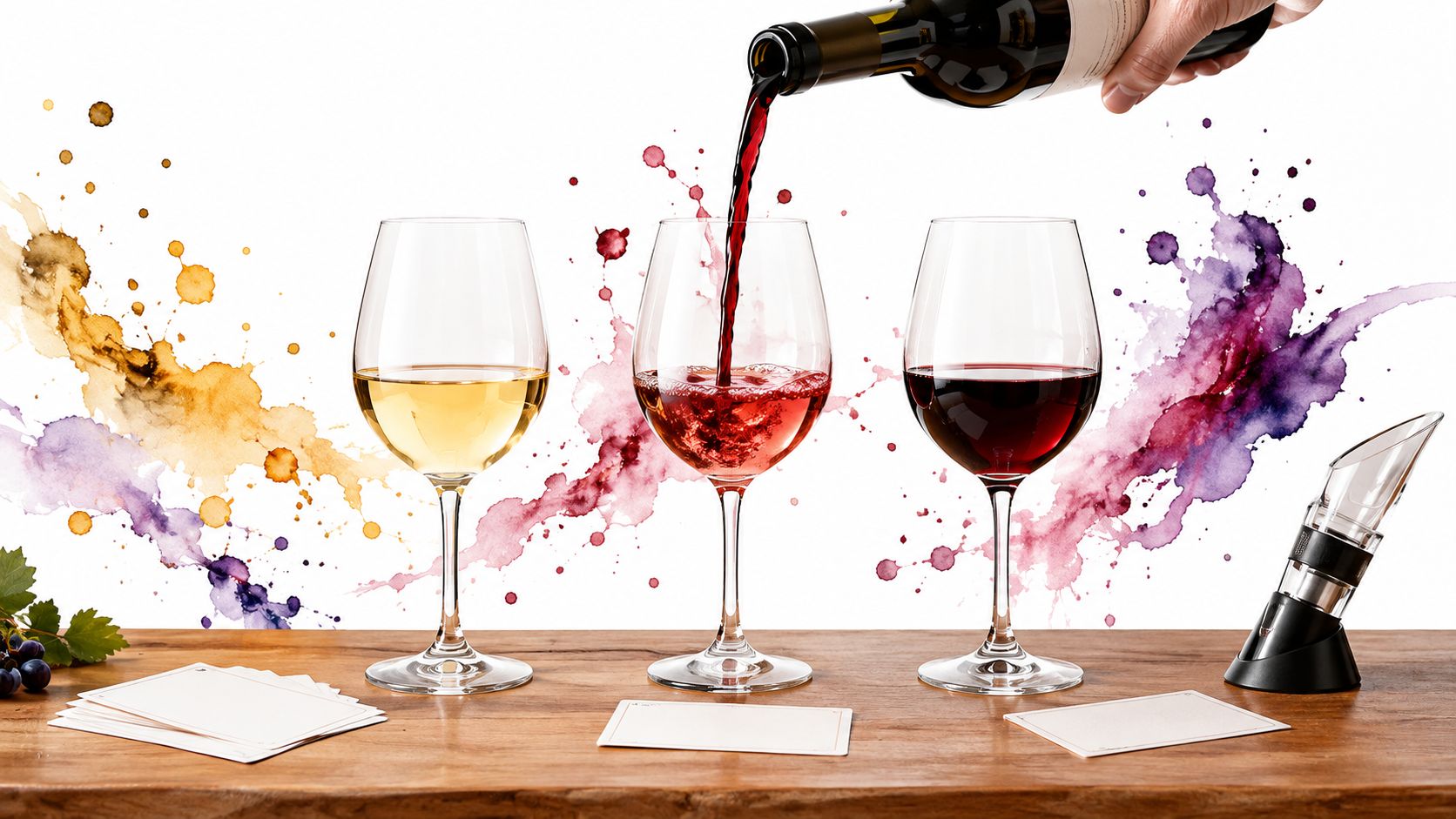
Start with the theme. Keep it narrow enough that the wines have something meaningful in common. Three Pinot Noirs from different places will teach you more about regional variation than three unrelated reds. If your goal is pure exploration, choose a discovery flight with contrasting styles instead.
Set up the comparison
- Choose three to five bottles: Pick one grape, one region, a style progression, or a producer comparison.
- Use matching glasses: Identical glassware removes an unnecessary variable.
- Pour equal amounts: Uneven pours make one wine seem more important before you even taste it.
- Number the glasses: Use masking tape or small stickers rather than showing the labels.
- Keep water nearby: Plain crackers can help reduce flavor carryover.
- Write before revealing: Record color, aroma, acidity, body, tannin, and finish without checking the bottle.
You don't need technical vocabulary. Write “lemon,” “drying,” “soft,” “smoky,” or “sharp” if that's what you notice. The useful part is comparing your notes across the glasses.
Reveal the bottles after everyone has tasted. Then ask what changed. Did the expensive-looking label match the wine you preferred? Did the region you expected to love really deliver? That small reveal turns casual drinking into a practical experiment.
If you want a visual demonstration of the setup, this tasting video shows how the format can work in practice:
A spit bucket is useful, especially when several wines are involved. It lets you evaluate aroma, flavor, acidity, and texture without swallowing every sample. The point is not to perform. It's to keep your senses clear enough to notice what changes from glass to glass.
The Real Alcohol Math in a Wine Flight
A flight isn't automatically a low-alcohol choice. Small pours can add up, and the glass shape tells you almost nothing about the actual amount.
Serving sizes vary. One practical range is about 1–2 U.S. fluid ounces, or roughly 30–60 milliliters, per wine. Other tasting guidance describes commercial pours of about 50–75 milliliters, while a restaurant training guide identifies a typical pour as 2 ounces. That variation is why you should ask for the measurement rather than guessing from the glass. This wine service guide discusses the relationship between pour size and total consumption.
A four-wine flight with 1-ounce pours totals 4 ounces. The same four wines with 2-ounce pours total 8 ounces, which is more than one standard 5-ounce U.S. glass. A four-wine flight served at 50 milliliters per pour totals about 6.7 ounces, while four 2-ounce pours reach 8 ounces. Firestone Restaurant's wine-training guide highlights why a flight can exceed a regular glass.
| Number of Wines | 1 oz Pour Each | 2 oz Pour Each |
|---|---|---|
| 3 | 3 oz | 6 oz |
| 4 | 4 oz | 8 oz |
| 5 | 5 oz | 10 oz |
| 6 | 6 oz | 12 oz |
The calculation is simple: number of wines × pour size = total volume. Wine strength also matters, so volume alone doesn't tell you the full alcohol intake. Ask, “How many ounces or milliliters is each pour?” Then plan water, food, pacing, and transportation accordingly.
If you're driving, tracking alcohol, or ordering a flight alongside dinner, count total ounces rather than the number of glasses. A flight can look modest while containing the equivalent of several tasting portions.
Your Next Step With Wine Flights
The most useful flight gives you a question you can answer. Pick three bottles of the same grape from different places, pour them in equal amounts, and taste them side by side. Look for differences in acidity, fruit character, body, tannin, aroma, and finish. You don't need to identify every region. You only need to notice what changes.
For a simpler restaurant order, decide whether you want learning or exploration. Choose a comparison flight when you want to understand one variable. Choose a discovery flight when you want to find a new favorite. Before ordering, ask about the theme, sequence, and pour size.
A flight is a tool, not a test. Use the structure to make wine less random, and use the math to make your choices responsibly. If you want help finding a starting point, take the free A to Wine quiz and use the result to guide your next tasting.
A to Wine offers short daily wine lessons that take about 5 minutes, practice quizzes, and an AI sommelier for real bottle and menu questions. Use it to build confidence with tasting comparisons, then visit A to Wine to choose your next step.