What Temperature Should Red Wine Be Served At
Most red wines should be served at 15–18°C (59–64°F), with lighter reds a touch cooler. The old advice to serve red at “room temperature” means a cool European cellar, not your heated living room.
Your thermostat isn't a wine accessory. Before blaming a bottle for tasting heavy, harsh, or strangely dull, check how warm it is. Serving temperature is something you can adjust, not a rule you have to suffer through.
Table of Contents
- The Room Temperature Myth You Should Stop Believing
- Red Wine Temperatures by Body and Style
- Why Temperature Changes How a Red Tastes
- How to Chill or Warm a Bottle Without Fuss
- Three Bottles Three Temperatures in Practice
- The Case for a Slight Chill on Most Reds
- Serve With Confidence and Trust Your Glass
The Room Temperature Myth You Should Stop Believing
You get home, open a red from the kitchen rack, and pour while dinner cooks. The wine feels heavy and a little hot going down. You decide you don't like that bottle.
Maybe. But you haven't given it a fair hearing yet.
The room-temperature rule comes from European cellar conditions, not centrally heated homes. The useful distinction is cellar-cool versus household-warm. The historical meaning and sensory background are discussed in research on red wine serving temperature.
Stop Using the Room as Your Reference
A bottle sitting at 21–23°C (70–73°F) can taste more alcoholic and less fresh than the same wine served cooler, according to this wine serving temperature guide. That's a perfectly plausible temperature for a comfortable room. It's not a useful default for your red.
The mistake isn't opening wine without special equipment. It's assuming that whatever temperature the bottle happens to be must be correct.
Your living room should be comfortable for you. Your wine doesn't need to share your preferences.
Ask a better question before pouring: What does this bottle need? A delicate, easygoing red and a powerful, drying red shouldn't automatically get identical treatment.
- Check the starting point. A bottle from a warm kitchen shelf may need cooling before you judge it.
- Consider the style. Weight and drying grip tell you more than color alone.
- Taste before deciding. Don't confuse an unhelpful serving temperature with a wine you dislike.
You don't need a cellar. You need permission to stop treating an old phrase like an instruction from the wine police.
Red Wine Temperatures by Body and Style
Body means how light or heavy a wine feels in your mouth. Tannin is the drying grip you notice on your gums, rather like the feeling after strong black tea.
Those are your useful clues. If body still feels abstract, this explanation of what wine body means gives you a practical way to recognize it.
Red Wine Serving Temperatures by Style
The following targets follow Decanter's temperature recommendations by red wine style. Treat them as starting ranges, not pass-or-fail marks.
| Style | Target Temperature | Example Wines |
|---|---|---|
| Light and chillable | 12–13°C (54–56°F), with some suitable down to 10°C (50°F) | Beaujolais, light Gamay, delicate Pinot Noir, lighter Frappato |
| Medium-bodied | 14–16°C (57–61°F) | Merlot, lighter Sangiovese or Chianti, medium-weight Tempranillo |
| Full-bodied or firmly tannic | 16–18°C (61–64°F) | Cabernet Sauvignon, Barolo, Bordeaux blends, Syrah, fuller Malbec |
The grape names are shortcuts, not guarantees. Put a lighter example toward the cooler tier. Give a denser, more gripping bottle a little more warmth.
A Pinot Noir that feels delicate and barely drying is a different serving proposition from a firm, concentrated example. Likewise, don't force every Malbec into the same box because the label says Malbec.
Let Structure Break the Tie
Before reaching for a thermometer, make a quick judgment:
- Light and juicy? Start toward the cooler end.
- Moderate weight and gentle grip? Choose the middle.
- Dense and drying? Keep it cool, but don't treat it like a refrigerator-cold refresher.
When ordering, you can use the same language. Ask for a light red served slightly chilled, or ask whether a full-bodied red can have a brief spell in the fridge if it arrives warm.
When in doubt, start a touch cooler and let the glass warm. You can follow the wine as it changes instead of chasing a perfect reading before the first sip.
Why Temperature Changes How a Red Tastes
Temperature changes what you notice, not just whether the drink feels refreshing. Cooling can make acidity, the wine's tart freshness, seem more obvious while muting aromas. With tannic reds, that can leave the drying grip feeling exposed.
Use this diagram as a sensory guide, not a promise that every wine reacts identically.
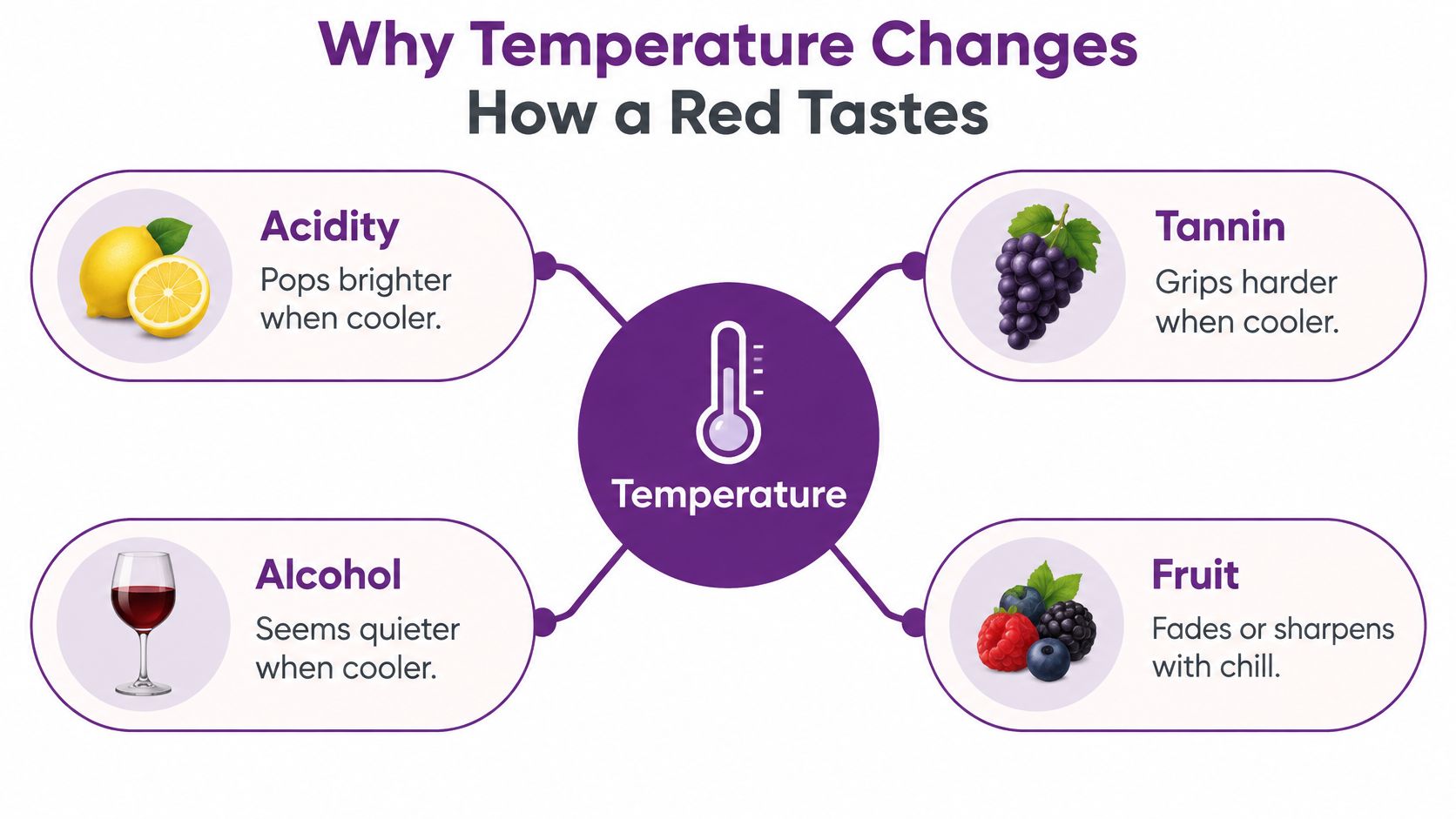
Follow the Same Wine as It Warms
A trained-panel study of six Washington Lemberger wines compared samples at 10°C, 16°C, and 22°C. The cooler samples received more sour, bitter, and astringent descriptions and fewer aroma descriptors, while the warmest samples produced more aroma language and more consistent sensory maps in the Lemberger serving-temperature study.
That doesn't crown the warmest glass the winner. More aroma isn't automatically better balance, and a result from a particular set of wines isn't a universal instruction.
A separate experiment tested reds at 14°C, 18°C, and 23°C and found a significant effect on aroma intensity, but no consistent differences in perceived bitterness or astringency across its tested temperatures in the red wine sensory experiment. So don't treat “cold always increases tannin” as a scientific law.
Balance check: Smell first, sip next, then ask whether fruit, freshness, drying grip, or alcohol dominates.
For a home comparison, keep the bottle and glass the same. Notice what becomes easier to smell as the wine warms, then decide whether you prefer the change.
This is part of why wines taste different under different conditions. Temperature is a balance control, not a way to make every red taste softer or fruitier.
How to Chill or Warm a Bottle Without Fuss
Use your kitchen fridge. You don't need a dedicated wine cabinet to serve dinner well.
These are starting methods, not guarantees. The bottle's initial temperature matters, so check the wine rather than trusting the clock alone.
Keep this visual handy when you're getting dinner ready.
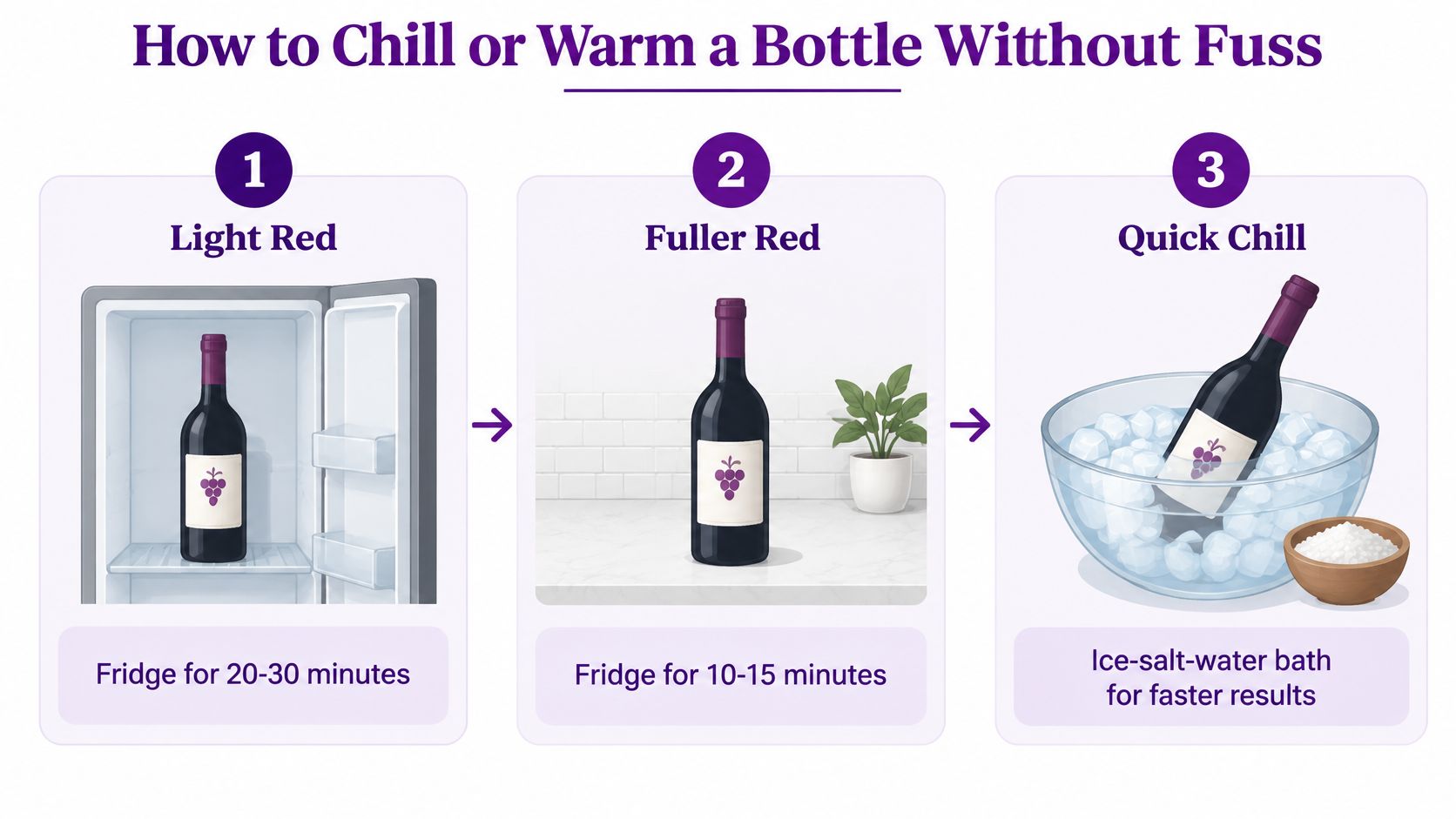
Cool the Bottle, Then Check It
Use the brief refrigerator timings in the serving guide cited earlier: a longer chill for a light red, a shorter one for a fuller bottle. Don't keep cooling because the bottle hasn't started feeling icy.
- For an unhurried dinner: Refrigerate briefly, pour a small taste, and assess it.
- For a last-minute adjustment: Use an ice-water bath, checking frequently. You're aiming for cool, not numb.
- For a bottle that's too cold: Leave it on the counter and pour a small glass to follow as it warms.
The practical move is to make an adjustment, then stop and taste. Don't bounce the bottle between extreme temperatures.
Warm Gently, Not Aggressively
Swirl the glass or cup its bowl briefly in your hands. Don't put the bottle beside a radiator, in hot water, or in a hot car to hurry things along. WSET's serving and storage guidance specifically warns against rapid heating near a radiator.
For a visual companion to your serving routine, use this video.
A wine thermometer takes the guesswork out. Without one, a bottle that feels slightly cool against your wrist is a rough checkpoint, not a measurement.
Keep the rest of dinner equally straightforward with these wine service basics for confident hosting.
Three Bottles Three Temperatures in Practice
A useful target becomes much easier to understand with a bottle in front of you. These are suggested starting points, not claims that every wine with the same grape name tastes alike.
The underlying principle is simple: serving temperature should follow body and tannin structure, then your own tasting should settle the details.
Beaujolais From the Wine Shop
Start this light, juicy bottle toward the cool end of the table. You're looking for clear fruit and an easy, refreshing sip, not a challenge for your gums.
Smell before drinking. If the aroma seems absent and the wine tastes mostly tart, leave the glass alone briefly and try again.
Don't judge the whole bottle from its coldest sip.
A good adjustment should make the wine more enjoyable, not merely more obviously cold. Stop cooling when you like what you're drinking.
Argentine Malbec With Dinner
For this example, assume the Malbec feels plush rather than heavily drying. Begin around the middle tier rather than automatically choosing the warmest setting because Malbec often sounds like a big-red choice.
- If alcohol dominates: Cool the remaining bottle slightly.
- If fruit seems hidden: Let the poured wine warm before adjusting anything else.
- If it already tastes balanced: Leave it alone. There's no prize for unnecessary intervention.
Young California Cabernet Sauvignon
Give this firmly structured bottle the warmer end of the serving framework. Don't try to make its natural drying grip disappear by chilling it harder.
You're looking for aroma and fruit alongside that grip. If the glass seems closed and severe, let it warm gently; if it feels hot and heavy, cool the bottle modestly.
For each example, pour a small taste, retaste after a few minutes, and choose a direction. That habit beats a magic number, especially when the next bottle turns out differently.
The Case for a Slight Chill on Most Reds
Chilling a red isn't a beginner mistake. Treating every red as if it belongs beside the thermostat is the mistake.
My default is simple: give a warm bottle a modest chill before serving. That's an editorial recommendation, not a command to make every Cabernet taste like a cold picnic drink.
Slightly Chilled Isn't Fridge-Cold
Bon Appétit's guide to chilling red wine distinguishes reds that benefit from cooling from lighter, chillable styles. That distinction matters more than the blanket argument over whether red wine should ever see a refrigerator.
A powerful bottle deserves room to show its aromas. That's an argument for controlled cooling, not for serving it warm regardless of how it tastes.
This image takes the chilled-red idea seriously. My preference is to cool the bottle rather than add ice to the glass.
Be a Host, Not a Temperature Referee
Don't turn dinner into a debate about who knows the proper rule. Offer an adjustment and let the drinker choose.
- At home: Taste before guests arrive so you can make a quiet correction.
- At a restaurant: Ask politely for the bottle to be cooled if it tastes too warm.
- With skeptical friends: Offer a comparison instead of a lecture.
The sensory research discussed earlier supports taking temperature seriously. It doesn't require everyone to prefer the same glass.
Serving wine thoughtfully means paying attention to the actual drink. A short spell in the fridge isn't disrespect. Refusing a useful adjustment because of an inherited rule makes much less sense.
Serve With Confidence and Trust Your Glass
So, what temperature should red wine be served at? Choose a starting range from its body and tannin, then let the tasting decide whether you need to move warmer or cooler.
You don't need to remember every grape in the table. You need to recognize what bothers you in the glass and make a small, deliberate adjustment.
Make a Clear Decision
Start with what you can describe. “I can barely smell it” is useful. So is “the alcohol is the first thing I notice.” You don't need polished tasting language to serve wine well.
Use this short checklist:
- Name the problem. Is the wine muted, overly tart, drying, or hot?
- Choose a direction. Let it warm gently or cool the bottle briefly.
- Check your preference. Keep the adjustment only if you enjoy the result more.
Don't keep tinkering once the wine tastes good. Dinner isn't a laboratory assignment, and your guests don't need a running commentary on the bottle.
Try It With Tonight's Bottle
Open a red and pour a small taste before committing to its serving temperature. Make an adjustment only if you think it needs one, then taste again.
If you prefer the original glass, that's useful too. You've learned something about your preferences rather than obeyed somebody else's chart.
Serving temperature isn't a rule to obey. It's a knob you can turn until the wine tastes right to you. Tonight, try that small adjustment before writing off the bottle.
A to Wine offers a personalized, ongoing wine path with short daily lessons that take about 5 minutes, practice quizzes, and an AI sommelier. Build the confidence to recognize what your glass needs, starting with the free wine quiz.