What Wine Goes with Pasta? a Sauce-by-Sauce Guide
The cheat sheet that says pasta means red wine is the advice many people repeat, and it's wrong often enough to ruin dinner. Seafood, pesto, garlic and oil, and plenty of cream sauces taste better with white, rosé, or bubbles. One fixed bottle for "pasta night" can't cover a pan that changes every week.
What wine goes with pasta? The sauce decides. Tomato sauces want bright, acidic reds like Chianti or Barbera. Cream, pesto, seafood, and garlic-oil pastas suit white, rosé, or dry sparkling. Read the sauce's pressure points (acid, heat, fat, salt, umami) and mixed sauces, a sold-out classic, or a lower-alcohol pick all get a straight answer. The sections below work through each one.
Table of Contents
- Best Wines for Pasta by Sauce Type
- Acidity, Body and Mixed Sauces
- Red Wines for Tomato and Oily Sauces
- Whites, Rosés and Sparkling Wines for Cream, Pesto and Seafood
- Substitutes for Classic Bottles and Low-Alcohol Options
- Pick Your Pasta Bottle Tonight
Best Wines for Pasta by Sauce Type
There's no single pasta wine. Match the sauce, not the noodle.
Wine Spectator treats the sauce as the dish's dominant element. Start with its strongest feature, such as tomato acidity and sweetness, and match the wine's body to the food's weight so a delicate sauce doesn't get buried by a heavy bottle. A simple tomato sauce brings sweetness and acidity, so it wants a fruity, bright red, not a powerful one. Chianti, typically a medium-bodied Sangiovese from Tuscany, is the classic pick because it can meet the tomatoes without covering basil.
Escoffier uses tomato sauce as the standard example of acidic food and names Chianti, Barbera, and Sangiovese for tomato pasta. Enough acidity in the glass keeps the bite fresh instead of flat.
| Pasta sauce | Wine style | Bottles to try | Why it works |
|---|---|---|---|
| Basic tomato marinara | Bright, medium-bodied red | Chianti Classico, Barbera | Acidity matches the tomato |
| Spicy arrabbiata or puttanesca | Lively red with moderate alcohol | Montepulciano d'Abruzzo, Barbera | Lower alcohol keeps heat from intensifying |
| Meat ragù | Medium red with fresh fruit | Chianti, Sangiovese-based red | Fruit and acidity cut the richness |
| Alfredo or cream sauce | Unoaked or lightly oaked white | Unoaked Chardonnay, Vermentino | Freshness lifts the cream |
| Carbonara (egg, pecorino, guanciale) | Crisp white or dry sparkling | Verdicchio, dry Prosecco | Acidity cleans up the richness |
| Pesto | Herbal, zesty white | Vermentino, Sauvignon Blanc | Herb notes echo basil |
| Clams or shrimp | Crisp, saline white | Verdicchio, Muscadet | Brightness suits the sea flavors |
| Aglio e olio (garlic and olive oil) | Dry rosé or light white | Dry rosé, Frascati | Fresh body suits oil without weight |
| Pasta alla Norma (fried eggplant, ricotta) | Fresh, fruity red | Frappato | Acidity offsets the oil |
| Vegetable primavera | Light white or rosé | Pinot Grigio, dry rosé | Light body matches fresh vegetables |
If you want the same logic for dishes beyond pasta, keep a wine pairing chart handy for weeknights.
Name the sauce's dominant taste, then pick a wine that matches it without overpowering it.
Acidity, Body and Mixed Sauces
Most "what wine goes with pasta" lists stop at marinara with Chianti, ragù with Sangiovese, and cream with Chardonnay. That leaves the harder plate: tomato plus cream, chili plus seafood, salty cheese plus vegetables, or a vegan sauce packed with savory depth. WSJ Wine's pasta guide already agrees the sauce matters more than the shape, and that tomato needs comparable acidity while cream needs freshness and enough body. It rarely tells you which signal wins when two fight.
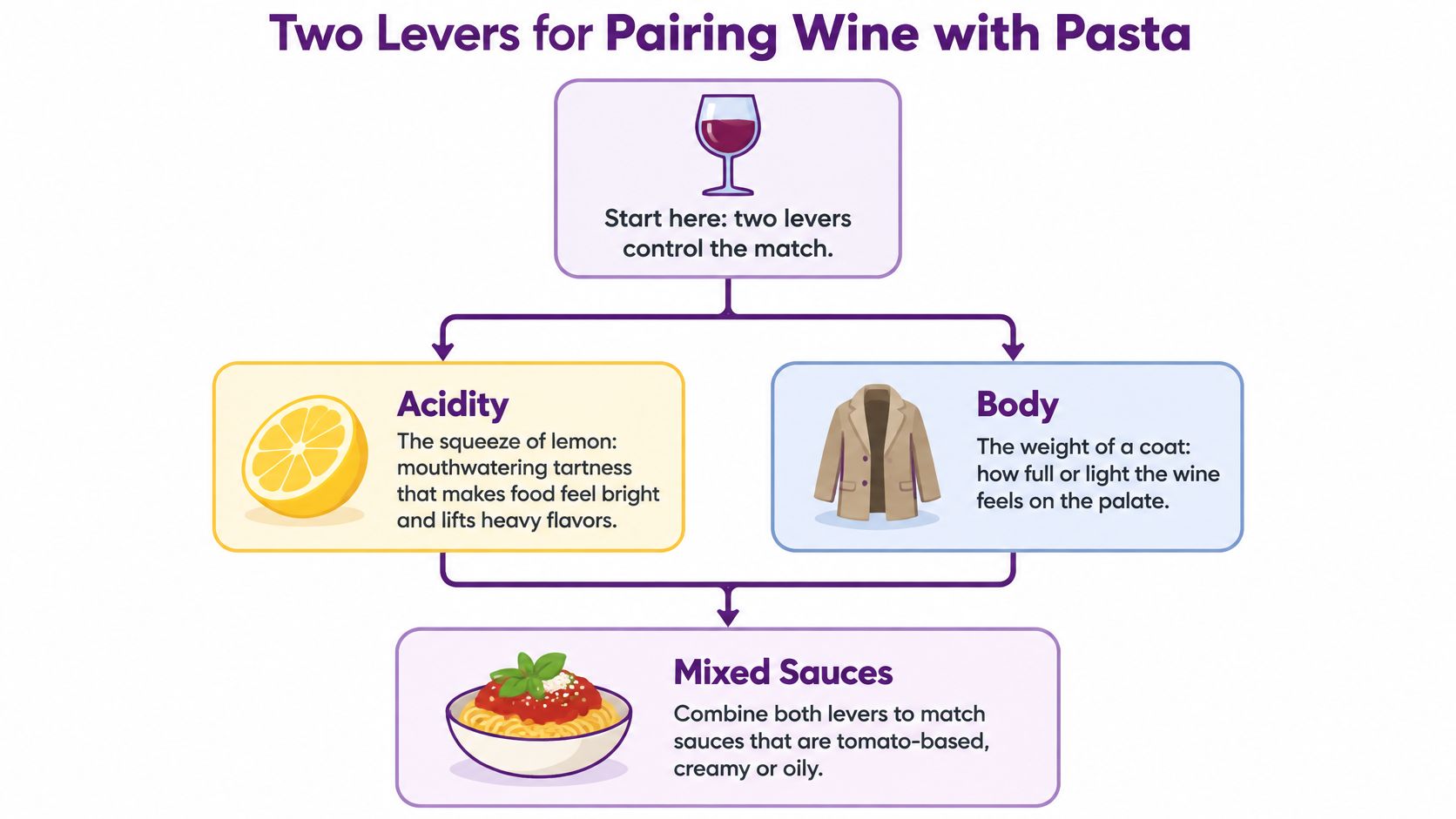
Two levers
Acidity is the squeeze of lemon. It's the mouthwatering tartness you get from lemon or a green apple. It makes food feel bright and it lifts heavy flavors.
Body is the weight of a coat. It's how full the wine feels in your mouth. A light wine disappears under a heavy sauce. A heavy wine crushes a light one.
You don't need a tasting diploma to spot either one. A plain way to identify wine acidity is to notice whether your mouth waters after a sip. If it does, the wine has the lift most pasta sauces want.
Five pressure points
A sauce pushes on some mix of these.
- Acidity: Tomato, lemon, or a splash of vinegar. The wine needs tartness that can keep up.
- Heat: Chili, pepper flakes, or a spicy oil. High alcohol and firm tannin make the burn feel hotter.
- Fat: Cream, butter, olive oil, or melted cheese. Freshness cuts the coat of fat.
- Salt: Pecorino, olives, capers, or anchovy. Salt makes a drying red taste harsh.
- Umami: The savory depth in mushrooms, aged cheese, cured meat, or a long-simmered vegan sauce. Fruit and medium body meet it better than a skinny wine.
Tannin is the drying, grippy feeling that comes from red grape skins and seeds. Next to salty cheese it can taste bitter, so save grippy reds for meat, not a cheese-forward bowl.
A creamy lemon Alfredo is mostly fat with a shot of acid. You want enough tartness to cut the cream, not a soft, oaky white that sinks into it. A mushroom ragù with Parmesan is umami plus salt and some fat. Fruit and medium body handle that better than a pale, thin white or a huge oaky red.
Same dinner, different boss ingredient. That's why one "pasta red" fails both plates.
Mixed sauce checklist
- Find the boss ingredient. Acid, heat, fat, salt, or umami. Whichever hits first is the boss.
- Check the other pressure points. A second strong note can veto your first bottle.
- Pick the wine that handles the most of them. One flexible glass beats a perfect match for only half the sauce.
Tomato plus cream is acid and fat together. Dry rosé or dry sparkling stays fresh enough for the tomato and rich enough for the cream. Chili with seafood is heat plus delicate sea flavor. A lightly chilled, low-tannin red or a dry rosé handles both. High alcohol and firm tannin make the chili harsher and bully the shrimp. Salty cheese with vegetables is salt plus a light plate. A fresh, fruity red or a crisp white keeps the cheese from clashing with tannin.
The wine that handles the most pressure points usually wins.
Pasta does not automatically call for red wine. Seafood, herb-heavy, olive-oil, and vegetable bowls often want white, rosé, or sparkling styles. Even traditional sources say there are no fixed pasta-pairing rules.
Red Wines for Tomato and Oily Sauces
Do this at the table tonight. Take a forkful of sauce, then sip the wine.
The sip test
If the wine suddenly seems flat, soft, or dull, choose a more acidic style next time. Tomatoes are acidic. The wine has to match or beat that acidity, or it tastes tired beside the sauce. A college beverage textbook on wine and food pairing backs that structural check, along with food-science work on how pairing structure changes perceived acidity.
Chianti Classico, Barbera, Montepulciano d'Abruzzo, and other Sangiovese reds pass because their bright acidity reinforces the sauce's freshness. Medium body beats a heavily oaked or high-alcohol red with marinara, arrabbiata, or puttanesca.
Three tomato sauces
Marinara with basil wants Chianti Classico. The acidity meets the tomato, and the medium body leaves the herb alone. You still taste basil, garlic, and olive oil.
Arrabbiata and puttanesca want Montepulciano d'Abruzzo or Barbera. You still need lively acidity for the tomato, olives, and capers. Keep the alcohol moderate. Very high alcohol makes chili heat feel stronger, which is the same caution from mixed sauces, now aimed at a spicy red sauce.
Meat ragù wants a Sangiovese-based red. Fruit and acidity cut the richness of browned meat without turning the bowl into a steakhouse pour. Skip the dense, heavily oaked bottle. It fights the tomato and covers the sauce.
A short clip makes the sip-after-sauce habit easier to picture before you open anything.
Pasta alla Norma
Fried eggplant, tomato, and salted ricotta is oil, acid, and salt on one plate. Decanter's pasta pairings use Frappato here. High acidity offsets the oil. Juicy fruit matches the tomato. That same fruit softens the salty cheese.
Light- to medium-weight wines with fruit and acidity usually work best with pasta. Bold, heavily oaked wines overpower the sauce.
Look for a fresh, fruit-forward red, not a dense or oaky one.
Whites, Rosés and Sparkling Wines for Cream, Pesto and Seafood
Pasta does not need red wine. Cream, pesto, seafood, garlic oil, and a vegetable bowl often taste better in a white, a rosé, or a dry sparkling wine.
Cream versus the sea
Alfredo and other cream sauces are fat. Unoaked Chardonnay or Vermentino brings freshness that lifts the cream so the wine doesn't vanish. Oak is the toast, vanilla, and spice a barrel can add. A little oak can sit with a rich cream sauce. Too much oak buries clams, shrimp, or pesto.
Put the two plates side by side. Cream can take a white with a bit of weight. Seafood cannot. Shrimp or clams want Verdicchio or Muscadet, crisp and saline, the way a squeeze of lemon works on shellfish. The same oaky Chardonnay that flatters fettuccine Alfredo will smother linguine with clams.
The lighter sauces
Carbonara is egg, pecorino, and guanciale. It's rich, salty, and peppery, not a tomato dish. Dry sparkling wine or Verdicchio cleans it up with bubbles or acidity. A grippy red turns bitter next to that cheese.
Pesto is basil, garlic, oil, and nuts. Vermentino or Sauvignon Blanc echoes the herbs and stays light enough that the basil still shows.
Aglio e olio is garlic and olive oil, sometimes with chili. Dry rosé or Frascati gives fresh body without extra weight. You want the oil cut, not a second coat of richness.
Vegetable primavera is peas, zucchini, and a light sauce. Pinot Grigio or dry rosé stays light enough to let the vegetables speak. A big red turns the bowl muddy.
How cold to serve them
Serve whites and rosés cold, but not ice cold. Straight from the freezer, the aroma shuts down and the wine tastes thinner than it is. Ten minutes out of the fridge is usually enough for the herbs, citrus, and saline notes to show.
Substitutes for Classic Bottles and Low-Alcohol Options
The shop will be out of the bottle you wanted. That's fine. You're not matching a label, you're matching a pressure point. If the stand-in hits the same acid, body, and tannin as the classic pick, the sauce won't know the difference.
| If you can't find | Try instead | Why it still works |
|---|---|---|
| Chianti Classico | Barbera or Montepulciano d'Abruzzo | Similar acidity and fruit for tomato sauces |
| Frappato (for pasta alla Norma) | Lighter Barbera served slightly cool | Fresh, fruity, enough acidity for oil and ricotta |
| Unoaked Chardonnay (for cream) | Vermentino or dry sparkling wine | Freshness lifts cream without heavy oak |
| Vermentino (for pesto or seafood) | Sauvignon Blanc or Verdicchio | Crisp, herbal, light enough for delicate sauces |
| Dry rosé (for garlic oil or primavera) | Frascati or a light Pinot Grigio | Light body with clean acidity |
| Full-strength red (for spicy sauce) | Lower-alcohol red served slightly chilled | Less alcohol keeps heat from intensifying |
| 0.0% wine (for cream) | Fuller alcohol-free white, served cold | Weight matches the fat so the glass doesn't taste thin |
| Oaked red (for tomato sauce) | Medium-bodied, fruit-forward red | Avoids heavy oak fighting the tomato |
Lower alcohol and no alcohol
Lower alcohol usually means less body, and body is what answers fat. A 0.0% wine can disappear beside cream, meat, or heavy seasoning. For tomato and fresh vegetable pasta, pick a high-acid alcohol-free white and serve it cold. For creamy sauces, look for a fuller alcohol-free white so the glass doesn't taste watery. Spicy dishes still want lower-tannin reds over firm, grippy ones, because alcohol and tannin both turn up the burn.
These bottles are getting easier to find, which is the practical point. An OIV 2025 paper reports that preference for low-alcohol wine rose from 44% in 2022 to 47% in 2024, and in 2024 50% of Gen Z and 48% of Millennials favored low-alcohol wines. That demand means shelves now carry real substitutes instead of a single dusty option, so apply the same rule as any other swap: match acid and body first, then check the alcohol number.
A can, a bag-in-box, or a lightweight bottle is fine for a weeknight if the wine inside is fresh. The package tells you nothing about acid or tannin. Read the style, not the container.
Vegan-friendly wine is about production choices, including how the wine is filtered, not a separate flavor. It doesn't change which sauce it belongs with. A vegan Chianti still follows the tomato rule.
If a no-alcohol bottle tasted like soda beside dinner, this take on healthy nonalcoholic wine explains why softness fails rich food.
Pick Your Pasta Bottle Tonight
Three steps at the shop or the table.
- Name the strongest feature. Acid, cream, herb, sea, spice, or salt. Say it out loud before you look at a label.
- Match acidity to the sauce and body to the weight. Use the sauce table above. Delicate food gets a lighter wine.
- When two features compete, run the pressure points in order. The boss is the strongest one, and it sets the wine's direction. The second feature is a conflict to solve, not a second boss. Grab the bottle that covers both if you can, and let the boss win if you can't.
Tomato and sausage with a pinch of chili reads as acid plus heat. A medium red with moderate alcohol is the grab. A chilled rosé is the safe backup if the red on the shelf looks huge and oaky.
Naming the match this way also survives a missing bottle. If the shelf has no Chianti, you still know the job: medium body, enough acid for the tomato, soft enough tannin for the sausage fat. Any red that fits that description works.
For a two-minute check of your wine level, take the free quiz. For a specific menu or a pantry dish, the Personal Sommelier can pick for that plate.
A to Wine is built for the weeknight bottle rather than memorizing regions. Short daily lessons, about five minutes each, plus practice quizzes and an AI sommelier turn the sauce table into a habit you can use standing in the wine aisle. When you want that confidence in a few minutes a day, start at A to Wine.