Wine Pairing with Thai Food: What Works
Most advice about wine pairing with Thai food is lazy. Sweet Riesling isn't a magic answer, it's just one tool, and it falls apart fast when the dish is tart, herbal, or coconut-heavy. The better move is simple, look at the dominant flavor on the plate, then pick the wine that can keep up.
Table of Contents
- Why the Standard Thai Food Wine Rule Fails
- The Four Competing Flavors in Thai Cuisine
- Handling Chili Heat Without Ruining the Wine
- Matching Wines to Curries and Tart Salads
- Red Wines and Alternative Styles That Work
- Your Quick Guide to Ordering With Confidence
Why the Standard Thai Food Wine Rule Fails
The usual advice treats Thai food like one big spicy blur. That's sloppy. A major gap in most guides is that they default to off-dry Riesling and ignore how the balance changes between sweet-sour pad Thai, tart som tam, and hot tom yum Michelin Guide.
Thai food is not built around a single problem. It can be bright, salty, sweet, fiery, and fragrant all at once. A wine that handles one of those gears can crash into the others. That's why a bottle that saves green curry can look silly next to a lime-heavy salad.
Practical rule: stop asking, “What wine goes with Thai food?” Start asking, “What's the loudest flavor in this dish?”
That shift matters more than grape variety. If the dish is built on chili, you need a different answer than if it's driven by lime, fish sauce, or coconut. The protein is often the least interesting part.
A better wine pairing with Thai food strategy starts with the sauce and seasoning. Once you do that, your choices get obvious fast. You stop gambling, and you start ordering like you've been there before.
For a simple pairing framework you can use with any meal, this quick guide to pairing without guessing helps build the habit.
The Four Competing Flavors in Thai Cuisine
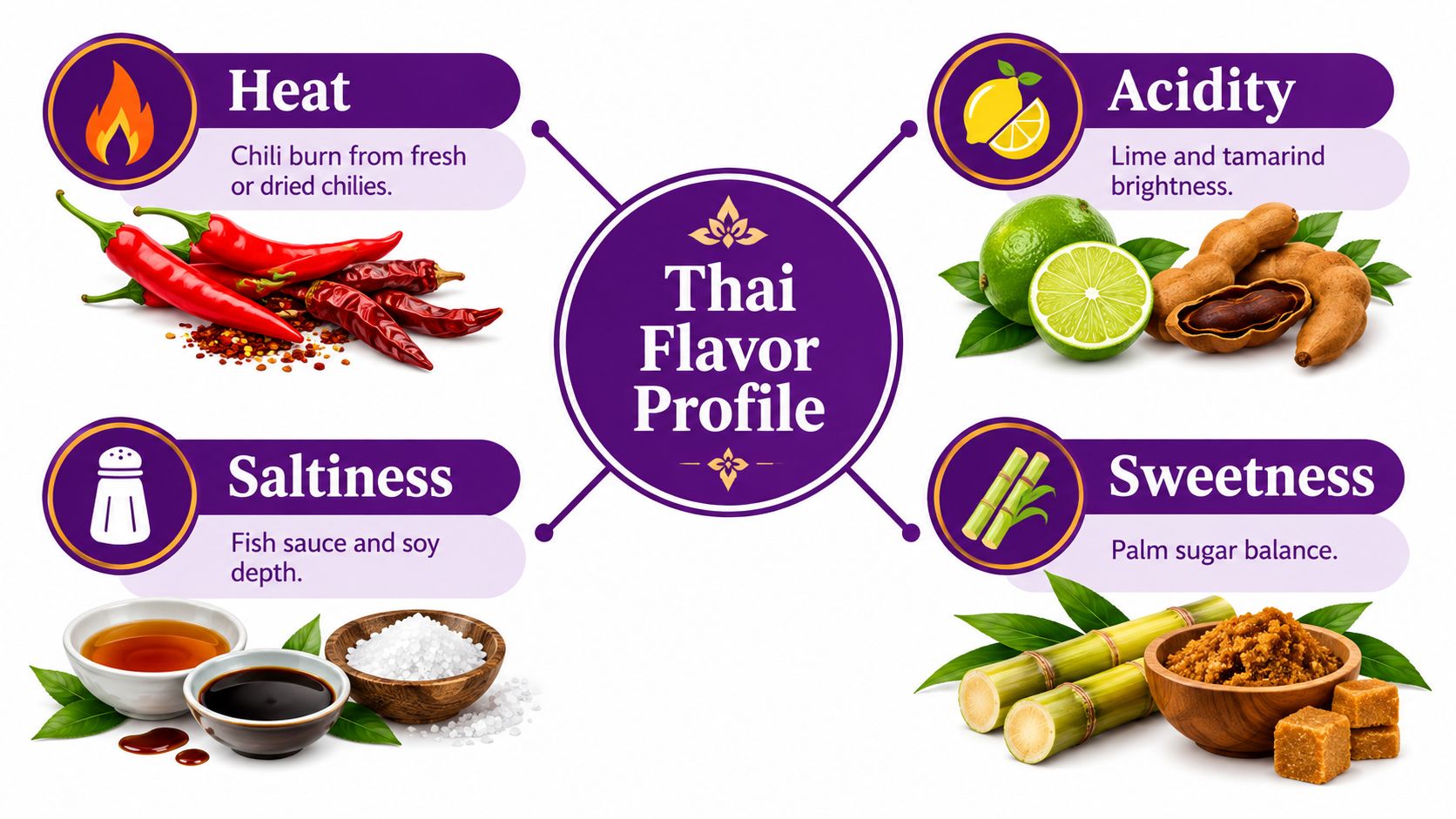
Thai dishes often pull in four directions at once, and that's the whole game. Chili heat, sourness, saltiness, and sweetness can all show up in one bowl. When that happens, a bulky or overly oaky wine usually gets lost, or worse, it makes the food taste harsher Grape Guru.
Heat Is Not the Only Thing You Taste
Chili matters, but it doesn't work alone. Fish sauce brings salt. Lime or tamarind brings punch. Palm sugar rounds the edges. That mix is why a single wine rule falls apart so quickly.
A high-acid wine is useful because it can stay vivid against rich coconut milk and sharp citrus. A touch of sweetness helps when the chili starts barking. Heavy tannin, the dry grip you feel in some reds, is usually the wrong kind of power here. It can make the food taste meaner.
Use the Dominant Flavor, Not the Dish Name
This is the practical test. If lime or tamarind is leading, go for a wine with clear acidity. If chili is leading, lean into a little sweetness. If coconut is doing the heavy lifting, you want freshness so the dish doesn't feel flat.
Thai food doesn't need a fussy wine. It needs a wine that knows when to back up and when to push back.
That's why wine pairing with Thai food works best when you read the plate first. Som tam, pad Thai, and tom yum live in different neighborhoods. Treating them the same is how people end up with wine that tastes tired by the second bite.
Handling Chili Heat Without Ruining the Wine
Chili is where people panic and grab the wrong bottle. Don't. Alcohol can make chili heat feel stronger because capsaicin spreads more easily with alcohol, so high-alcohol reds are a risky match for spicy Thai dishes Wine with Seth.
Keep the Alcohol in Check
A safer target is below 13% ABV for medium-to-hot food. That matters because you're trying not to pour extra heat into a dish that already burns. The wine should cool things down, not join the fight.
That's why big Cabernet Sauvignon and high-octane Shiraz usually flop here. They're too heavy, too hot, and too blunt. If the curry paste is loud, those wines just amplify the fire.
For a clean refresher on acidity, use this short guide to spotting wine acidity.
Sweetness Helps, But Don't Overdo It
A little residual sugar softens the burn. That's the logic behind off-dry whites with spicy food. You're not trying to make dinner taste like dessert, you're trying to keep your mouth from lighting up.
For spicy dishes, the sweet spot is usually a wine with enough freshness to stay lively and just enough sweetness to calm the chili. That's why off-dry Riesling and aromatic whites keep showing up. They're not trendy. They're functional.
If the heat is serious, don't get cute. Pick a wine that stays cool, clean, and low in alcohol. That's the move.
Matching Wines to Curries and Tart Salads
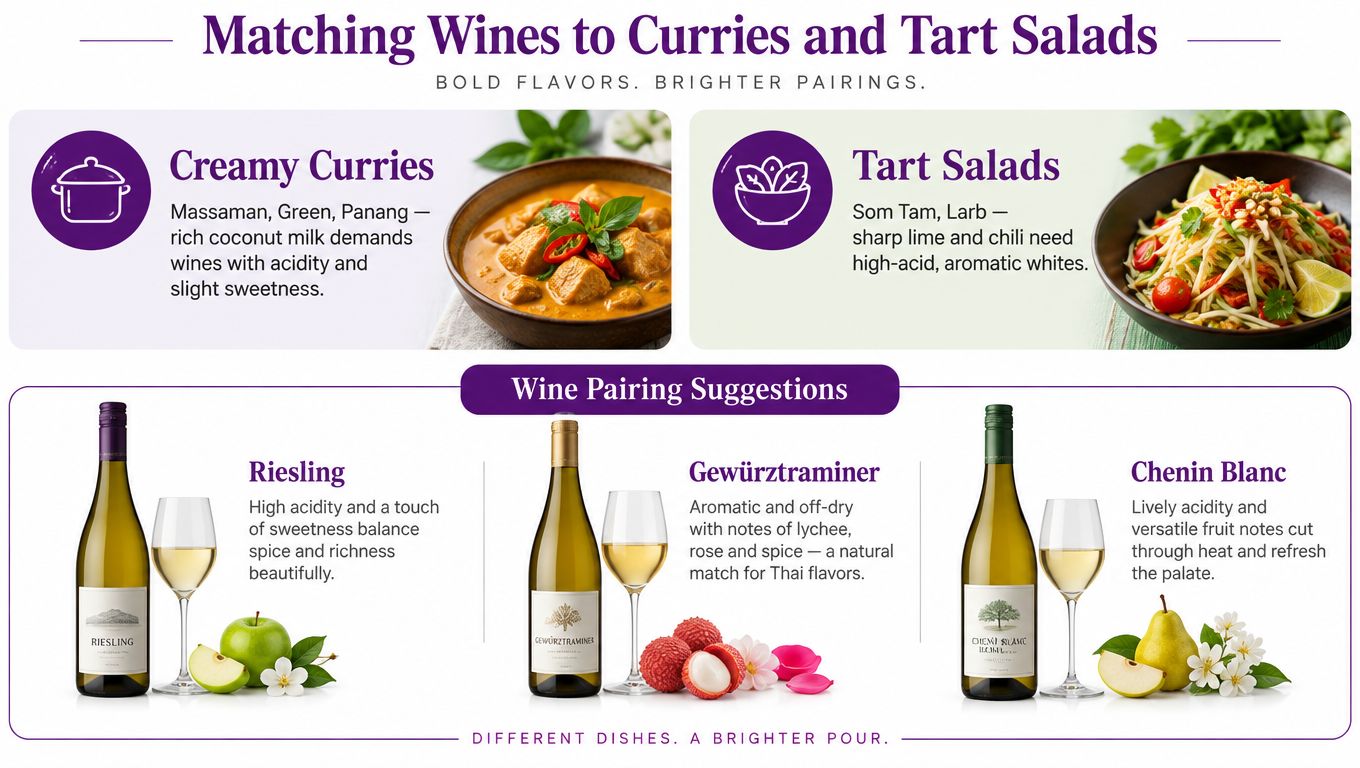
Creamy curries and sharp salads need different bottles. This is not up for debate. A coconut curry wants a wine that can cut through fat. A tart, herb-heavy salad wants something with real acid and nerve.
For Coconut Curries, Go Fresh and Bright
Massaman, green curry, and Panang lean rich. Coconut milk can make a dish feel heavy if the wine is soft too. You want acidity to keep the texture moving, and a little aromatic lift helps with lemongrass, ginger, and galangal.
That's where Riesling and Gewürztraminer earn their keep. They're expressive enough to match the perfume of the food, and they've got enough structure to keep the plate from turning muddy. For medium-to-hot dishes, a slightly off-dry style with roughly 8–20 g/L residual sugar and below 13% ABV is the safe lane, served well chilled around 8–10°C so freshness stays front and center Wine Traveler.
For Som Tam and Tom Yum, Acidity Wins
Tart salads and hot-and-sour soups are a different animal. Som tam is sharp. Tom yum is sharp and hot. Soft wine gets crushed here. It tastes thin, sometimes even sweet in a bad way.
Use a wine that can snap back at the dish. Crisp whites do that best. Sauvignon Blanc is especially useful when lime, herbs, and a little green bitterness are part of the package. It doesn't need to be fancy. It needs to be alive.
The rule is simple. Coconut wants freshness. Lime wants acidity. Chili wants a little sweetness. Once you sort the dish into one of those buckets, the bottle choice gets much easier.
Red Wines and Alternative Styles That Work
If you want red wine, don't reach for the heaviest bottle on the shelf. That's how people ruin dinner. Thai food can handle red, but only if the wine stays light, juicy, and low in tannin.
Pick Reds That Behave
Pinot Noir and Gamay make sense because they bring brightness instead of brute force. They're less likely to fight with herbs, fish sauce, or chili. Chilled slightly, they can work with milder dishes, soy-based flavors, or a not-too-spicy pad Thai.
Avoid dense, tannic reds. They can turn bitter next to chili and make salty flavors feel metallic. This isn't a place for a big mouth-filling monster wine. It's a place for restraint.
Orange Wine Isn't a Gimmick Here
Orange wine can work with tamarind-heavy dishes because it has grip, texture, and enough character to stand up without drowning the food. I like it more than most do with Thai food because it brings a little rebellion without going full clown show. It's a good choice when you want something off the beaten path but still food-friendly.
Practical rule: if the dish is savory and structured, a light red or orange wine can work. If it's hot and sharp, stay with crisp white.
That's the answer to wine pairing with Thai food. White isn't mandatory. Balance is.
Your Quick Guide to Ordering With Confidence
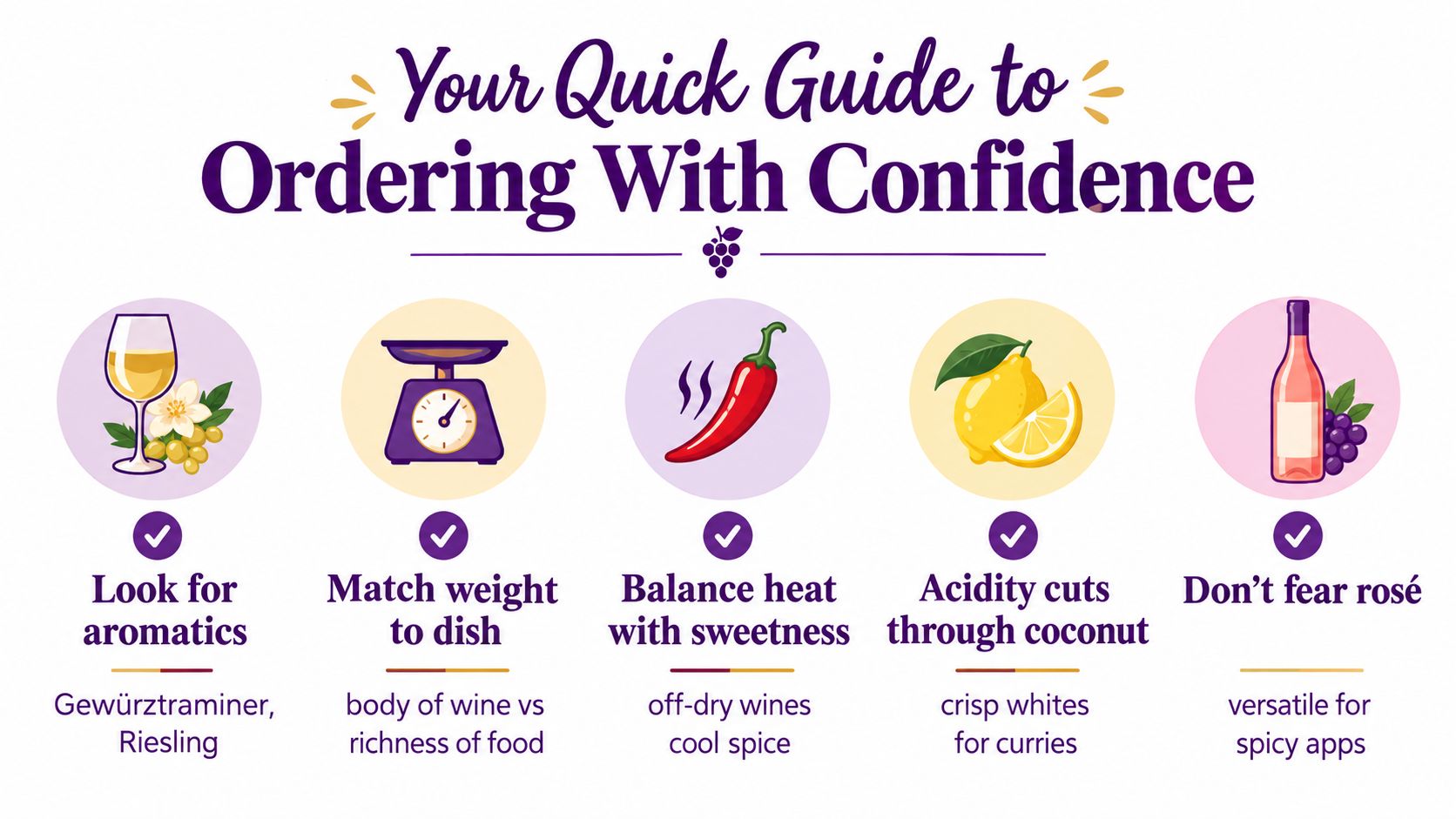
Use this checklist at the table and you won't freeze. First, find the dominant flavor. Then match the wine to that flavor instead of the cuisine label. That one habit solves most pairing problems.
For mixed orders, play it safe with a crisp white, a lightly off-dry aromatic white, or a chilled light red. Thai restaurant tables rarely stick to one flavor profile, so flexibility matters more than showing off. A wine that can handle herbs, chili, lime, and coconut without falling apart is doing its job.
Quick checklist for the bottle
- Look for aromatics. Riesling and Gewürztraminer make sense when the food is fragrant.
- Match weight to the dish. Rich curry needs more structure than a light salad.
- Balance heat with a little sweetness. Off-dry wines calm spice.
- Use acidity against coconut. Crisp whites keep creamy sauces from feeling heavy.
- Don't fear rosé. It can be a smart middle path for spicy appetizers and mixed dishes.
Thai restaurants are everywhere now, and the number of Thai restaurants worldwide grew from roughly 5,500 in 2002 to more than 17,000 by January 2024 Vinepair. That means more chances to get this right, and more reasons to stop winging it.
If you want help matching a bottle to your exact takeout order, A to Wine offers short daily wine lessons, practice quizzes, and an AI sommelier that can point you to the right style for spicy food. Visit A to Wine and make your next Thai dinner a lot less random.